
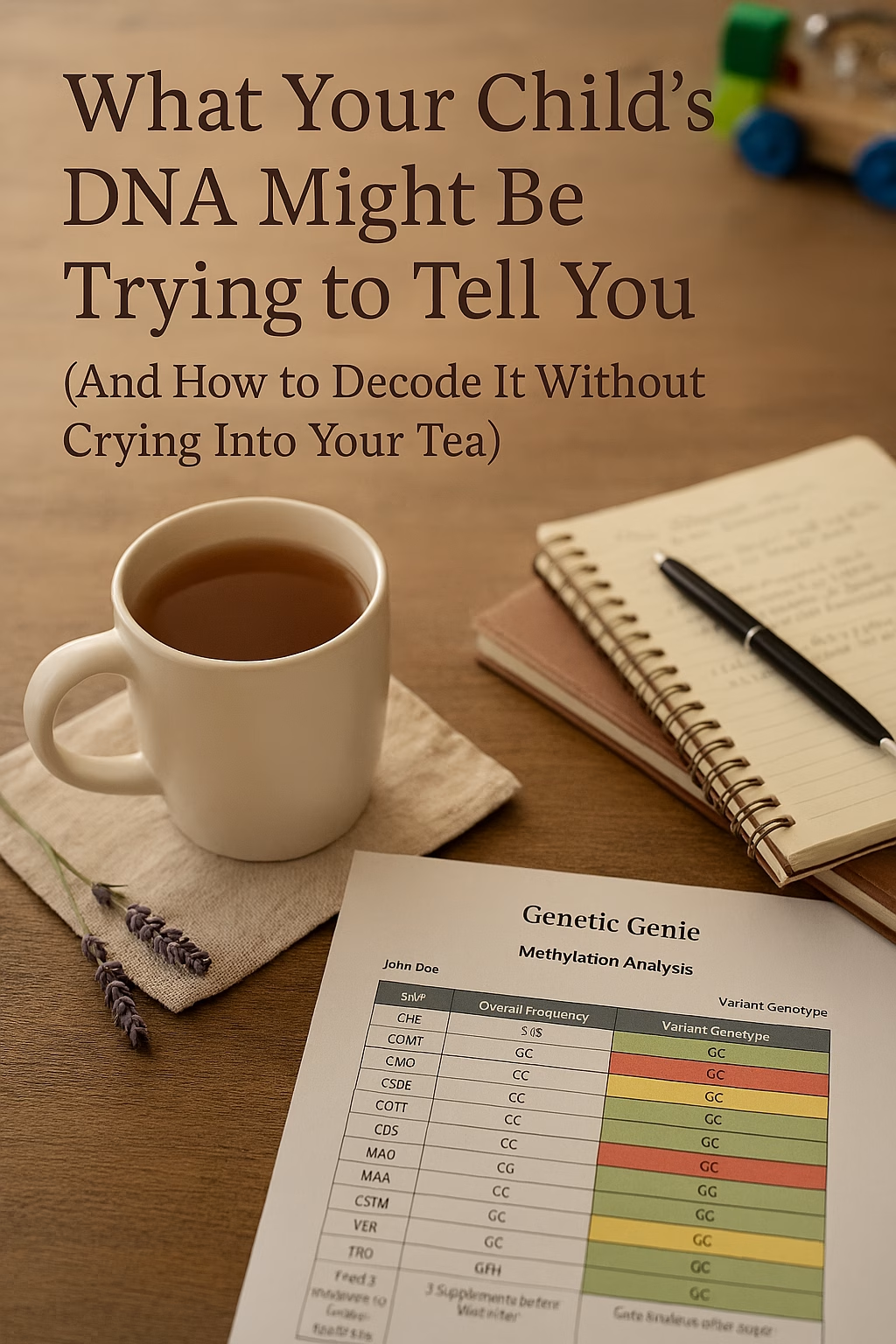
How to Use Genetic Genie to Decode Your Child’s DNA (Without Crying Into Your Tea) Let me guess: you opened your child’s Genetic Genie report, saw a wall of acronyms like MTHFR, COMT, and CBS, and immediately Googled “can DNA testing cause emotional breakdowns in moms?” Same. But here’s the truth: that confusing little report might be the most powerful parenting tool you’ve never been taught to use. It’s not just data—it’s a map. A biochemical blueprint that explains why your child melts down after snack, panics during transitions, or reacts to vitamins like they’re poison. And once you learn how to read it?You stop guessing.You start healing.And you finally get to say, “Ohhh… that’s why.” What Is Genetic Genie (And Why It’s Worth Your Time)? Genetic Genie is a free tool that translates raw DNA data (from places like Ancestry or 23andMe) into functional health insights. It offers: Methylation Panel – explains how your child processes nutrients, regulates mood, and handles stress Detox Panel – reveals how well their body clears toxins, dyes, fragrances, and environmental stressors GenVue Variant Discovery Tool – lets you explore deeper genetic variants and patterns that may affect behavior, learning, and regulation But here’s the thing: most moms don’t need a full biochemical breakdown. They need real-life answers. So, let’s turn those panels into practical, healing-centered shifts. Meet the DNA Cast of Characters Let’s make this fun. Imagine your child’s methylation cycle as a dinner party. Here’s who’s invited: MTHFR: The sluggish chef who keeps burning the folate unless you give her methylated ingredients and a slow morning COMT: The moody cousin who clings to dopamine like it’s a breakup song and turns every transition into a Broadway production CBS: The overachiever who processes sulfur too fast and throws tantrums when garlic shows up uninvited MAO-A: The anxious poet who feels everything deeply and needs magnesium and quiet to chill out GSTM1: The absent janitor—missing entirely—so toxins pile up unless you bring in reinforcements Once you know who’s at the party, you can stop trying to serve spaghetti to someone who’s allergic to tomatoes. Real-Life SNPs Table: What Your Child’s DNA Might Be Trying to Tell You SNP What It Affects What It Looks Like What Helped Us MTHFR Methylation Mood swings, trouble waking up Methylated B vitamins, slower mornings COMT Dopamine breakdown Resistance to transitions, emotional intensity Predictable routines, movement breaks CBS Sulfur processing Reactions to eggs, garlic, or supplements Diet tweaks, binder support MAO-A Serotonin metabolism Anxiety, sensory overload Magnesium, red light therapy GSTM1 Detox pathways Reactions to dyes, fragrances, vitamins Clean products, protein-rich snacks Still wondering if your child’s DNA might be behind those quirky, intense, or downright baffling moments? Here’s a cozy way to spot the signs—no science degree required. Download your free Bingo card here! Want to see how this played out in our homeschool? Read: His DNA Didn’t Just Explain Him—It Transformed Me: A New Way to Homeschool Visual Checklist: What to Do When You’re Drowning in SNPs Decode Your Child’s DNA: Healing Checklist ☐ Upload raw DNA data to Genetic Genie☐ Start with the Methylation Panel☐ Circle anything marked “++” or “+”☐ Google one SNP at a time (or use this post!)☐ Look for patterns—do multiple SNPs affect mood, detox, or transitions?☐ Choose ONE area to support first (e.g., methylation or detox)☐ Make a gentle shift—nutrients, routines, or sensory tools☐ Track changes for 2–3 weeks☐ Celebrate small wins (even if it’s just fewer tears at snack time)☐ Bookmark this post for when you’re ready to go deeper What Actually Helped Us We didn’t just change our mindset—we changed our tools. These are the ones that made a real difference: All About Learning Press – gentle, multisensory phonics that didn’t trigger tears MEL Science – hands-on experiments that matched his curiosity without overwhelm Signing Time – gave us communication before speech, and connection without pressure Mito Red Light – supported regulation and sleep more than I ever expected Art of Tea + Cafe Borbone – because moms need healing rituals too Global Healing – clean supplements that didn’t backfire Training Aliens – social skills with humor and heart Logic of English, Pandia Press, and Honest History – curriculum that respected his brain “SNPs in the Wild”: Mini Stories That Made It Real “I gave him a Flintstones vitamin and he turned into a velociraptor. Turns out, his MTHFR couldn’t handle synthetic folic acid. Who knew?” “He screamed when I lit a candle. GSTM1 was missing, and fragrance was his kryptonite.” “He melted down every time we had eggs for breakfast. CBS was overactive—and sulfur was the culprit.” These moments felt random until DNA gave us the language. Now they feel like clues. Tea Time Translation: The Short Version for Overwhelmed Moms If you’re reading this with one hand in a snack bag and the other trying to Google “MTHFR for beginners,” here’s what you need to know: Your child’s DNA might explain their meltdowns, mood swings, and sensory overload Genetic Genie helps you decode that DNA—without needing a PhD Start small. One SNP. One shift. One healing win. You’re not failing. You’re just missing the map. And now? You’ve got it. Continued Reading: Healing, Homeschooling, and Hope If this post resonated, you’ll love these: The Truth About Early Autism Signs: A Mother’s Story of Realization and Hope Before the Diagnosis: The Fight That Changed Our Future When the Doctor Said “He’s Fine”—But My Heart Knew Better The Year Everything Was Changing: Autism, Covid, and Unexpected Healing I Was Losing My Son to Autism—Then DNA Testing Showed Me How to Bring Him Back From Meltdowns to Methylation: The Year Everything Changed Want to Help Your Child Feel Better? Start with What Goes In and On Their Body That Toy Isn’t a Distraction. It’s a Sensory Survival Tool The Sensory Breakthrough That Changed Our Days—After Years of Struggle How to Recover When the Day Starts in Meltdown Mode Little Letters, Big Spirit:
His DNA Didn’t Just Explain Him—It Transformed Me: A New Way to Homeschool
His DNA Didn’t Just Explain Him—It Transformed Me: A New Way to Homeschool He was curled under the table, clutching a crayon like a lifeline.I was Googling “how to homeschool a child who cries during phonics.” Again. We had tried everything—gentle curriculum, sensory bins, flexible schedules.But nothing stuck. Nothing soothed. Nothing fit. It started innocently enough—with an Ancestry kit I bought to trace my heritage. I thought I’d find out if I had Viking roots or maybe a splash of Irish rebellion.Instead, I found a rabbit hole. One article led to another.One genetic marker led to a hundred questions.And before I knew it, I was deep into the world of methylation, detox pathways, and the work of Dr. Amy Yasko. That rabbit hole?It led me to Nolan’s healing. What DNA Actually Revealed (And Why It Changed Everything) This wasn’t just a cute “find your heritage” kit anymore. It became a biochemical blueprint that explained everything I couldn’t put into words: Sluggish detox pathways → dyes, fragrances, and even vitamins were overwhelming his system Neurotransmitter imbalance → anxiety, sensory overload, and emotional volatility made sense Methylation issues → his body struggled to convert nutrients into usable forms Nervous system dysregulation → transitions felt traumatic, and “simple” tasks triggered panic Suddenly, the meltdowns weren’t mysterious.They were biological.And I wasn’t a bad mom—I was just missing the manual. How Our Homeschool Began (And Why It’s Already Changing Everything) We’ve only been homeschooling for six months.I didn’t start because I had it all figured out—I started because nothing else was working.School was triggering. Homework was heartbreaking. And every drop-off felt like betrayal. But once I understood his biology, everything shifted. I stopped chasing the “right” curriculum and started asking, what does his brain actually need? Here’s what that looks like now: Challenge DNA Insight Homeschool Shift Meltdowns after snack Poor detox pathways Removed dyes, added protein Resistance to reading Dopamine imbalance Movement before literacy Trouble with transitions Nervous system stuck in fight-or-flight Predictable routines, sensory tools Mood swings Methylation issues Nutrient support, slower mornings We’re still learning.We’re still tweaking.But for the first time, our days feel like they’re built for him—not just around him What Actually Helped (And Why I Recommend It) We didn’t just change our mindset—we changed our tools. For phonics that didn’t trigger tears, we turned to All About Learning Press—gentle, multisensory, and meltdown-friendly. For science that matched his curiosity and his sensory needs, MEL Science gave us hands-on experiments without overwhelm. For communication before speech, Signing Time helped us connect in ways that felt safe and empowering. And yes, red light therapy with Mito Red Light supported his regulation more than I ever expected. I only share what we’ve truly used and loved. These links are affiliate links, which means I may earn a small commission—at no extra cost to you. Why This Matters for Moms Like Us If your child is sensitive, intense, or “hard to teach,” you’re not failing.You might just be missing the map. DNA gave me that map.It didn’t give me a label—it gave me language.And it helped me stop blaming myself for what I couldn’t see. This post is part of our healing series. If you’re new here, start with: The Truth About Early Autism Signs: A Mother’s Story of Realization and Hope Before the Diagnosis: The Fight That Changed Our Future When the Doctor Said “He’s Fine”—But My Heart Knew Better The Year Everything Was Changing: Autism, Covid, and Unexpected Healing From Meltdowns to Methylation: The Year Everything Changed You’ll see how biology, intuition, and love came together to change everything. Ready to Rethink Everything? This isn’t just a homeschool story.It’s a healing story.And if you’ve ever felt like your child is “too much” or “not enough,” I promise—you’re not alone. So, grab your tea, take a breath, and dive in.Because the answers you’ve been searching for might be hiding in their DNA. And if you want to keep going, here’s what moms are loving next: Want to Help Your Child Feel Better? Start with What Goes In and On Their Body The Sensory Breakthrough That Changed Our Days—After Years of Struggle How to Recover When the Day Starts in Meltdown Mode Neurodivergent Homeschooling Made Simple Little Letters, Big Spirit: Raising a Child Who Defied Expectations
I Was Losing My Son to Autism—Then DNA Testing Showed Me How to Bring Him Back
- Advocacy & Healing Journeys, - Family Detox & Supplement Protocols, - Gentle, Science-Informed Healing, - Healing Journeys, - Neurodivergent Journeys, - Real-Life Recovery Stories, Advocacy Through Experience, Autism Healing Journey, Biomedical Interventions, Genetic Insights & Methylation, Join the Journey, ntegrative Approaches to Autism, Our Autism Journey
I Was Losing My Son to Autism—Then DNA Testing Showed Me How to Bring Him Back Spoiler alert: My son Nolan told me his brain was buzzing—and it was the best thing I’ve ever heard. If you’re a parent staring down a pile of test results, half-used supplements, and a child who seems trapped behind a fog of reactivity, I see you. I was you. And I want to share what actually helped us break through. This isn’t a miracle cure post. It’s a real-life, messy, expensive, emotionally raw autism recovery story. And yes, it includes receipts. Literally. The Tests That Changed Everything Right before Nolan’s sixth birthday, I took a deep breath and ordered two tests I could afford from Dr. Yasko’s Holistic Heals’ website: A hair analysis A urine organic acids test What they showed was both terrifying and clarifying. Nolan had high levels of aluminum, antimony, arsenic, and moderate uranium, nickel, silver, tin, and titanium. He was also deficient in calcium, magnesium, potassium, copper, and zinc. Translation? His body was overloaded with metals and undernourished in minerals. And worse—he wasn’t absorbing what I was giving him. Detoxing Without Drama I knew detox was key, but I also knew Nolan’s system was sensitive. I’d heard about Coseva Advanced TRS from multiple families and decided to try it. It helped—but we started very slowly. Like, half a spray slowly. Here’s the link if you’re curious. If that’s out of your budget or feels too intense, Bioray Kids Detox is a gentler option that still supports drainage and detox. Find it here. This gentle approach to detox was a turning point in Nolan’s autism recovery—because it didn’t overwhelm his system. It supported it. The Speech Protocol That Actually Worked While browsing Holistic Heal’s site, I stumbled on a protocol called Language + Cognition. I didn’t expect much—but wow. Nolan’s expressive language exploded. Suddenly, I wasn’t just hearing scripted phrases—I was hearing Nolan. Even his teachers noticed. It was like someone turned the lights on in his brain. The Liquid Battle (and the Drink Hack That Saved Me) Let’s talk about the real struggle: getting supplements into a child who hates fights as hard as he can when he doesn’t want to do something. Nolan would rather wrestle a porcupine than take a dropper full of anything. I tried everything—bribes, distractions, interpretive dance. Nothing worked. Eventually, I discovered that mixing the liquids into a drink worked just as well. Smoothies, juice, even coconut water became my secret weapons. And when Nolan finally learned to swallow pills? Game. Changer. Suddenly, we had access to a whole new world of healing tools—and fewer sticky messes. Before and After: What Autism Recovery Actually Looked Like Before healing, Nolan was stuck in a loop—repeating phrases, melting down over tiny transitions, and disappearing into obsessive patterns. I felt like I was parenting through a fog, trying to reach a child who couldn’t reach back. I remember the way he used to script movie lines, over and over, like he was trying to anchor himself to something familiar. I remember the way his body would stiffen when I tried to hug him. I remember the silence—the kind that made me wonder if I’d ever hear his real voice. Now? He’s present. He’s playful. He’s learning. He’s here. The first time he gave me a hug without any prompting brought tears to my eyes. And I finally get to know my son—not just manage his symptoms. And I get so sad sometimes because I missed out on so many years of being able to know my real kid. I wish more than anything that I could go back and tell myself what I know now. What We Actually Used (Yes, I Have Receipts) I bought as many of Dr. Yasko’s recommended supplements as I could afford. Some were foundational. Some were experimental. Some were life-changing. Here’s a snapshot of what helped Nolan the most: Brain & Behavior Compulsive & Repetitive Behavior Support Pedi-Active Phosphatidylserine/DMAE GABA Calm, Ultimate B + Lithium, Adenosyl B12 Detox & Methylation Metal Away™, Metals IV, Ammonia Support, CCK Support, Nerve Calm TRS Spray, Bioray Kids, Reduced Glutathione, Methyl Folate, Liquid SAMe, Liquid B-Complex Gut & Nutrient Absorption Special Digestive Enzymes, Children’s Acidophilus, Bowel Support Zinc Lozenges, Magnesium-Potassium Complex, All-in-One Multi-Vitamin Mitochondrial & Energy MitoForce™, CoQ10 Spray, Black Bear Energy Spray, Vita D-Light™, UltiFend™ Testing That Guided Us Hair Elements Test Organic Acids Test (OAT) Comprehensive Stool Analysis One of our biggest investment moments in Nolan’s autism recovery—this order included the comprehensive stool test, hair analysis, and several key supplements from Dr. Amy Yasko’s protocol. It wasn’t cheap, but it gave us answers we couldn’t get anywhere else. Why Folic Acid Is Off the Table—for Good One of the biggest revelations from Nolan’s genetic testing was that he carries the MTHFR mutation. It means his body struggles to convert synthetic folic acid into usable folate—a process that’s essential for detox, mood, and brain function. For us, this wasn’t just a fun fact. It was a turning point. We realized that the fortified cereals, multivitamins, and processed foods we thought were “healthy” were actually clogging his system. That’s why we’ll never reintroduce folic acid into our diet. Instead, we use methylated folate—something his body can actually absorb and use. And that’s also why we don’t eat gluten. Most gluten-containing products—especially breads, pastas, and baked goods—are fortified with synthetic folic acid. For a child with MTHFR, that’s not just unhelpful—it’s harmful. Going gluten-free wasn’t just about digestion or behavior. It was about protecting Nolan’s methylation pathways and giving his body a real chance to heal. Nolan’s Autism Recovery Timeline Age 6: Hair + urine tests reveal toxic metals and mineral deficiencies Age 6.5: Start TRS spray + Language + Cognition protocol Age 7: Speech improves, teachers notice expressive breakthroughs Age 7.5: On-and-off supplement use, emotional regression Age 8: Stool + hair tests show methylation progress, gut dysfunction Age 8.5: Consistent supplement
From Meltdowns to Methylation: The Year Everything Changed
From Meltdowns to Methylation: The Year Everything Changed I thought kindergarten would be the beginning of something beautiful. Nolan had made real progress in preschool. He was curious, expressive, and finally starting to feel like himself. So, when we moved back to Texas and enrolled him in a top-notch elementary school, I had high hopes. I imagined him thriving in a classroom, making friends, and maybe even enjoying circle time. Instead, I found myself dragging my five-year-old into the building—kicking, screaming, and clinging to me like I was the last life raft on a sinking ship. To say it was stressful would be an understatement. It was heartbreaking, confusing, and frankly, a little traumatizing for both of us. When the Classroom Isn’t Built for Your Child The school didn’t realize Nolan had special needs. He was placed directly into a general education classroom, and while I was willing to give it a try, Nolan had other ideas. Loud ones.Thankfully, the school acted quickly and transferred him to their special needs classroom. And here’s where we got lucky: it wasn’t a chaotic, overstimulating space. It was a small room with just a few other kids on the spectrum and a team of compassionate teachers.But even with that support, we didn’t see much progress that year.Why? Because transitioning to school was a lot for Nolan. Most of his day was spent doing non-preferred tasks, and the teachers spent more time convincing him to work than actually teaching. It felt like we were stuck in survival mode.If you’ve ever felt like your child’s classroom wasn’t built for their brain, you might relate to these posts: That Toy Isn’t a Distraction. It’s a Sensory Survival Tool The Sensory Breakthrough That Changed Our Days—After Years of Struggle The Accidental Discovery That Shifted Our Healing Fast forward to 2022. I wasn’t looking for answers—I was just curious about my ancestry. I ordered a DNA test through Ancestry.com, expecting to learn something fun about my heritage. Instead, I stumbled into a rabbit hole that would completely shift our healing journey. Someone in one of my autism healing groups mentioned uploading raw DNA data into a program that reveals genetic mutations. Intrigued, I tried it. (If you’re curious, check out Genetic Genie—it works with 23andMe too.) What I found was a methylation panel—a breakdown of genetic markers that influence how the body processes toxins, nutrients, and even emotions. And here’s the kicker: Nolan had only two homozygous mutations, and neither were the ones commonly associated with autism. That meant his genetic profile wouldn’t significantly inhibit his healing. Cue the cautious optimism. Why Sensitivity Isn’t a Weakness—It’s a Clue But the real lightbulb moment came when I saw that Nolan, my daughter, and I all shared a homozygous mutation linked to high sensitivity. Suddenly, so much made sense. I dove into research about what it means to be a highly sensitive person—how it affects sensory processing, emotional regulation, and even social interactions. It was like reading a manual for my child’s nervous system. And mine. This search led me to the most impactful website I’ve ever found: holisticheal.com, created by Dr. Amy Yasko. Dr. Amy is a powerhouse. She’s written e-guides that explain the science behind autism in a way that’s both deeply technical and profoundly human. Her work emphasizes that healing autism is never one-size-fits-all. It’s individualized, based on genetic markers, environmental factors, and biochemical pathways. Why This Matters Because so many autism products and programs are marketed as one-size-fits-all solutions, and they might help some kids, but they only helped Nolan to a certain point. His healing plateaued because we were trying to fit him into systems that weren’t designed for his biology. True healing requires personalization. It requires understanding your child’s unique makeup—emotionally, neurologically, and genetically. That’s why methylation matters. It’s not just a buzzword—it’s a roadmap. If you’re just beginning your journey, you might want to read: The Truth About Early Autism Signs: A Mother’s Story of Realization and Hope Before the Diagnosis: The Fight That Changed Our Future When the Doctor Said “He’s Fine”—But My Heart Knew Better About Autism Tools That Helped Us Along the Way As we began to understand Nolan’s sensitivity and biology, we started layering in tools that supported his nervous system and social development: Training Aliens: A quirky, neurodivergent-friendly social skills program that felt more like play than therapy. Nolan actually looked forward to it—and that’s saying something. Mito Red Light: We added red light therapy to our routine, and it helped Nolan sleep better, regulate more easily, and feel calmer overall. If you use my link, you’ll get 5% off your order. Art of Tea and Cafe Borbone: These became staples in our weekly Tea Time ritual. A warm cup of something beautiful helped us slow down, connect, and breathe. Tiny comforts, big impact. Note: Some of these are affiliate links, which means I may earn a small commission at no cost to you. I only recommend what we truly love and use. What Happened Next Changed Everything I didn’t just read the guides—I lived them. Dr. Amy’s program became the backbone of our healing rhythm, and while it wasn’t easy, it was the first time I felt like I truly understood Nolan’s body, brain, and spirit.But what did that actually look like?What supplements did we use? What shifts did we see? And how did this methylation-based approach transform not just Nolan—but our entire family?That part of the story deserves its own post.So, stay tuned, because in my next post, I’ll share exactly how we implemented Dr. Amy’s protocol, what it looked like in our daily life, and the subtle (and not-so-subtle) changes we began to see in Nolan.It was the beginning of something extraordinary. Want to Keep Reading? Here are a few posts that build on this journey: Want to Help Your Child Feel Better? Start with What Goes In and On Their Body Little Letters, Big Spirit: Raising a Child Who
The Year Everything Was Changing: Autism, Covid, and Unexpected Healing
The Year Everything Was Changing: Autism, Covid, and Unexpected Healing After Nolan’s autism diagnosis, I did what a lot of moms do—I spiraled. I cried, I blamed myself, and I mentally rewrote every moment of his early childhood trying to figure out what I did “wrong.” Spoiler alert: that kind of guilt spiral is a total waste of energy. If you’re in it right now, please hear me—stop blaming yourself. Autism is complex. It’s influenced by genetics, environmental toxins, and factors we simply can’t control. So instead of beating yourself up, channel that mama bear energy into helping your child. That’s where the magic happens. If you’re still in the thick of those early emotions, you might want to start with The Truth About Early Autism Signs: A Mother’s Story of Realization and Hope and Before the Diagnosis: The Fight That Changed Our Future. They’re raw, real, and might help you feel a little less alone. Diagnosis, Emotions, and the First Glimmers of Hope While I was drowning in all the feelings, I also felt a strange sense of relief. Nolan was finally going to get help—speech therapy, occupational therapy, and a spot in a developmental preschool. Speech therapy started quickly and helped a bit. Progress was slow but steady. Occupational therapy? Not so much. Nolan flat-out refused to participate. And honestly, I didn’t push it. I didn’t want him to associate writing with misery. We quit after a few months, and guess what? He learned to write just fine—on his own timeline. Then Came Covid (Because of Course It Did) Just as Nolan was set to start preschool in March, we got the email with his start date—and then, boom. Covid hit. Schools shut down. Services vanished. And I was back to square one, trying to figure out how to support my autistic child at home with zero professional help. Homeopathy, Bioscans, and a $50 Gamble That Paid Off Desperate for answers, I stumbled across a Facebook group where someone mentioned Bioscans and homeopathy for autism. It cost $50. I figured, why not? The scan revealed Nolan had likely had a minor concussion (he was always bonking his head), among other things I can’t remember because #mombrain. But here’s the wild part: the homeopathic remedy she gave us worked almost immediately. Before the remedy, Nolan couldn’t say “yes.” He’d respond with “no” or scripted phrases that meant yes, but the word itself? Off-limits. The day after the remedy—he said yes. Just like that. He also stopped stripping his clothes off constantly. Coincidence? Maybe. But I’m not arguing with results. Curious about Bioscans? Check it out here (not sponsored, just my honest experience). Omega Gummies, Magnesium, and the Sleep Breakthrough Another Facebook tip: Omega gummies for autism. I gave them to Nolan daily. He thought they were candy, and I saw improvements—though I can’t pinpoint exactly what. Brain health is brain health, right? We also added magnesium, which helped with sleep (hallelujah). Sleep was a huge issue for Nolan, and when he was tired, his behaviors were next-level challenging. So magnesium became part of our nightly routine—via bath salts and a drink mix. Bath magnesium: link Drinkable magnesium: link Omega gummies: link If you’re curious about other ways to support your child’s body from the inside out, check out Want to Help Your Child Feel Better? Start with What Goes In and On Their Body. Back to Washington: A Hard Move with a Silver Lining Covid forced us to move back to Washington State. It was tough on Nolan, but being near family helped. And—miracle of miracles—I got him into an ABA preschool program despite the restrictions. Now, I know ABA is controversial. Some programs are downright traumatic. But I found a good one, and that made all the difference. Rehab Without Walls: The Program That Changed Everything Rehab Without Walls was a game-changer. They helped Nolan get fully potty trained, reduced his behavioral issues, and gave me tools to support him long after the program ended. When we started, Nolan was saying “no” hundreds of times an hour during non-preferred tasks. By the end of six months, that number had dropped dramatically. Preschool Wins and Social Breakthroughs After the program, Covid restrictions eased, and Nolan started attending the local school district preschool twice a week. I also enrolled him in a traditional preschool a couple days a week. And guess what? No behavioral issues. None. He started seeking out other kids to play with. My once-isolated little guy was finally social. Cue the happy tears.If you’re navigating sensory challenges, you might love The Sensory Breakthrough That Changed Our Days—After Years of Struggle or That Toy Isn’t a Distraction. It’s a Sensory Survival Tool. What Helped Nolan Most During That Year: Saying “yes” after a homeopathic remedy (via Bioscan) Omega gummies for brain support Magnesium for sleep and behavior regulation ABA preschool (with a vetted, compassionate team) Dual preschool enrollment for social growth Letting go of guilt and trusting his timeline A Quote to Hold Onto “Healing doesn’t always look like progress. Sometimes it looks like trying again tomorrow.” From One Autism Mama to Another If you’re reading this with tears in your eyes and a lump in your throat, just know—you’re not alone. I’ve been there. And there is a way forward. Have you tried any alternative therapies for your autistic child? I’d love to hear what worked (or didn’t!) for you—drop a comment or message me on Instagram @prairieemberadventures. In the next post, I’ll share our next chapter—moving back to Texas and diving into genetic testing (which opened up a whole new world of understanding). Until then, mama bear—keep going. You’re doing better than you think.

When the Doctor Said “He’s Fine”—But My Heart Knew Better About Autism
When the Doctor Said “He’s Fine”—But My Heart Knew Better About Autism If you’ve ever had a gut feeling that something wasn’t right with your child—but were told to “wait and see”—this autism story is for you. When my son Nolan was three and a half, we finally got the call for his long-awaited school autism evaluation. After six months of waiting, worrying, and wondering, I walked into that building with a knot in my stomach and a thousand questions in my heart. What happened next changed everything. If you’re just beginning your autism journey, you might want to start with The Truth About Early Autism Signs: A Mother’s Story of Realization and Hope—it’s the moment I first knew something was different. The Results That Shook Me The autism evaluation team asked dozens of questions and ran multiple assessments. I thought I was prepared. I wasn’t. Speech: Nolan scored in the 2nd percentile, with overall language skills at the level of a 19-month-old. His social language was even lower—on par with a 12-month-old. Motor Skills: He scored in the 1st percentile for grasping and 5th for visual-motor integration. Suddenly, his resistance to writing and drawing made heartbreaking sense. Emotional & Social Development: Nolan scored less than 12 months in every category—emotional expression, regulation, sense of self, play, and social interaction. I felt like the floor had dropped out from under me. If your child struggles with fine motor tasks like drawing or writing, The Best Morning Routine for Kids with Sensory Processing Challenges might help you build a gentler start to the day. Sensory Seeking Explained So Much This was the first time I heard the terms sensory seeking and sensory avoiding—and it was like someone handed me a map to Nolan’s autism-related behaviors. He preferred to be barefoot and without clothes.He stuffed food in his mouth, sucked on fingers and toys, hit and pinched himself, spun in circles, crashed into things, and licked or smelled inedible objects.He loved crunchy and chewy foods, hated squishy textures, and had a high pain tolerance. These weren’t random quirks. They were clues—clues that pointed toward autism and sensory processing challenges. If you’ve ever wondered why your child clings to certain toys or textures, That Toy Isn’t a Distraction. It’s a Sensory Survival Tool reframes play as regulation. And for a deeper dive into sensory behaviors often linked to autism, The Truth About Sensory-Seeking Kids: How to Support Their Behavior is a must-read. The Autism Diagnosis: Higher Than I Expected Then came the autism score. On their scale, a score of 12 or higher indicated autism.Nolan scored a 19—placing him in the high range on the autism spectrum. His autism-related behaviors included: Difficulty transitioning Emotional outbursts and self-aggression Leading others by hand to desired objects Finger twisting, body tensing, dropping objects at midline Lining up toys, cause-and-effect play obsession Aversion to baby dolls, staring off, sound sensitivity Atypical language: labeling, echolalia, scripting, repetitive phrases, inconsistent eye contact I had suspected autism. But I hadn’t realized how severe it was. If your child struggles with transitions or meltdowns—common in autism—How to Recover When the Day Starts in Meltdown Mode offers gentle, practical strategies that truly work. Why You Should Trust Your Gut What shocked me most? Less than a year earlier, Nolan had been seen by a doctor who said he was “fine.” So if you’re a parent reading this and you feel something isn’t right—trust your instincts.Mama intuition is powerful. It’s not overreacting. It’s knowing. I share more about that fight for answers in Before the Diagnosis: The Fight That Changed Our Future—a story of persistence, advocacy, and love in the face of autism uncertainty. The Moment I Wanted to Give Up After the autism evaluation, I felt defeated.Hearing that my son was functioning at the level of a baby in so many areas was crushing.The road ahead felt impossibly long. There were moments I wanted to stop trying.To let him “just be.”To accept that this was all there was. But something inside me whispered: There’s more to Nolan than these autism behaviors. And I’m so glad I listened. If you’re exploring healing options for autism, Want to Help Your Child Feel Better? Start with What Goes In and On Their Body shares the first steps we took toward real change. And The Sensory Breakthrough That Changed Our Days—After Years of Struggle shows how one small shift made a huge difference in our autism journey. Why I’m Sharing Our Autism Experience Now Reading back on this autism evaluation feels surreal.It’s like reading about a completely different child.None of those behaviors apply to him anymore. He’s grown. He’s healed. He’s thriving. If you’re in the early stages of an autism journey, I want you to know:You’re not alone. There is hope. And your child is more than a diagnosis. For a dose of encouragement, Little Letters, Big Spirit: Raising a Child Who Defied Expectations is a celebration of growth and grit beyond the autism label. What Comes Next in Our Autism Journey That day marked the beginning of a journey I never expected—one filled with grief, grit, and grace. And while the road ahead wasn’t easy, it was ours to walk. Ready to keep reading? Here’s what helped us heal, grow, and thrive—one step at a time: Before the Diagnosis: The Fight That Changed Our Future – The moment I knew I had to advocate harder The Truth About Early Autism Signs: A Mother’s Story of Realization and Hope – What I wish I’d known sooner Want to Help Your Child Feel Better? Start with What Goes In and On Their Body – Our first steps toward healing The Sensory Breakthrough That Changed Our Days—After Years of Struggle – How we finally found calm That Toy Isn’t a Distraction. It’s a Sensory Survival Tool – Rethinking play and regulation Follow along for gentle, real-life stories about autism, sensory needs, homeschooling, and healing—written for moms who want connection, not perfection. And if you’re feeling overwhelmed
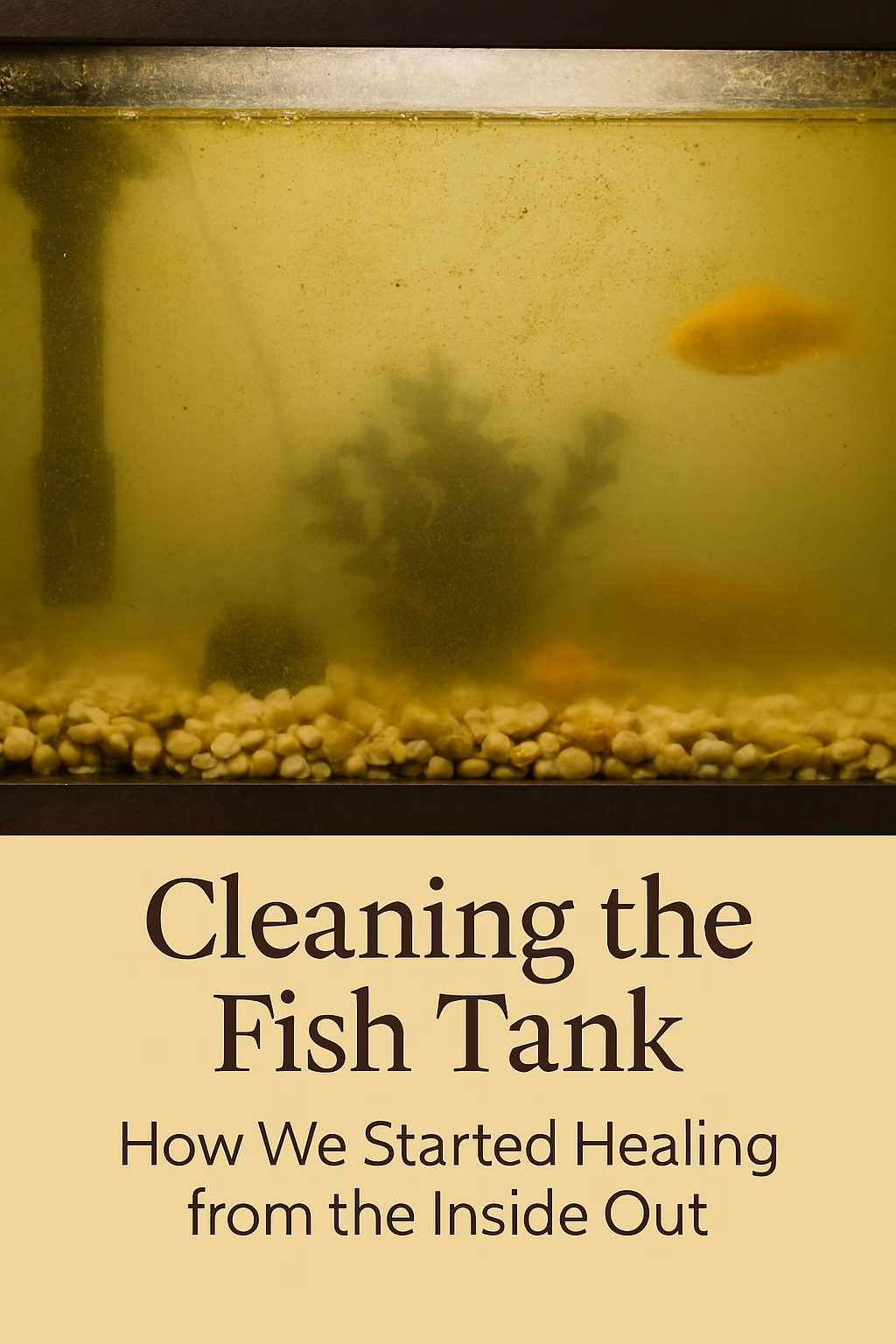
Want to Help Your Child Feel Better? Start with What Goes In and On Their Body
Cleaning the Fish Tank: How We Started Healing from the Inside Out If your child is struggling with behavior, sleep, or sensory overload, start by cleaning up what goes in and on their body. This gentle detox guide walks you through food triggers, low-tox swaps, and healing tips that helped our family see our child feel better naturally—without overwhelm or perfection. Before the diagnosis, I had no idea how many toxins were quietly sabotaging my son’s ability to thrive. I thought our home was safe. I thought our food was fine. I thought our products were “clean enough.” Spoiler: they weren’t. The amount of chemicals in our everyday lives is truly astounding. From dish soap to laundry detergent, even the water we drink—most of it contains ingredients that don’t belong anywhere near a developing brain. And for kids with autism or other disabilities, those toxins can be the difference between surviving and thriving. So I did what any determined mom would do:I put on my detective hat and started cleaning the fish tank. What’s the Fish Tank? Imagine your child as a beautiful, sensitive little fish trying to swim in a tank so murky you can barely see through it. The water is filled with chemicals, artificial ingredients, and environmental stressors. That grime? It’s not just inconvenient—it’s suffocating. Your job isn’t to fix the fish.Your job is to clean the tank.And when you do, you’ll start to see your child feel better naturally—because their body finally has the space to heal. If you’re just beginning this journey, The Truth About Early Autism Signs: A Mother’s Story of Realization and Hope is a good place to start. Start with Food: The Fastest Wins The first thing I tackled was Nolan’s diet—and it made a noticeable difference fast. Many children on the spectrum struggle to digest gluten and casein (the protein in milk), often due to shared genetic mutations (we’ll dive into that in a future post!). I’m not saying you need to raid your pantry and toss everything today. But I am saying:Stop bringing new trigger foods into your home. Start with gluten and dairy. Then move toward eliminating: Artificial colors Chemical additives Excitotoxins like MSG, aspartame, and glutamate Cooking from scratch is your best bet. It’s not glamorous, but it’s powerful. And if you’re wondering whether the whole family should join in—yes. It’s easier, more supportive, and you might all feel better eating cleaner. Later, I noticed Nolan reacted strongly to corn—especially with increased aggression. Other common triggers include soy and high-sugar products. But here’s the good news:Strict diets don’t have to last forever. We’re still gluten-free (thanks to a DNA marker), but Nolan now tolerates dairy and corn. If something starts affecting him again, I simply reroute and eliminate it for a while. It’s all part of helping your child feel better naturally—by listening to their body and adjusting with love. If food feels like a daily battle, That Toy Isn’t a Distraction. It’s a Sensory Survival Tool and Top Gluten-Free Snacks for Kids That They Actually Love might help. What They Drink Matters Too Filtered water is ideal. Sugary drinks and juices—especially those with artificial sweeteners—are best avoided. I give Nolan lemonade most days to help get liquid supplements into his system. It’s a small tweak with a big impact. Clean hydration is one of the simplest ways to help your child feel better naturally—especially when paired with gentle detox support. Cookware & Storage: The Hidden Toxins You could buy the healthiest food in the world, but if you’re cooking it in toxic cookware, it’s a bit counterproductive. Check your pots, pans, and containers for: Aluminum Teflon PFOA Copper Cadmium Nickel Lead BPA We’ve switched to glass storage and non-toxic cookware—and it’s made a difference. These small changes add up when your goal is to help your child feel better naturally, one layer at a time. Vaccines: A Personal, Informed Choice This is a sensitive topic, and I want to honor that. But if you’ve never looked into what’s in a vaccine, it’s worth exploring. Common ingredients include formaldehyde, aluminum, MSG, and even chick embryo. I’m not here to tell you what to do. I am here to say:Know what’s going into your child’s body. Some families choose a delayed vaccine schedule to reduce toxin overload. If you’re curious, I’ve linked a resource here to help you explore that option. For some families, adjusting the vaccine schedule is part of helping their child feel better naturally—by reducing stress on the immune and neurological systems. What Goes On Their Body Counts Too Body wash, shampoo, toothpaste, cleaning products—these are daily exposures. Look out for: Parabens Fragrances Petroleum Phthalates Aluminum We personally use fluoride-free toothpaste because fluoride is a known neurotoxin. But again—this is your choice. If you’re overwhelmed, I’ve curated a list of our favorite low-tox products right here. Swapping out these everyday items is one of the easiest ways to help your child feel better naturally—without overhauling your entire life overnight. Detoxing: Clearing What’s Already Inside Once you’ve stopped the incoming toxins, you may want to help your child detox what’s already in their system. This part is hard—but it’s worth it. For younger kids, I recommend Bioray Kids NDF formulas. They offer a simple quiz to help you choose the right formula based on your child’s symptoms. For older kids or adults, Global Healing’s Heavy Metal & Chemical Cleanse is a deeper option. It’s a full program designed to gently remove heavy metals and environmental toxins. Disclaimer: I’m not a doctor—just a mom who’s been in the trenches. Always consult your healthcare provider before starting any detox protocol. Detoxing can be intense. Your child may have symptoms that feel like setbacks. But give them grace. Support their body with: Plenty of water Quality sleep Daily movement Sauna time (even short sessions help!) These supports are key to helping your child feel better naturally during the healing process. If your mornings start in meltdown mode, How to
Before the Diagnosis: The Fight That Changed Our Future
Before the Diagnosis: The Fight That Changed Our Future A few months after having my light bulb moment (you can read about that in The Truth About Early Autism Signs: A Mother’s Story of Realization and Hope), I finally started accepting that Nolan may have autism and went about setting up an appointment to get him evaluated through the school district. Unfortunately, autism evaluations aren’t exactly a walk-in service. The soonest available slot was six months out—which, in mom time, feels like a decade. So if you’re reading this and you’re concerned about your child, please don’t wait. Schedule the evaluation now. Even if your child doesn’t have a disability, isn’t it better to know than to spend every night tossing and turning, wondering if you’re missing something? Clarity is a gift. And trust me—wondering every day is way harder than knowing and moving forward. And here’s the truth that no one wants to say out loud:The longer you wait to get your child help, the harder it is for them to heal. Early treatment for autism isn’t just helpful—it’s critical. The brain is most flexible in the early years, which means the window for meaningful progress is wide open—but it doesn’t stay open forever. Every month matters. Every delay makes it harder for your child to build the skills they need to thrive. If you’re still in the “maybe” stage, I shared our first lightbulb moment in The Truth About Early Autism Signs—it might help you feel less alone. Becoming the Wrecking Ball Mom Before the diagnosis, I became a wrecking ball with a Wi-Fi connection. I was on a mission to research everything I could about how to help Nolan heal. I’ve always believed in natural medicine, and I had this unshakable hope that healing was possible—even when people around me said, “You can’t heal autism.”Spoiler alert: I didn’t listen. And I’m so glad I didn’t.Even though I had a toddler, an infant, and was working part-time, I spent every spare moment diving into the stories of parents who had walked this road before me. I read every book I could find, joined Facebook groups, and Googled like it was my job. There were days I wanted to quit. Days I cried in the laundry room. Days I questioned everything. But pushing through that fight was the most important thing I’ve ever done.If you’re in the thick of it right now, hear me: put in the work now, so you can meet your real child later. I wouldn’t know the version of Nolan I know today if I hadn’t fought through those early years.If your days feel like a sensory circus, The Sensory Breakthrough That Changed Our Days—After Years of Struggle might give you a little hope. And if your mornings start in meltdown mode, How to Recover When the Day Starts in Meltdown Mode is one of the most honest things I’ve ever written. Awaken Your Mama Bear And here’s something else I learned the hard way:You have to awaken your mama bear. Before the diagnosis, I was still waiting for someone else to tell me what to do. But once I woke up that bear—that fierce, protective, unstoppable part of me—it changed everything. No one in this world is going to advocate for your child the way you will. Not the doctors. Not the teachers. Not the well-meaning relatives who say “he’ll grow out of it.” You. It’s you. Once you awaken that bear, you stop waiting for permission. You stop second-guessing. You start gathering the strength you need to help your child, because suddenly, it’s not about fear. It’s about love. And love is powerful. Love is what fuels the research at 2 a.m. Love is what makes you switch out your cleaning products, overhaul your pantry, and stand up to professionals who don’t see your child clearly. Love is what makes you brave. Two tools that helped me advocate and teach with confidence were: Training Aliens – a social skills program that actually gets neurodivergent kids. It’s playful, emotionally safe, and gave me language to support Nolan’s interactions without shame or overwhelm. It helped me see his behavior through a lens of connection, not correction. Signing Time– a gentle, joyful way to help Nolan communicate when words were hard. It gave him power, and it gave me peace. If your child struggles with speech, transitions, or emotional regulation, this program is a game-changer. It’s not just about signs—it’s about giving your child a voice. If you’re still waiting for someone to tell you it’s okay to fight—this is me, telling you:Wake up the bear. Your child needs you. And you are already enough. Cleaning the Fish Tank: Where Healing Begins Before the diagnosis, I didn’t know where to start. But nearly every healing story I read began with one thing: clean up the environment. I like to think of it as a dirty fish tank. Imagine your child as a beautiful, sensitive little fish trying to survive in a tank so murky you can barely see through it. The water is filled with chemicals, noise, clutter, and stress. And that grime? It’s not just inconvenient—it’s suffocating. Your job isn’t to fix the fish. Your job is to clean the tank. So that’s what I did. I swapped out household products, filtered the air, simplified our routines, and started paying attention to every little thing that could be making Nolan’s world harder to navigate. It wasn’t glamorous. It wasn’t instant. But it was the beginning of something real. If you’re wondering what that looked like in practice, I’ve shared the exact steps I took to clean up Nolan’s “fish tank” in this post. It’s full of gentle, sensory-friendly swaps and healing tools that helped us breathe again. If you’ve ever wondered whether that toy your child clings to is “just a distraction,” That Toy Isn’t a Distraction. It’s a Sensory Survival Tool might shift your perspective. And if you’re trying to plan a
The Truth About Early Autism Signs: A Mother’s Story of Realization and Hope
The Truth About Early Autism Signs: A Mother’s Story of Realization and Hope The Day It Finally Clicked It was spring of 2019. Nolan had just turned three, and Josie was a newborn. I remember sitting at a picnic table, holding her while Nolan played nearby. A little girl came over and started chatting with me—bright-eyed, full of words. I asked how old she was.She said she was two.And in that moment, my heart dropped. This little girl was younger than Nolan, and she could talk so well. Nolan couldn’t string more than two words together. Suddenly, everything my parents and my husband had said came flooding back. I’d had concerns too, but his doctor said he was fine at his three-year checkup. And deep down… I wasn’t ready to believe something might be wrong with my son.That day was the moment I began to truly see the early autism signs I’d been trying to explain away. Early Autism Signs in Toddlers: What I Missed From the beginning, Nolan’s start was rough. He was a big, healthy baby—eight and a half pounds—but he cried endlessly. I mean endlessly. To this day, I feel a bit of PTSD when I hear a baby crying. He had terrible stomach issues—constant gas—and didn’t sleep more than a few hours at a time until he was nearly a year old. At the time, I didn’t think it was autism. I just thought I had a very fussy baby. My great-grandma had told me her son was the same way. My mom had similar stories about my brother, who was later diagnosed on the spectrum. Looking back now, I realize those were early autism signs—subtle, but present. Still, I kept going, believing Nolan was just sensitive and spirited. Intelligence, Sensory Sensitivities, and the Signs I Overlooked Around 18 months, Nolan’s intelligence started to shine. He learned his alphabet, numbers, and shapes quickly. By two, he could recite entire books from memory. I saw it as brilliance—just a sensitive, smart little boy. He was also incredibly active. Always running, jumping, moving. I figured he was just being a typical boy.But when I got pregnant with Josie, things started to shift.My pregnancy was rough, and I wasn’t as attentive as I had been before. Nolan started jumping and screaming constantly. Our downstairs neighbor would come up to complain, but I couldn’t get him to stop. I tried taking him out to burn off energy, but it was never enough.After Josie was born, things took a nosedive. Nolan couldn’t stand to wear clothes—no matter the incentive. He started doing echolalia, parroting back everything we said. His tantrums became intense and unpredictable. I remember one day at the grocery store—he screamed and clung to the doorframe, refusing to go inside. I couldn’t get us through the doors. These weren’t just quirks. They were early autism signs—sensory sensitivities, communication challenges, and difficulty with transitions. But I didn’t see them clearly until that day at the park.Growing up with a brother on the spectrum, I’d normalized a lot of these behaviors. They didn’t seem unusual to me. But that day… it finally clicked. Nolan’s behaviors weren’t typical. And I needed to help my son. Accepting the Diagnosis: A Message to Other Parents Before I got Nolan help, I tried so hard to convince myself that nothing was wrong. I called autism professionals, hoping they’d tell me he didn’t have it. I wanted so badly to hear that everything was fine.If you’re a parent who thinks your child may be showing early autism signs, please—don’t do what I did. I know how hard it is to even consider that something might be wrong with your precious child. But the sooner you accept that they need help, the sooner they can thrive. If you are unsure, the Autism Research Institute has a free online autism assessment that you can use to see where your child is at. Related Posts You Might Love If you’re walking a similar path, these posts might offer comfort, clarity, and practical support: The Sensory Breakthrough That Changed Our Days—After Years of Struggle How We Finally Enjoyed Vacation with Food Allergies—No Stress, Just Magic How to Recover When the Day Starts in Meltdown Mode The Best Morning Routine for Kids with Sensory Processing Challenges Little Letters, Big Spirit: Raising a Child Who Defied Expectations The Truth About Sensory-Seeking Kids: How to Support Their Behavior Feeling Burned Out? A Survival Guide for Overstimulated Moms Neurodivergent Homeschooling Made Simple Gentle FAQ: Early Signs of Autism and What Help Can Look Like What were some of the first signs of autism in Nolan?Looking back, the signs were there—just scattered and subtle at first. Nolan had delayed speech and struggled to form sentences. He was extremely sensitive to clothing and sounds, and he had intense tantrums when routines changed. He also showed echolalia, repeating phrases instead of responding directly. At the time, I saw his intelligence and energy and thought he was just quirky and bright. But those behaviors were part of a bigger picture. Did you notice sensory issues early on?Yes, though I didn’t recognize them as sensory-related at the time. Nolan cried endlessly as a baby, had stomach issues, and couldn’t sleep for long stretches. Later, he couldn’t tolerate clothes, needed constant movement, and had a hard time calming down. These were all signs of sensory processing challenges. How did you come to accept the possibility of autism?It wasn’t easy. I spent a long time trying to convince myself that nothing was wrong. I even called professionals hoping they’d say he didn’t meet the criteria. But the turning point came when I realized that getting help wasn’t giving up—it was choosing love. It was choosing support, possibility, and a better future for Nolan. What would you say to another parent who’s unsure?Trust your gut. You know your child better than anyone. If something feels off, it’s okay to ask questions. It doesn’t mean you’re failing—it means you’re showing
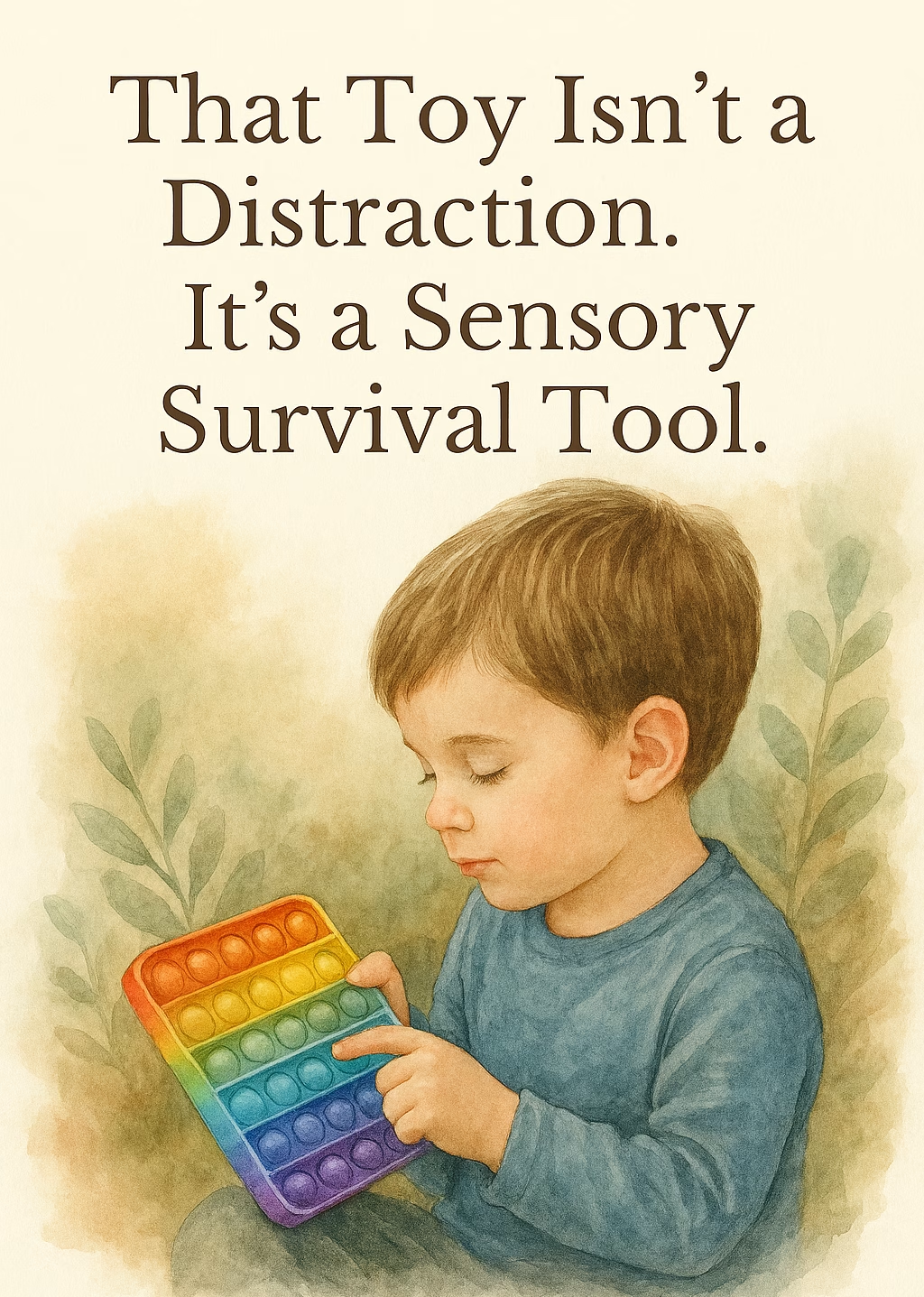
That Toy Isn’t a Distraction. It’s a Sensory Survival Tool.
That Toy Isn’t a Distraction. It’s a Sensory Survival Tool in Disguise. You know that one toy your child won’t let go of?The one they drag from room to room like a beloved sidekick, sleep with under their pillow, and clutch during meltdowns?The one you’ve considered hiding just to get a break? Yeah. That toy. What if it’s not just a toy?What if it’s their Sensory Survival Tool in disguise? Nolan’s Story: Scout the Sensory Sidekick When my son Nolan was three, his constant companion was a LeapFrog My Pal Scout.He brought it everywhere—the grocery store, the park, even to the bathroom (yes, really).He’d press the music and sound buttons on repeat, creating a rhythm that soothed him when the world felt too loud.Scout wasn’t just a toy.He was Nolan’s Sensory Survival Tool—his bedtime buddy, his transition anchor, his emotional translator. And when I finally saw Scout that way, everything changed.I stopped trying to “phase him out” and started honoring him as part of Nolan’s regulation toolkit. If your days feel like a sensory rollercoaster, you might love The Sensory Breakthrough That Changed Our Days—After Years of Struggle. It’s raw, hopeful, and full of practical pivots. What You See: A squishy fidget, a worn-out stuffed animal, a spinning top, a chewed-up straw. What’s Really Happening: Your child is using that object to self-soothe, stay grounded, and regulate their nervous system—especially in moments when the world feels too fast, too loud, or too unpredictable. Sensory Sidekick Profiles Let’s reframe these beloved objects as heroes in disguise: Sidekick Name Superpower Sensory Survival Tool Type Squishmallow the Brave Calms transitions and bedtime jitters Tactile + Emotional Chewy the Wise Oral input master, defender of focus Oral + Emotional Spinnerella Queen of vestibular calm and movement spells Vestibular + Visual Scout the Steady Audio rhythm regulator, sleep whisperer Auditory + Emotional Want to go deeper into sensory-seeking behavior? The Truth About Sensory-Seeking Kids: How to Support Their Behavior is a must-read. Is It a Toy or a Tool? (Mini Quiz) If you’re wondering whether your child’s favorite object is a Sensory Survival Tool, ask yourself: Do they reach for it during transitions or stress? Does it help them focus, calm down, or fall asleep? Is it used repetitively (spinning, squeezing, chewing, pressing buttons)? Do they panic when it’s missing? If you checked 3 or more, congratulations—you’ve got a Sensory Sidekick on your hands. And if your mornings feel like meltdown mode before coffee, How to Recover When the Day Starts in Meltdown Mode might be your new lifeline. What You Can Do Instead: Honor it. Let it be part of their toolkit. Observe it. What need is it meeting—touch, movement, oral input, sound? Support it. Offer similar tools if needed, but don’t rush the swap. Reframe it. Say, “This helps them regulate,” instead of “They’re obsessed.” If your child regulates through sound, rhythm, or repetition, Signing Time offers gentle, engaging ways to build communication through music and movement. It’s more than language—it’s regulation in disguise. Need help building a sensory-friendly morning? The Best Morning Routine for Kids with Sensory Processing Challenges has gentle, doable ideas. Adult Reframe: What’s Your Sensory Survival Tool? Let’s be honest—grown-ups have them too.Coffee mugs, weighted blankets, playlists, gum, that one hoodie you wear when life feels hard.Sensory needs don’t disappear with age. They just get rebranded. Feeling overstimulated lately? Feeling Burned Out? A Survival Guide for Overstimulated Moms might be the hug-in-blog-form you didn’t know you needed. Want to turn regulation into ritual? Art of Tea makes sensory-friendly tea time feel like a warm hug in a mug. It’s our go-to for calming transitions and cozy connection. The Parenting Shift That Changes Everything This isn’t about letting go of boundaries—it’s about letting go of shame.When we stop seeing sensory tools as distractions, we start seeing our kids as wise, resourceful, and deeply attuned to their own needs. And honestly? That’s the kind of parenting shift that changes everything. If your whole family feels sensitive lately, What Happens When Everyone’s Sensitive? A Real-Life Survival Guide to Highly Sensitive Parenting and Emotional Family Life might help you feel less alone. Coming Soon: Sensory Wisdom in Disguise Series This post is part of a new series uncovering everyday regulation strategies hiding in plain sight.Stay tuned for: Why pacing isn’t misbehavior—it’s movement regulation The magic of chewing gum and crunchy snacks How repetitive speech can be a calming loop Why lining up toys might be emotional architecture And if you’re craving beauty and calm in your week, Turn Tea Time into a Weekly Ritual of Beauty: Art, Poetry & Music Made Simple is a gentle place to start. Share the Reframe Next time you trip over that toy, pause.It might be the very thing helping your child hold it together. Share this post with a parent who needs the reminder: Regulation doesn’t always look like calm—it often looks like play. Lindsey’s Picks: Gentle Tools for Real-Life Regulation Signing Time – Music, movement, and emotional connection for sensory-seeking kids My Pal Scout on Amazon – Nolan’s beloved auditory Sensory Survival Tool Art of Tea – Cozy blends for sensory rituals and parent self-care