
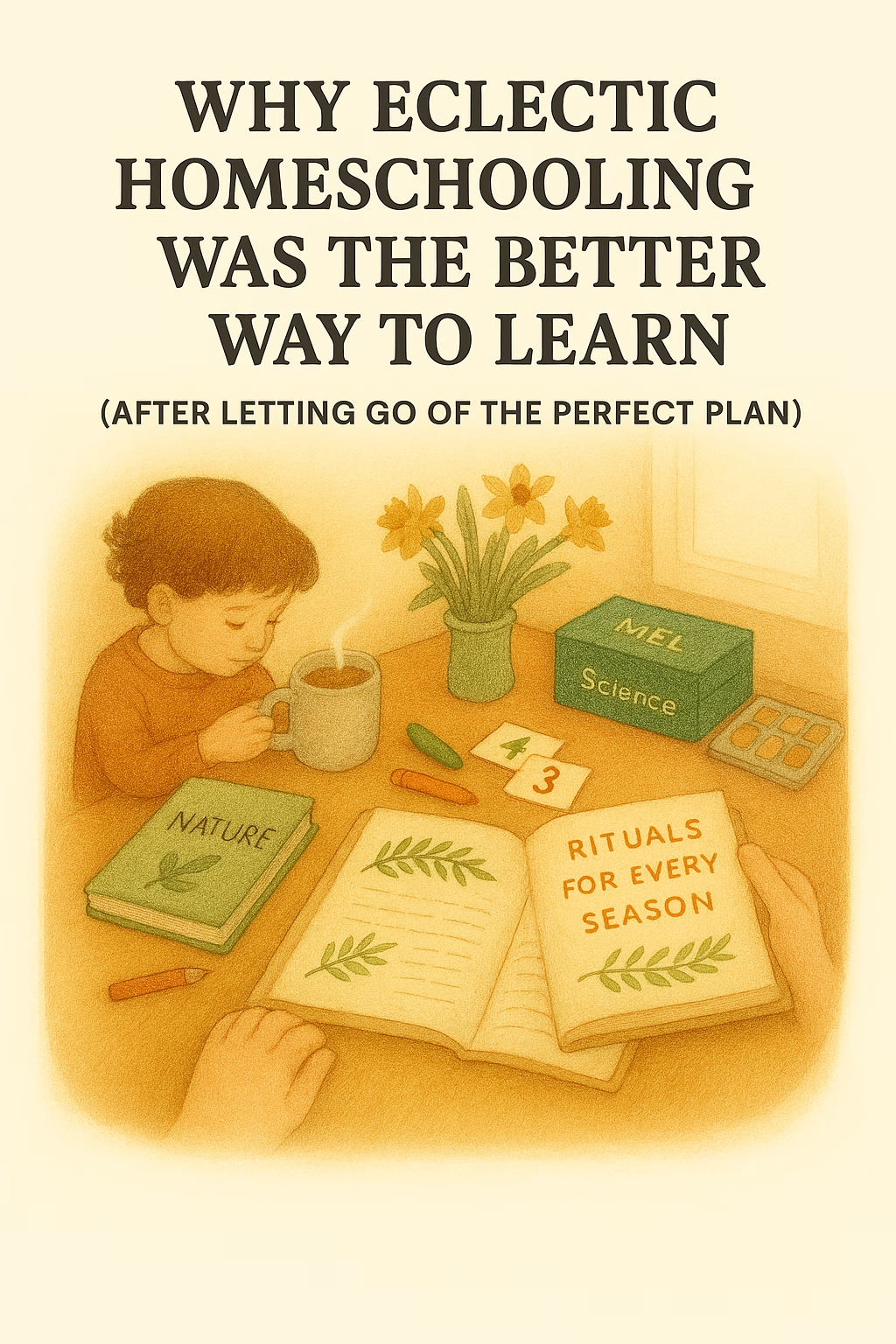
Why We Pivoted to Eclectic Homeschooling And Why It’s the Best Thing We’ve Ever Done for Our Sanity, Our Kids, and Our Coffee Budget Let me paint you a picture:It’s 8:07 a.m. I’m clutching a lukewarm mug of Cafe Borbone espresso, trying to coax my child through a worksheet that was clearly designed by someone who’s never met a sensory-seeking six-year-old. There are tears. There’s a rogue glitter explosion. There’s me, Googling “Can homeschool moms just…quit?” Spoiler: I didn’t quit.I pivoted—to something more flexible, more joyful, and far more sustainable: eclectic homeschooling. The Myth of the “Perfect Curriculum” When we started homeschooling, I did what every well-intentioned, slightly panicked mom does:I bought the box. The one with the scripted lessons, the color-coded schedule, and the promise that if I followed it to the letter, my child would magically become a well-rounded academic prodigy who also speaks Latin.But here’s the thing:My child is not a box.And neither am I.We tried. We really did. But the more we forced ourselves into someone else’s mold, the more disconnected we felt—from each other, from learning, and from the joy that brought us to homeschooling in the first place.If you’ve ever felt this way, you might love The Truth About Homeschooling: What No One Tells You at First or 10 Real-Life Homeschool Burnout Signs (It’s Not About the Curriculum). You’re not alone—and you’re not doing it wrong. Enter: Eclectic Homeschooling Eclectic homeschooling isn’t a curriculum. It’s a mindset.It’s the moment you realize that learning doesn’t have to look like school to be meaningful.It’s the freedom to say: “We’re skipping math today because the snow is perfect for tracking animal prints.” “We’re reading graphic novels because they actually get finished.” “We’re learning biology through baking because mitochondria are cool, but cookies are cooler.” It’s not chaos. It’s custom.And it’s exactly what our family needed. If you’re curious about how this compares to other methods, Popular Homeschooling Methods Explained: From Charlotte Mason to Eclectic breaks it down beautifully. Why We Made the Switch Here’s what pushed us over the edge (in the gentlest, most growth-oriented way possible): Neurodivergence doesn’t follow a script.My child needed flexibility, sensory breaks, and space to learn in spirals—not straight lines. Eclectic homeschooling let us honor that. If you’re parenting a sensitive or neurodivergent child, Neurodivergent Homeschooling Made Simple and How to Help Sensitive Kids Learn: 7 Brain-Based Shifts for Focus, Regulation, and Healing are must-reads. You can also explore my Autism Support Favorites for tools that actually help. Connection > Completion.We stopped chasing checkboxes and started chasing curiosity. Our relationship improved. So did our retention. For a deeper look at how autonomy and regulation show up in everyday moments, The Parenting Breakthrough Hidden in a Sock Refusal might surprise you. And if you’re looking for a social-emotional curriculum that actually works, Training Aliens is our favorite for building real-life skills with humor and heart. Healing requires room to breathe.Rigid schedules were triggering. Eclectic homeschooling gave us permission to slow down, recalibrate, and prioritize emotional safety. If you’re navigating sensory challenges, The Sensory Breakthrough That Changed Our Days and That Toy Isn’t a Distraction. It’s a Sensory Survival Tool are gentle reminders that healing often looks “weird”—and that’s okay. For low-tox swaps that support regulation, check out my Staples for a Low-Tox Home. I wanted to enjoy my kids again.Not just survive the day. Not just “get through the curriculum.” I wanted to laugh, explore, and remember why we chose this path. If you’re craving more joy and less burnout, You’re More Than a To-Do List: Join the 30-Day Ritual Reset and my Mama Reset Rituals shelf are cozy invitations to come back to yourself. What Eclectic Homeschooling Looks Like for Us Yes, we still have structure.Yes, we still cover core subjects.No, we don’t just “unschool” (though we borrow from it often). Here’s our eclectic secret sauce: A weekly rhythm that flexes with our energy A mix of unit studies, nature-based learning, and child-led projects Science through storytelling, history through play, and math through movement Tea Time for connection, regulation, and sneaky literacy wins Occasional printable chaos, because I’m still me We curate. We adapt. We pivot again when needed.And we’ve never felt more aligned. Curious about how we teach history gently? Honest History and Pandia Press are our go-to’s for inclusive, story-rich resources.Want to see how we turned Tea Time into a weekly ritual of beauty? Tea Time Together, paired with Art of Tea, is our favorite way to make learning feel sacred.Need a reading program that actually works for sensitive kids? All About Learning Press and Grammar Galaxy have been game-changers.For spelling and phonics with a brain-based twist, Logic of English is worth every penny.And for science that feels like magic? MEL Science is hands-on, engaging, and sensory-friendly. Who Eclectic Homeschooling Is For If you’re a parent who’s tried All The Things and still feels like something’s missing…If your child is sensitive, spirited, or simply doesn’t fit the mold…If you’re craving a homeschool that feels like home, not a performance… Eclectic homeschooling might be your permission slip, too. And if you’re wondering how DNA fits into all this?Let’s just say His DNA Didn’t Just Explain Him—It Transformed Me and Sensitive Kids Aren’t Broken—These DNA Markers Helped Me See Why were game-changers.You can also explore Global Healing and Mito Red Light for tools that support cellular healing and regulation.And don’t miss What Your Child’s DNA Might Be Trying to Tell You—because sometimes the answers are hiding in plain sight. Final Thoughts (and a Pep Talk) You don’t have to earn your way into this approach.You don’t need a Pinterest-worthy plan or a degree in educational theory.You just need the courage to say:“This isn’t working. Let’s try something that might.” And if you’re scared to pivot?That’s okay.I was, too. But now?Now we have joy.We have connection.We have a homeschool that fits us—not the other way around. So, here’s your nudge, friend:If your homeschool feels heavy, maybe

You’re More Than a To-Do List: Join the 30-Day Ritual Reset for Moms Who Need a Minute
You’re More Than a To-Do List: Join the 30-Day Ritual Reset for Moms Who Need a Minute Let’s be honest:Motherhood is a full-contact sport.You’re the snack curator, meltdown negotiator, laundry archaeologist, and emotional support human for everyone in the house. And somewhere between the third reheated coffee and the 47th “Mommmm!” of the day… you forget what it feels like to be you. Sound familiar? If you’ve ever looked in the mirror and thought,“Wow. I used to have hobbies. And cheekbones,”this is for you. I created the 30-Day Ritual Reset because I was tired of waiting for a magical season of rest to arrive. Spoiler: it never does.So instead of booking a retreat in Bali (tempting), I built a reset I could do in my own bathroom—door locked, kids hollering, and me pretending not to hear for five sacred minutes. What Is the 30-Day Ritual Reset? It’s a gentle, printable invitation to reconnect with yourself—physically, emotionally, and spiritually—through tiny, doable rituals that actually fit into real life.No guilt. No glittery perfection. Just grace, momentum, and a free checklist to keep you going. And yes, it’s totally free. Because moms deserve care without a paywall. Why the 30-Day Ritual Reset Works (Even If You’re Tired, Touched Out, and Overwhelmed) Unlike most self-care lists that feel like a second job, this reset is designed to: Spark joy and sensory refreshment in under 10 minutes Calm your nervous system without needing a yoga mat or silence (ha!) Rebuild your inner voice with compassion, not criticism Help you feel like a woman again—not just a walking to-do list Create micro-moments of celebration, connection, and actual fun It’s not about becoming a new person.It’s about remembering the one who’s been here all along. What You’ll Do (But More Importantly, What You’ll Feel) Week 1: Physical Refresh & Sensory Care→ Feel seen. Tended to. Like you exist outside of Goldfish crumbs and grocery lists.→ A few favorites that help me feel grounded: a warm cup of Art of Tea, a few minutes under my Mito Red Light, and a soft robe from my ShopMy Ritual Shelf. Week 2: Grounding & Emotional Anchoring→ Feel calm. Present. Like your body is a place you can safely live in again.→ Related reads:• How to Recover When the Day Starts in Meltdown Mode• Feeling Burned Out? A Survival Guide for Overstimulated Moms Week 3: Self-Compassion & Inner Voice→ Feel heard. Validated. Like you’re allowed to rest without earning it.→ Related reads:• What Happens When Everyone’s Sensitive? A Real-Life Survival Guide to Highly Sensitive Parenting and Emotional Family Life• Little Letters, Big Spirit: Raising a Child Who Defied Expectations Week 4: Joy, Connection & Celebration→ Feel alive. Reconnected. Like you’re not just surviving—you’re allowed to sparkle.→ Related reads:• Turn Tea Time into a Weekly Ritual of Beauty: Art, Poetry & Music Made Simple• How We Finally Enjoyed Vacation with Food Allergies—No Stress, Just Magic Ready to Reset? I made you a cozy, printable checklist with all 30 rituals—so you can follow along, check things off, and feel like a human again.You don’t need a babysitter. You don’t need a budget. You just need a little intention and a lot of grace. Download the Free 30-Day Ritual Reset Checklist I’ll be starting my own reset on September 1st—and sharing the journey on Instagram.If you want to see how it looks in real life (yes, with messy counters and real emotions), come follow along. I’ll be posting daily reflections, tiny wins, and honest moments that remind us we’re not alone. Follow @PrairieEmberAdventures on Instagram Because you deserve more than survival mode.You deserve to feel like you. Let’s reset together. I’ll be right here, cheering you on—with dry shampoo in my hair and someone always asking for a snack. With love and a whole lot of empathy,LindseyFounder of Prairie Ember P.S. If you’re looking for gentle tools to support your reset—like sensory-friendly favorites, calming teas, or cozy little upgrades—I’ve gathered my go-to picks in one place. Check out my Mama Reset Rituals shelf on ShopMy for everything I actually use and love. 🌿 Mama Reset Rituals Shelf These are the cozy, sensory-friendly favorites I actually use—perfect for supporting your 30-Day Ritual Reset with warmth, calm, and a little sparkle.
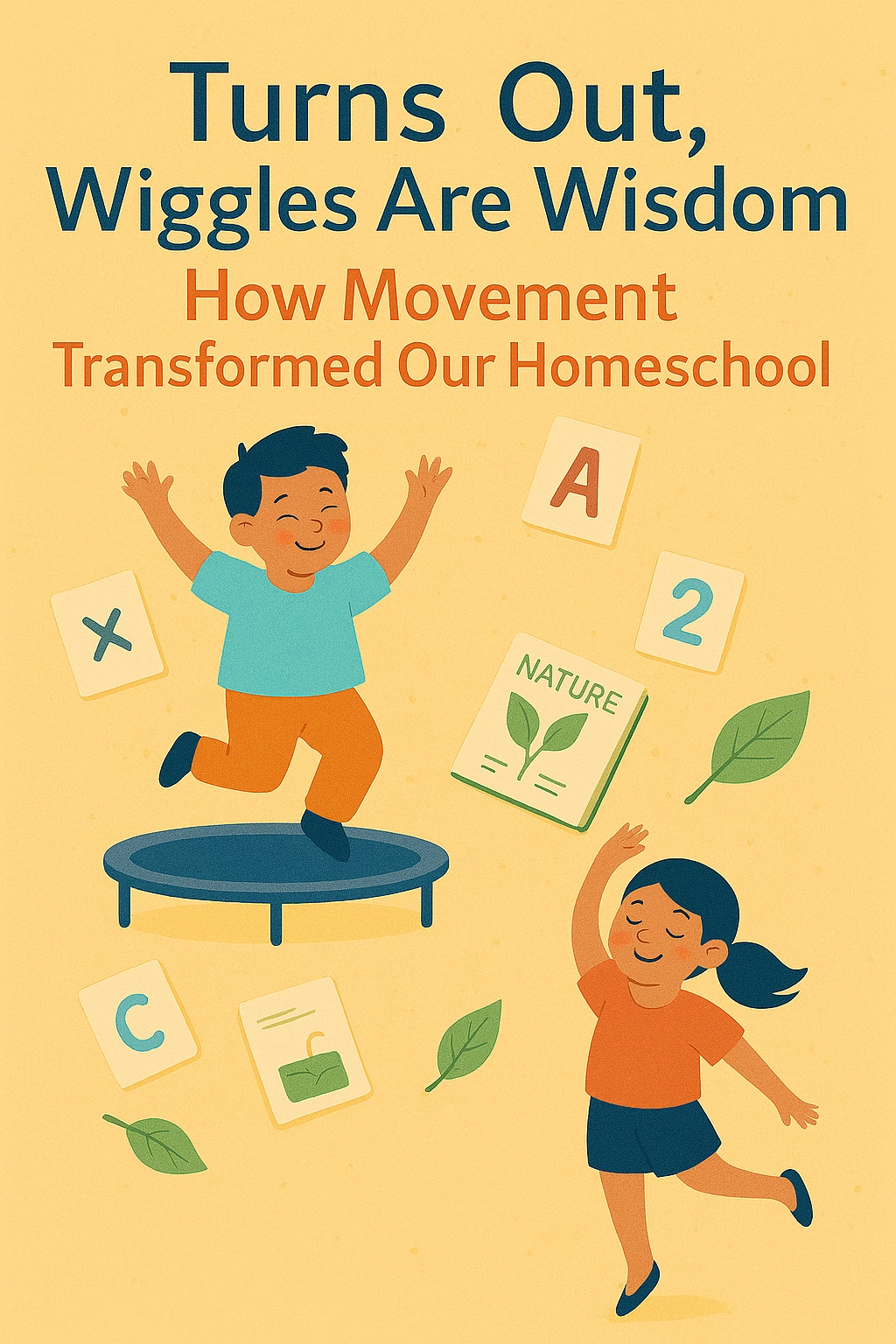
Turns Out, Wiggles Are Wisdom: How Movement Transformed Our Homeschool
The Surprising Link Between Movement and Memory in Our Homeschool If you’ve ever watched your child bounce, spin, wiggle, or cartwheel their way through a spelling lesson and thought, “Is this even working?”—you’re not alone. I used to think learning required stillness. Quiet. Focus. A desk. Preferably with matching pencils. But then I met my actual child. And suddenly, our homeschool looked a lot less like a classroom and a lot more like a sensory gym. What surprised me most? The more we embraced movement, the more we remembered. Related: The Parenting Breakthrough Hidden in a Sock Refusal: Autonomy, Regulation, and Real Connection Movement Isn’t a Distraction—It’s a Brain Booster Here’s what the science says (and what our lived experience confirms): movement activates the brain. Physical activity increases blood flow, boosts neurotransmitters, and strengthens neural connections—especially in areas tied to memory and executive function.For sensitive or neurodivergent kids, movement isn’t optional. It’s regulation. It’s access. It’s the key that unlocks learning.Movement helps kids process information, regulate emotions, and build confidence—all while making learning feel less like a chore and more like a dance.Related: How to Help Sensitive Kids Learn: 7 Brain-Based Shifts for Focus, Regulation, and HealingRelated: Why “Weird” Calming Behaviors Are Actually Totally Normal What This Looks Like in Real Life Here’s how movement shows up in our homeschool—sometimes planned, sometimes spontaneous, always powerful: Spelling words while hopping on one foot Math facts on the trampoline History narration while pacing the hallway Grammar review during a nature walk Flashcards taped to the wall for a movement-based scavenger hunt And yes, sometimes we do phonics in pajamas while rolling around on the floor. Because that’s where the movement magic happens. Related: That Toy Isn’t a Distraction. It’s a Sensory Survival ToolRelated: The Sensory Breakthrough That Changed Our Days—After Years of Struggle Sensory Profiles as Learning Styles (Or: Why My Kid Solves Fractions While Hanging Upside Down) Let’s break it down with a little sensory sass—and a whole lot of movement: The Heavy-Work Hero (Proprioceptive Seeker)These kids crave deep pressure and resistance. Think pushing, pulling, lifting, climbing. Give them a weighted vest or a laundry basket full of books, and suddenly they’re reciting multiplication tables mid-movement like it’s their job. The Dizzy Dancer (Vestibular Lover)These learners thrive on movement that challenges balance—spinning, swinging, bouncing. They might memorize spelling words while twirling or recall history facts mid-cartwheel. Yes, it looks chaotic. No, it’s not random. The Gentle Floater (Tactile Avoider)These kiddos prefer soft, slow, predictable movement. Think stretching, swaying, rocking. They might do best with yoga-style learning breaks or quiet walks while reviewing flashcards. Calm movement = clear brain. Related: The Truth About Sensory-Seeking Kids: How to Support Their BehaviorRelated: The Best Morning Routine for Kids with Sensory Processing Challenges Movement as a Healing Modality Most posts stop at “movement helps memory.” But in our home, movement does more than boost retention—it rewires stress responses, supports trauma recovery, and builds emotional safety. For sensitive kids, movement is how the body says, “I’m safe now.” It’s how we move through frustration. How we reconnect after a meltdown. How we build trust, one wiggle, bounce, or stretch at a time. Related: From Meltdowns to Methylation: The Year Everything ChangedRelated: The Year Everything Was Changing: Autism, Covid, and Unexpected HealingRelated: When the Doctor Said “He’s Fine”—But My Heart Knew Better About Autism Tea Time Tie-In Tea Time isn’t just cozy—it’s kinetic. We sip, we sign, we sway. We stretch before stories and dance between activities. Movement is woven into every moment, because learning lives in the body, too.Sometimes we even do ASL signs while walking laps around the living room. It’s not a curriculum—it’s a rhythm. One that honors regulation, connection, and joyful movement.Related: Turn Tea Time into a Weekly Ritual of Beauty: Art, Poetry & Music Made SimpleRelated: Little Letters, Big Spirit: Raising a Child Who Defied Expectations Weird But True: 5 Times Movement Saved Our Homeschool Spelling drills while sweeping the kitchen Reciting poetry while bouncing a yoga ball Memorizing planets while walking backwards Solving math while dancing to ABBA Reviewing grammar while hanging upside down (yes, really) If it sounds wild, it probably worked. Movement isn’t just tolerated here—it’s celebrated. Related: From Frustration to Focus: Using Learning Styles in Our HomeschoolRelated: Surprise Science: What Happens When You Skip the Curriculum but Not Curiosity Tools That Helped Us Move and Remember These affiliate favorites made movement-based learning easier, cozier, and more effective: MEL Science – Hands-on experiments that get kids moving and thinking All About Learning Press – Multisensory reading and spelling curriculum Grammar Galaxy – Language arts with built-in movement and humor Training Aliens – Social skills with sensory-friendly pacing Logic of English – Phonics meets brain science Pandia Press – Story-rich science and history that invites exploration Signing Time – ASL resources that pair movement with meaning Art of Tea – For the post-lesson wind-down Cafe Borbone – Because sometimes, mama needs espresso to keep up Shop My Shelves – Autism Support Favorites, Mama Reset Rituals, and Low-Tox Staples Related: Want to Help Your Child Feel Better? Start with What Goes In and On Their BodyRelated: Homeschool Mom Self-Care That Actually Works (Free Download) What I Wish I’d Known Sooner Stillness isn’t the goal. Learning is. And for our family, movement is the bridge between the two.So, if your child is bouncing through a lesson, don’t panic. You might be witnessing a breakthrough. One that starts in the body and blooms in the brain—through movement, connection, and trust.Related: Sensitive Kids Aren’t Broken—These DNA Markers Helped Me See WhyRelated: His DNA Didn’t Just Explain Him—It Transformed Me: A New Way to HomeschoolRelated: I Was Losing My Son to Autism—Then DNA Testing Showed Me How to Bring Him Back Gentle Disclaimer I’m not a healthcare professional, and this post isn’t medical advice. It’s a heart-centered reflection based on lived experience, science-informed parenting, and the stories of sensitive families I’ve had the honor to learn from. If you’re concerned about your child’s learning
The Parenting Breakthrough Hidden in a Sock Refusal: Autonomy, Regulation, and Real Connection
The Sock Refusal Wasn’t About Clothing—It Was About Control Sensitive kids often struggle with sensory input, yes. But sometimes, the issue isn’t texture—it’s autonomy. Nolan wasn’t just rejecting socks. He was asserting agency. He was saying, “I know my body. I know what feels right. And I need you to trust me.”Once I stopped trying to override that voice, everything shifted. The meltdowns eased. The mornings softened. And I realized: autonomy isn’t a luxury. It’s regulation. That moment marked the beginning of a parenting breakthrough I didn’t know I needed. Related reading:→ The Truth About Sensory-Seeking Kids: How to Support Their Behavior→ Why “Weird” Calming Behaviors Are Actually Totally Normal Parenting in North Dakota, Remembering Texas Back when we lived in Texas, Nolan’s bare feet weren’t defiance—they were a declaration: “I know what I need.” He wanted joy, but the path to it—socks and shoes—was too overwhelming. Some days, he chose to stay home.Now, years later in North Dakota, where winter lasts nine months and socks are practically a survival tool, I still think about those barefoot days often. Because that kind of clarity—knowing what you need and honoring it—is something I’m still learning to cultivate in myself. That early sock refusal wasn’t just a sensory struggle—it was the spark of a parenting breakthrough that continues to shape how I show up for my kids. Related reading:→ Trading Chaos for Calm: How North Dakota Gave Us a New Life What I Learned (That Has Nothing to Do with Footwear) Control isn’t the enemy—coercion is. Sensitive kids thrive when they feel safe, not when they feel forced. Autonomy builds trust. When I honored Nolan’s choices, he became more open to collaboration. Regulation starts with respect. The more I respected his body cues, the more regulated he became. The socks were just the symptom. The real issue was power, safety, and the need to be heard. This wasn’t just a parenting adjustment—it was a parenting breakthrough. One that taught me to trade control for connection, and urgency for understanding. Further reading:→ How to Help Sensitive Kids Learn: 7 Brain-Based Shifts for Focus, Regulation, and Healing→ That Toy Isn’t a Distraction. It’s a Sensory Survival Tool→ The Sensory Breakthrough That Changed Our Days—After Years of Struggle Why This Matters When we honor autonomy, we don’t just avoid meltdowns—we build connection. We teach our kids that their voice matters. That their body belongs to them. That safety isn’t about compliance—it’s about trust.And that lesson? It’s bigger than socks. It’s the foundation of healing-centered parenting—and one of the most unexpected parenting breakthroughs I’ve ever had. Related post:→ What Happens When Everyone’s Sensitive? A Real-Life Survival Guide to Highly Sensitive Parenting and Emotional Family Life→ Feeling Burned Out? A Survival Guide for Overstimulated Moms Socks as a Metaphor for Control Socks became our metaphor for control. Some days they fit. Some days they didn’t. But every day, they reminded me that parenting isn’t about covering up discomfort—it’s about walking beside it.And sometimes, the bravest thing we can do is let our kids walk barefoot. That’s where the real parenting breakthroughs begin. Want to go deeper?→ Sensitive Kids Aren’t Broken—These DNA Markers Helped Me See Why→ His DNA Didn’t Just Explain Him—It Transformed Me: A New Way to Homeschool→ I Was Losing My Son to Autism—Then DNA Testing Showed Me How to Bring Him Back Affiliate Favorites That Helped Us Heal Here are a few tools and programs that supported our journey—from sensory struggles to science-informed healing: MEL Science – Hands-on experiments that spark curiosity and regulation All About Learning Press – Gentle, multisensory reading and spelling curriculum Grammar Galaxy – Playful language arts for quirky thinkers Training Aliens – Social skills with humor, heart, and neurodivergent respect Logic of English – Phonics meets brain science Pandia Press – Secular, story-rich science and history Honest History – Magazines that make big ideas feel personal Signing Time – ASL resources that empower communication Tea Time Together – Our signature ritual for connection and calm Art of Tea – Organic blends that soothe overstimulated moms Cafe Borbone – Because sometimes, healing starts with espresso Mito Red Light – Gentle red light therapy for cellular support Gentle Disclaimer I’m not a healthcare professional, and this post isn’t medical advice. It’s a heart-centered reflection based on lived experience, science-informed parenting, and the stories of sensitive families I’ve had the honor to learn from. If you’re concerned about your child’s behavior, trust your instincts and reach out to a qualified provider who respects your child’s unique wiring. Some links in this post are affiliate links, which means I may earn a small commission—at no extra cost to you—if you choose to make a purchase. I only share products I genuinely love and use in my own healing-centered home. Let’s Connect If this post made you laugh, cry, or finally stop Googling “why won’t my child wear socks,” come say hi. I share more sensory-friendly insights, gentle parenting tips, and real-life moments over on Instagram @prairieemberadventures. Or drop a comment below. I read every one—especially the ones about sock drama. More from the healing journey:→ Before the Diagnosis: The Fight That Changed Our Future→ The Year Everything Was Changing: Autism, Covid, and Unexpected Healing→ From Meltdowns to Methylation: The Year Everything Changed→ What Your Child’s DNA Might Be Trying to Tell You (And How to Decode It Without Crying Into Your Tea)

Why “Weird” Calming Behaviors Are Actually Totally Normal
Why “Weird” Calming Behaviors Are Actually Totally Normal (And Often the Smartest Thing a Sensitive Brain Can Do) Let’s talk about the pacing. The gum chewing. The crunchy snack obsession. The endless loops of “It’s Tuesday, it’s Tuesday, it’s Tuesday.” The toy lineup that looks suspiciously like a miniature traffic jam. If you’ve ever watched your child do something that seems odd, repetitive, or downright confusing—and wondered, “Is this normal?”—you’re not alone. And here’s the good news: not only are these behaviors normal, they’re often necessary. Sensitive kids (and let’s be honest, sensitive grown-ups too) use these strategies to regulate their nervous systems, process emotions, and create a sense of safety in a world that often feels too loud, too fast, or too unpredictable. So, let’s break down why these behaviors aren’t just okay—they’re brilliant. 1. Tiny Brain Truths (aka: Science Without the Snooze) These behaviors aren’t random—they’re rooted in biology. Here’s the fun-sized science behind them: Pacing activates the vestibular system (your body’s internal GPS), helping kids calm down and focus. Chewing stimulates deep pressure receptors in the jaw, sending “you’re safe” signals to the brain. Repetitive speech engages rhythm centers that soothe the amygdala (the brain’s alarm bell). Lining up toys creates visual order, which helps organize emotional chaos. Basically, your child is a tiny nervous system ninja. And these behaviors? They’re their toolkit. Further reading:→ How to Help Sensitive Kids Learn: 7 Brain-Based Shifts for Focus, Regulation, and Healing→ Sensitive Kids Aren’t Broken—These DNA Markers Helped Me See Why We love MEL Science for hands-on experiments that support sensory regulation and curiosity. Grammar Galaxy and All About Learning Press are gentle, flexible options for kids who thrive on rhythm and repetition. 2. What It Looks Like at Different Ages These calming behaviors show up across the lifespan, often in beautifully adaptive ways: Toddlers: Rocking, spinning, chewing, echoing phrases Preschoolers: Toy lineups, snack rituals, repetitive storytelling School-age kids: Pacing while thinking, scripting conversations, tapping or chewing gum Teens & adults: Fidgeting, walking laps, looping music, crunchy food cravings If you’ve ever hummed while folding laundry or taken a walk to clear your head—you’ve used the same toolkit. Sensitive brains don’t outgrow these strategies. They refine them. Signing Time is a beautiful way to support communication and rhythm for little ones who regulate through repetition. Training Aliens is our favorite social skills program for kids who need structure with a side of silliness. 3. Quick Reference Chart: What It Is, What It Does, How to Help Print it. Share it. Tape it to your fridge. It’s your new “what’s actually happening” decoder ring. Pacing What it is: Walking back and forth, often during thinking or transitions What it does: Activates the vestibular system to support focus and emotional regulation How to help: Offer space to move, avoid forcing stillness, and validate the rhythm Chewing What it is: Gum, crunchy snacks, chewable jewelry, or constant nibbling What it does: Stimulates deep pressure receptors in the jaw, sending calming signals to the brain How to help: Provide safe chew options and honor snack rituals as regulation tools Repetitive Speech What it is: Echoing phrases, looping words, or scripting conversations What it does: Engages rhythm centers and anchors the brain during stress or learning How to help: Listen without interrupting, mirror their tone, and use it as a cue for support Lining Up Toys What it is: Arranging objects in rows, patterns, or categories What it does: Creates visual order to organize emotional chaos How to help: Resist the urge to “fix” it—ask what they’re building and join their world Related post:→ That Toy Isn’t a Distraction. It’s a Sensory Survival Tool Pandia Press and Logic of English offer open-and-go options that honor your child’s pacing and sensory needs. Honest History is perfect for curious kids who crave depth and story-based learning. 4. When to Be Curious (Not Alarmed) Most of these behaviors are healthy, adaptive, and even brilliant. But if you’re noticing any of the following, it might be time to gently explore further: The behavior causes distress or interferes with daily life Your child seems stuck, overwhelmed, or unable to shift gears There’s a sudden change in behavior, mood, or developmental progress Curiosity is key. Not panic. These moments aren’t about fixing—they’re about understanding. Mito Red Light has been part of our healing toolkit—especially for calming inflammation and supporting nervous system health. You can find our Autism Support Favorites and Mama Reset Rituals on ShopMy Shelves. 5. What It’s Not (Let’s Bust Some Myths) Let’s gently unlearn a few things: Pacing is not defiance. Chewing is not distraction. Repetition is not manipulation. Lining up toys is not rigidity. These are regulation strategies. Not misbehavior. Not “bad habits.” Not something to fix. Related post:→ The Truth About Sensory-Seeking Kids: How to Support Their Behavior 6. Real-Life Moment: Josie and the Math Loop Last week, Josie repeated the same math problem about 30 times. Out loud. In a loop. It wasn’t because she didn’t understand—it was because she was trying to. Repetition helped her brain stay anchored while she worked through the steps. And once she got it? She beamed. Like she’d just solved world peace with subtraction. Related post:→ What Your Child’s DNA Might Be Trying to Tell You About Learning (And How to Listen) 7. What If We Stopped Trying to Fix It? Imagine if we stopped seeing these behaviors as problems—and started seeing them as wisdom. Your child’s pacing, chewing, repeating, and lining-up aren’t glitches in the system. They are the system. They’re how a sensitive brain says, “I’m doing my best to feel safe.” When we stop trying to fix what isn’t broken, we make space for trust. For connection. For healing. And maybe—just maybe—we start to see the beauty in the rows of dinosaurs, the rhythm of repetition, the crunch of a carrot at 7 a.m. Further reading:→ From Meltdowns to Methylation: The Year Everything Changed→ I Was Losing My Son
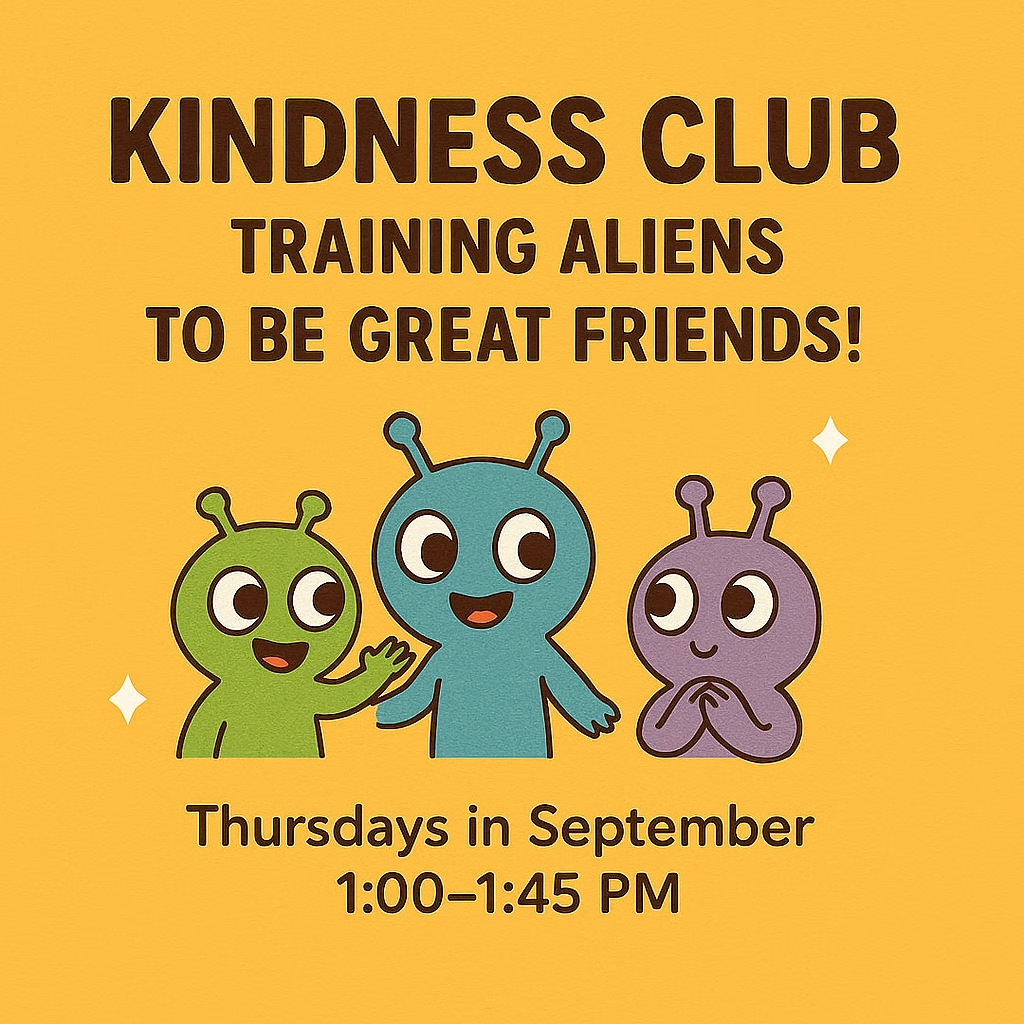
Alien Academy: Social Skills for Earthlings
Welcome to Kindness Club: Training Aliens to Be Great Friends! Join us for a playful, heart-centered social skills series designed for sensitive and curious kids. Using the Training Aliens curriculum, we’ll explore how to meet new people, listen with care, understand nonverbal cues, and respect personal space—all through imaginative play and gentle guidance. Thursdays in October 1-1:45 PM Starting October 9th Ages: 5-9 This cozy group is perfect for children who thrive with emotional attunement, clear structure, and a little bit of whimsy. Whether your child is shy, spirited, or somewhere in between, they’ll be welcomed with kindness and encouraged to grow at their own pace. Please fill out the form below to reserve your spot. Space is limited to keep the group small and supportive. Kindness Club FAQ Training Aliens to Be Great Friends What ages is this group for?This series is designed for children ages 5 to 9—a playful, sensitive stage where social-emotional skills are just beginning to bloom. What will my child learn?Over four weeks, we’ll gently explore: Meeting new people Listening with care Nonverbal communication Respecting personal space All through imaginative play, movement, and the Training Aliens curriculum. When and where does it meet?We’ll meet Thursdays in October, from 1–1:45 PM, starting October 9th. Is this a drop-off class? Yes, this is a gentle drop-off group. However, if your child needs a slower transition, we’ll work with you to make it feel safe and supported. What if my child is shy or neurodivergent?They’re absolutely welcome. This space is designed with sensitivity in mind. We honor each child’s pace and offer gentle scaffolding to help them feel safe and included. What should my child bring?Just themselves! If they have a comfort item or sensory tool they’d like to bring, that’s welcome too. What happens after the four weeks?We may offer a follow-up series or seasonal extension based on interest. You’ll be the first to know if more alien adventures are on the horizon!
How to Help Sensitive Kids Learn: 7 Brain-Based Shifts for Focus, Regulation, and Healing
🧸 Autism Support Favorites These are the gentle tools and sensory-friendly supports we use and love in our own home. Every item is curated with healing, regulation, and real-life parenting in mind. https://shopmy.us/collections/embed/2128828? This carousel includes affiliate links. If you choose to explore or purchase, I may earn a small commission—at no extra cost to you. Thank you for supporting gentle, community-rooted work. How to Help Sensitive Kids Learn: 7 Brain-Based Shifts for Focus, Regulation, and Healing Let’s be honest: most advice for “helping kids learn” feels like it was written by someone who’s never had a child scream because their sock seam was crooked. If you’re parenting or teaching a sensitive, neurodivergent, or just delightfully spicy child, you already know that healing and learning aren’t separate journeys. They’re tangled up like earbuds in a purse—frustrating, beautiful, and totally inseparable. This final post in the Teaching from the Inside Out series is your permission slip to stop chasing perfection and start making small, science-backed shifts that actually work. Not because they’re trendy. But because they honor how your child’s brain and body actually function. Because when sensitive kids learn in ways that support their biology, everything changes. Ready to rethink learning from the inside out? Let’s dive in. 1. Magnesium Before Math Forget flashcards. If your child’s nervous system is fried, no amount of repetition will stick. Magnesium-rich baths (think Epsom salts or magnesium flakes) can calm the stress response, support GABA production, and make learning feel less like climbing a mountain in flip-flops. Real-Life Shift: Josie’s StoryLast Tuesday, Josie was spiraling over subtraction. I skipped the worksheet, ran a warm magnesium bath, and handed her a measuring cup. Twenty minutes later, she was calculating water volume like a tiny hydrologist. Healing first. Learning second. It works. Why This Works:Magnesium helps regulate the HPA axis (your stress-response system). When that’s soothed, executive function improves—and suddenly, sensitive kids learn with less resistance and more joy. We love magnesium flakes for bath time, and you’ll find them in my Autism Support Favorites shelf. 2. Movement Is Medicine Sensitive kids often have genetic variants (like GAD1 or COMT) that make it harder to regulate stress. Movement—especially rhythmic, cross-body movement—can help metabolize excess adrenaline and support dopamine balance. Real-Life Shift:We started doing “animal walks” between subjects. Josie crab-walks to the kitchen, bear-crawls back, and giggles the whole way. Her focus afterward? Night and day. Why This Works:Movement activates the vestibular and proprioceptive systems, which help regulate mood and attention. It’s not “off-task”—it’s brain fuel. And it’s one of the fastest ways sensitive kids learn to self-regulate. For structured movement breaks, we’ve loved Signing Time’s “Move & Groove” series and Training Aliens’ social-emotional movement games. 3. DNA Is a Roadmap, Not a Sentence Genetic insights can feel overwhelming, but they’re actually empowering. Knowing your child has a MTHFR variant doesn’t mean panic—it means you can support methylation with food, movement, and gentle detox strategies. Real-Life Shift:Once I understood Josie’s MTHFR and GAD1 variants, I stopped blaming myself for her meltdowns and started supporting her biology. It changed everything. Why This Works:DNA testing reveals how your child processes stress, nutrients, and emotions. It’s not a diagnosis—it’s a flashlight in the dark. And when you support those pathways, sensitive kids learn more easily and recover faster. Related Reading: Sensitive Kids Aren’t Broken—These DNA Markers Helped Me See Why What Your Child’s DNA Might Be Trying to Tell You (And How to Decode It Without Crying Into Your Tea) His DNA Didn’t Just Explain Him—It Transformed Me: A New Way to Homeschool We also use Mito Red Light therapy for calming inflammation and supporting sleep. 4. Transitions Need a Nervous System Buffer If your child melts down during transitions, it’s not defiance—it’s dysregulation. Try adding a sensory buffer: a weighted lap pad, a calming song, or a silly countdown ritual. Real-Life Shift:We started using a “transition song” before switching activities. Josie picked it. It’s ridiculous. But now she moves from math to snack time without tears. Why This Works:Transitions trigger cortisol spikes. Predictable rituals and sensory tools help buffer the nervous system and reduce overwhelm. And when transitions feel safe, sensitive kids learn to trust the rhythm of their day. Related Reading: How to Recover When the Day Starts in Meltdown Mode The Best Morning Routine for Kids with Sensory Processing Challenge 5. Less Curriculum, More Connection You don’t need a Pinterest-perfect homeschool binder. You need eye contact, giggles, and space to follow your child’s curiosity. Connection activates oxytocin, which calms the amygdala and boosts learning retention. Real-Life Shift:We ditched the workbook and read poetry under a blanket fort. Josie asked questions about rhythm, rhyme, and why the poet used the word “moon.” That was our entire language arts lesson—and it was perfect. Why This Works:Oxytocin (the connection hormone) helps regulate stress and improve memory. Connection isn’t a detour—it’s the curriculum. And it’s often the most powerful way sensitive kids learn. Related Reading: Turn Tea Time into a Weekly Ritual of Beauty: Art, Poetry & Music Made Simple Surprise Science: What Happens When You Skip the Curriculum but Not Curiosity We use Tea Time Together’s seasonal guides and Art of Tea’s herbal blends. Grammar Galaxy and Honest History are our go-to cozy curriculum picks. 6. Resistance Isn’t Rebellion When your child refuses to “do school,” pause before assuming attitude. Often, it’s a sign their nervous system is in fight-or-flight. Look for clues: dilated pupils, clenched fists, or a sudden need to “go potty” for the fifth time. Real-Life Shift:Josie refused to write. I offered a snack, a snuggle, and a sensory bin instead. Ten minutes later, she was writing a story about a glittery dinosaur. No threats. No tears. Why This Works:Fight-or-flight shuts down the prefrontal cortex. Regulation reactivates it. Respond with safety, not shame. Because when sensitive kids learn in a regulated state, they retain more and resist less. Related Reading: That Toy Isn’t a Distraction. It’s a Sensory Survival Tool The Sensory Breakthrough That Changed

What Your Child’s DNA Might Be Trying to Tell You About Learning (And How to Listen)
How to Translate Genetic Info into Homeschool Choices From SNPs to Schedules: A DNA-Informed Guide for Sensitive Kids Who Learn Differently It started with a meltdown over math and a suspicious reaction to broccoli. Again.I wasn’t trying to become a genetic detective—I just wanted to homeschool without feeling like I was dodging emotional landmines every hour. But here’s the truth: when you’re parenting a sensitive or neurodivergent child, traditional homeschool advice often feels like trying to bake sourdough with no starter. You’ve got the ingredients, but nothing’s rising. So, what if the missing ingredient… is genetic? What if your child’s DNA holds the clues to a homeschool that actually works? Why DNA Isn’t Just for Doctors Let’s be clear: I’m not suggesting you need a PhD to homeschool your child. But if you’ve ever wondered why your kid melts down after snack time, resists transitions like they’re personal betrayals, or short-circuits during phonics—genetic clues might explain more than you think.Because once you understand how your child’s DNA affects their ability to process vitamins, regulate neurotransmitters, and handle sensory input, you stop guessing. You start choosing curriculum, routines, and supports that fit—like a cozy sweater instead of a scratchy uniform.DNA doesn’t diagnose—it decodes. And when you decode gently, you build a homeschool that supports your child from the inside out. DNA-Informed Curriculum, Supports, and Math Matches From SNPs to Subjects—What Actually Works for Sensitive Kids Your child’s DNA can guide everything from snack choices to spelling programs. Here’s how specific genetic markers (SNPs) connect to curriculum and math recommendations that actually support learning. MTHFR – The Vitamin Landmine Daily Clues: Mood swings after vitamins, post-snack chaosCurriculum Matches: Grammar Galaxy, Pandia Press, Tea Time Together, Honest HistoryMath Recommendation: RightStart Math – hands-on, visual, and low overwhelmGentle Supports: Methylated B vitamins, low-tox snacks, cozy routinesIdeal Rhythm: Short blocks with snack breaksLearning Style Clues: Needs clean inputs and simple, clear instructions COMT – The Dopamine Traffic Cop Daily Clues: Meltdowns during transitions, surprises feel like sabotageCurriculum Matches: All About Learning Press, Logic of English, Signing Time, Tea Time TogetherMath Recommendation: Math-U-See – predictable and mastery-basedGentle Supports: Magnesium, calming tea, visual schedulesIdeal Rhythm: Predictable routines with visual cuesLearning Style Clues: Thrives with repetition and rhythm MAO-A – The Nervous System Whisperer Daily Clues: Sensory overload, bedtime battles, emotional fragilityCurriculum Matches: Training Aliens, Honest History, Signing Time, Tea Time TogetherMath Recommendation: ShillerMath – Montessori-inspired and sensory-friendlyGentle Supports: Magnesium soaks, red light therapy, sensory prepIdeal Rhythm: Slow starts with sensory prep before transitionsLearning Style Clues: Benefits from sensory integration and emotional safety DAO – The Histamine Gatekeeper Daily Clues: Rashes, tummy aches, seasonal mood swingsCurriculum Matches: Pandia Press, Tea Time Together, Honest HistoryMath Recommendation: Simply Good and Beautiful Math – gentle pacing and visual appealGentle Supports: Low-histamine diet, DAO enzyme, gentle detox routinesIdeal Rhythm: Flexible pacing with food and environment awarenessLearning Style Clues: Learns best when physical comfort is prioritized GAD1 – The Anxiety Amplifier Daily Clues: Wired but tired, anxious, can’t wind downCurriculum Matches: MEL Science, Signing Time, Tea Time Together, Training AliensMath Recommendation: Wild Math – nature-based and movement-friendlyGentle Supports: GABA support, magnesium baths, nature walksIdeal Rhythm: Movement-integrated learning with outdoor timeLearning Style Clues: Needs calm environments and gentle pacing VDR – The Sunshine Paradox Daily Clues: Low mood despite sunshine, frequent illnessCurriculum Matches: Honest History, Pandia Press, Tea Time TogetherMath Recommendation: Math Lessons for a Living Education – story-based and gentleGentle Supports: Vitamin D drops, outdoor learning, immune supportIdeal Rhythm: Morning-focused academics with nature-based afternoonsLearning Style Clues: Responds well to experiential, nature-based learning SOD2 – The Detox Defender Daily Clues: Sensitive to toxins, screen time stress, emotional reactivityCurriculum Matches: Tea Time Together, Honest History, Training AliensMath Recommendation: Life of Fred – quirky, low-pressure, and screen-freeGentle Supports: Antioxidants, red light therapy, low-tox swaps Ideal Rhythm: Low-stimulation days after screen-heavy onesLearning Style Clues: Prefers hands-on, screen-free activities MTR/MTRR – The Fog Lifters Daily Clues: Fatigue, foggy thinking, emotional fragilityCurriculum Matches: Logic of English, Tea Time Together, Pandia PressMath Recommendation: CTC Math – short lessons with flexible pacingGentle Supports: Methylated B12, folate-rich foods, slow morningsIdeal Rhythm: Alternating active and quiet tasksLearning Style Clues: Needs extra time to process and reflect Because Calm Kids Learn Better—and DNA Can Help You Get There When you understand your child’s genetic blueprint, you can build a rhythm that honors their nervous system. DNA-informed scheduling isn’t rigid—it’s responsive. Real Mom Reflection “Once I understood my son’s MTHFR mutation, snack time stopped feeling like sabotage. I swapped his vitamins, adjusted our rhythm, and suddenly math wasn’t a battlefield—it was a bridge. DNA didn’t just explain his reactions—it gave me a roadmap.” A Cozy Morning Snapshot Imagine starting the day with warm tea, a sensory-friendly story from Honest History, and a science kit from MEL Science that actually matches your child’s energy and genetic sensitivities. No more guessing. Just gentle rhythm, real learning, and fewer tears—because your homeschool is now guided by DNA-informed insight. Build Your Gentle Toolkit I’ve curated two ShopMy shelves filled with the staples that helped us most—many chosen specifically to support our child’s DNA-based needs: Autism Support Favorites – Supplements, sensory tools, and routines that made a real difference in our healing journey Cozy Low-Tox Home Staples – Simple swaps for a calmer, cleaner space—because sensitive kids often thrive in environments that feel safe and regulated These aren’t just products—they’re part of the DNA-informed toolkit that helped me move from chaos to clarity. I only share what I’ve used, loved, and would recommend to another mom in the thick of it. Gentle Action Plan: Start Small You don’t need to decode every gene or overhaul your homeschool overnight. Just start with one clue. One shift. One healing win.Maybe it’s swapping a vitamin based on your child’s MTHFR status.Maybe it’s choosing a curriculum that feels like a hug instead of a hurdle—because their COMT gene makes transitions feel like betrayal.Maybe it’s finally understanding why bedtime feels like a battleground—and how MAO-A might be involved.You’re not just homeschooling—you’re healing. And I’m here,
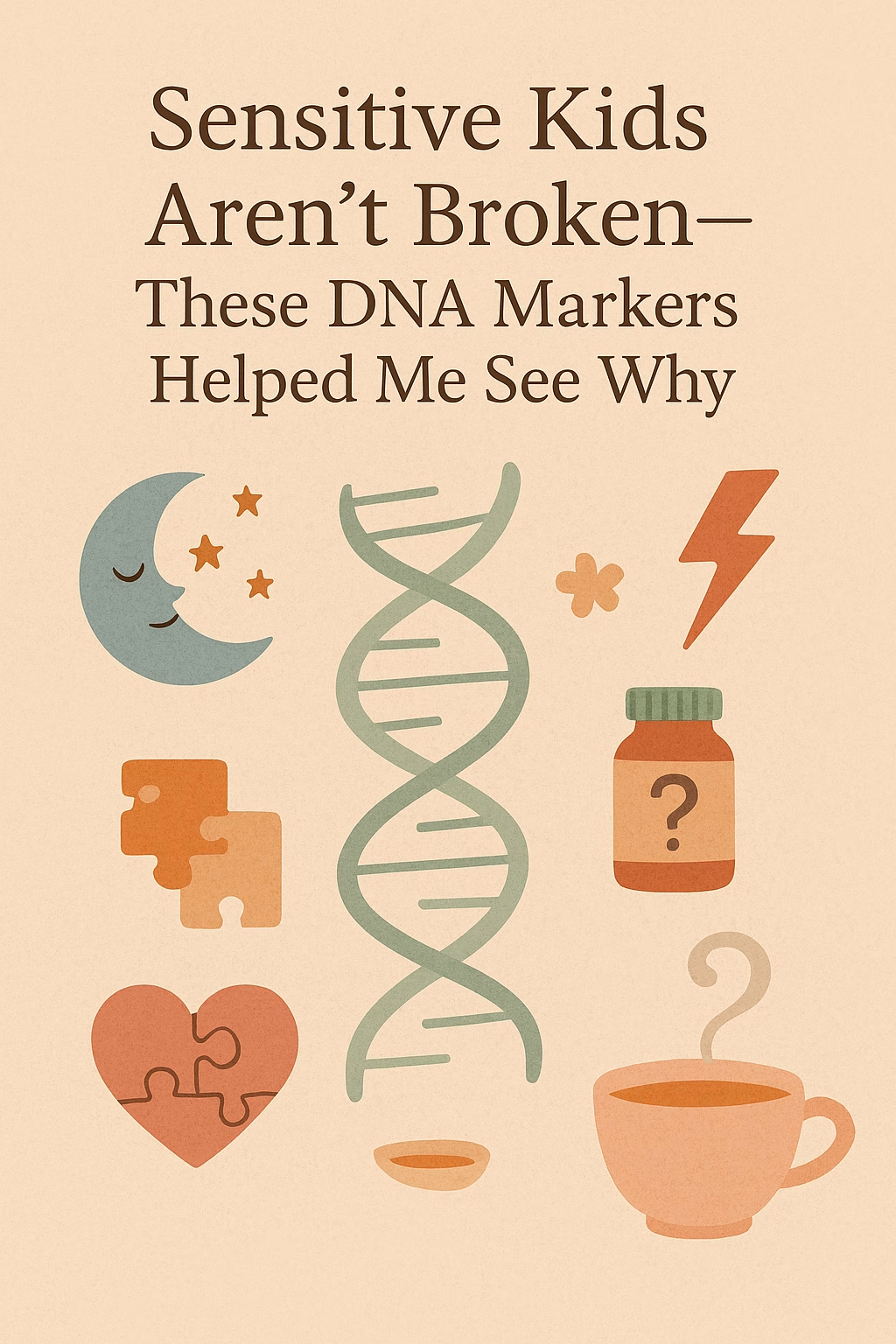
Sensitive Kids Aren’t Broken—These DNA Markers Helped Me See Why
What Markers Matter for Sensitive Kids? The DNA Clues That Help You Stop Guessing and Start Supporting It started with a Flintstones vitamin and a meltdown that felt like a crime scene. I wasn’t trying to decode DNA—I was just trying to survive snack time. My child wasn’t “just sensitive.” He was one of many sensitive kids reacting to things that made no sense on the surface: vitamins, transitions, bedtime, broccoli. And while parenting books gave me strategies, they didn’t give me answers. I needed a map. DNA testing became that map—not a diagnosis, but a decoder ring. A way to finally understand what was happening underneath the behaviors. So, if you’re parenting one of those sensitive kids who seems allergic to surprises, snack time, and sensory input, this post is for you. The Markers That Actually Matter Let’s skip the overwhelm and go straight to the good stuff. These are the SNPs (tiny DNA switches) that tend to show up in sensitive kids—and why they matter more than you think. 1. MTHFR – The Vitamin Landmine If your child reacts to synthetic folic acid like it’s a betrayal, MTHFR might be the reason. This gene affects how the body processes B vitamins—and when it’s not working well, even “healthy” foods or supplements can backfire. Think mood swings, fatigue, and post-snack chaos. Why it matters:Supporting MTHFR gently can reduce emotional volatility, improve detox, and make supplements actually help instead of hurt. Sensitive kids often benefit from methylated vitamins like those offered by Global Healing or clean options on Amazon. 2. COMT – The Dopamine Traffic Cop Slow COMT means dopamine hangs around too long. That sounds fun—until you realize it makes transitions feel like betrayal, surprises feel like sabotage, and “just go with the flow” feel like a threat. Why it matters:Understanding COMT helps you create routines that soothe instead of stress. Predictability becomes a healing tool, not just a parenting hack—especially for sensitive kids who thrive on rhythm. Tools like All About Learning Press and Grammar Galaxy offer structure without rigidity. 3. MAO-A – The Nervous System Whisperer This gene affects how your child processes serotonin and other calming neurotransmitters. When it’s anxious or overactive, bedtime becomes a battleground and sensory input feels like an ambush. Why it matters:Supporting MAO-A with magnesium, warm soaks, and gentle rituals can turn chaos into calm—without needing a full sensory overhaul. Sensitive kids often respond beautifully to sensory-friendly routines like those in Signing Time or calming teas from Art of Tea. 4. GAD1, CBS, DAO, VDR, SOD2, MTR/MTRR – The Bonus Round These genes might not be household names, but they’re often the missing pieces in sensitive kids. Here’s a visual summary to make it easy: Marker Common Clues Gentle Supports GAD1 Wired but tired, anxious, can’t wind down GABA support, magnesium, warm baths CBS Irritability after sulfur foods, headaches Low-sulfur diet, gentle detox DAO Rashes, tummy aches, seasonal mood swings Low-histamine diet, DAO enzyme VDR Low mood despite sunshine, frequent illness Vitamin D support, immune regulation SOD2 Sensitive to toxins, screen time, emotional stress Antioxidants, Mito Red Light therapy MTR/MTRR Fatigue, foggy thinking, emotional fragility Methylated B12, folate-rich foods Why These Markers Aren’t Just “Interesting” They’re actionable. They’re empowering. And they’re the difference between feeling like you’re failing… and realizing your child’s brain just needs a different kind of support. Because once you understand the why, you stop blaming yourself. You stop trying to “fix” your child. And you start building a toolkit that actually works—for sensitive kids who need compassion, not correction. Gentle Decoder’s Reflection Prompts Before you dive into testing, grab your tea and ask yourself: What patterns keep repeating in my child’s behavior or health? What do I feel in my body when those moments happen? Am I seeking clarity, confirmation, or a sense of direction? What kind of emotional support do I have if the results feel heavy? DNA testing isn’t just a purchase—it’s a perspective shift. And you deserve to enter it gently. From Confused to Confident: What You’ll Gain Fewer meltdowns after snack More peaceful transitions Better sleep (for everyone) Less guilt, more grace One “aha” moment that changes everything Sensitive kids don’t need perfect parents. They need attuned ones. And you’re already on that path. Tea Time Takeaway DNA testing isn’t about perfection. It’s about perspective. It’s about saying, “Ohhh… that’s why,” and finally feeling like you’re parenting from a place of insight, not just instinct. You don’t have to decode everything at once. You can start with one SNP, one shift, one healing win. And I’ll be here, cheering you on—tea in hand, decoder ring ready. Explore more gentle tools through Tea Time Together, Pandia Press, Honest History, and Training Aliens—each one curated for sensitive kids and the families who love them. Gentle Resources for Sensitive Kids and Cozy Homes If you’re exploring DNA testing or just trying to make daily life gentler for your sensitive kids, I’ve curated two ShopMy shelves filled with the staples that helped us most: Autism Support Favorites – Tools, supplements, and sensory supports that made a real difference in our healing journey. Cozy Low-Tox Home Staples– Simple swaps for a calmer, cleaner space—because sensitive kids often thrive in low-tox environments. These aren’t just products—they’re part of the toolkit that helped me move from chaos to clarity. I only share what I’ve used, loved, and would recommend to another mom in the thick of it. Keep Reading: Your Gentle Parenting + DNA Journey DNA & Emotional Healing How DNA Testing Helped Me Understand My Child—and Myself—in a Whole New Way What Your Child’s DNA Might Be Trying to Tell You (And How to Decode It Without Crying Into Your Tea) His DNA Didn’t Just Explain Him—It Transformed Me: A New Way to Homeschool Autism & Healing Journey The Truth About Early Autism Signs: A Mother’s Story of Realization and Hope Before the Diagnosis: The Fight That Changed Our Future When the Doctor
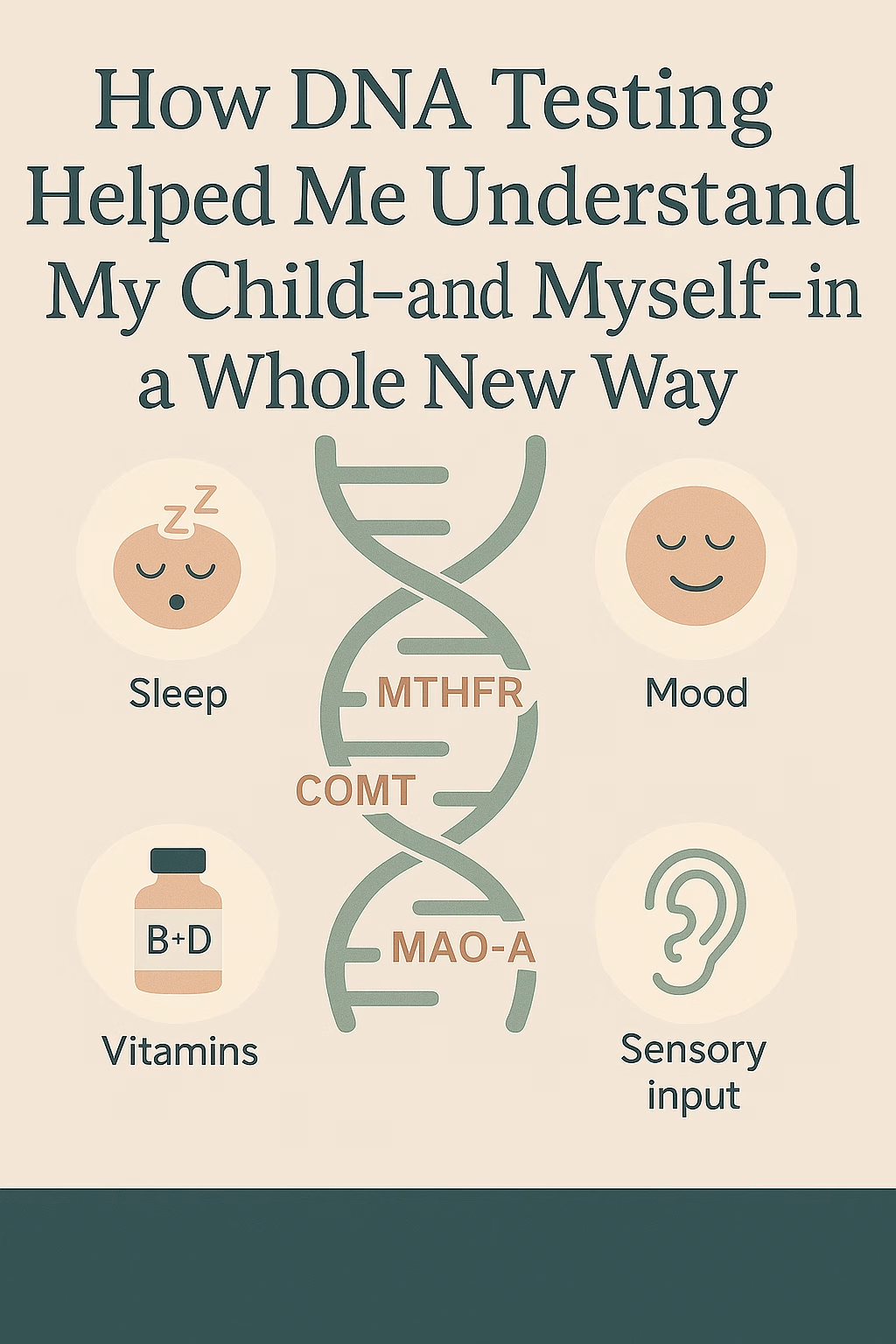
How DNA Testing Helped Me Understand My Child—and Myself—in a Whole New Way
Teaching From the Inside Out How DNA Testing Helped Me Understand My Child—and Myself—in a Whole New Way I didn’t start with DNA. I started with intuition. With noticing that my child melted down after snack, panicked during transitions, and reacted to vitamins like they were tiny landmines. I knew something was off—I just didn’t know why. And while parenting books gave me strategies, they didn’t give me answers. That’s when I found DNA testing. Not as a diagnosis, but as a decoder ring. A way to understand the why behind the behaviors, the sensitivities, the patterns that felt random but weren’t. And once I saw it through that lens? Everything shifted. This post kicks off Teaching From the Inside Out—a series for moms who want to parent with insight, not just instinct. We’ll explore how DNA testing can illuminate your child’s emotional rhythms, sensory needs, and biochemical quirks—without overwhelm, guilt, or perfection. Because when you understand what’s happening under the surface, you stop guessing. You start healing. And you finally get to say, “Ohhh… that’s why.” What DNA Testing Actually Taught Me DNA didn’t give me a diagnosis. It gave me a map. It explained why my child: Turned into a velociraptor after a Flintstones vitamin (hi, MTHFR) Panicked every time we changed plans (COMT was slow, dopamine was sticky, and transitions felt like betrayal) Slept better after we added magnesium spray and warm soaks to our bedtime routine (MAO-A was anxious, and his nervous system needed help winding down) These weren’t random moments. They were biochemical clues. And once I learned to read them, I stopped feeling like I was failing. I started seeing patterns. And I finally had tools that worked. “Before You Test” Reflection Prompts Before you order a DNA test, take a breath. Grab your tea. And ask yourself: What patterns am I noticing in my child’s behavior or health? What questions keep resurfacing that I haven’t been able to answer? Am I looking for clarity, confirmation, or a starting point for healing? What kind of support do I have emotionally if the results feel heavy? DNA testing isn’t just a purchase—it’s a perspective shift. And you deserve to enter it gently. DNA Testing Options: From Curious Mom to Confident Decoder Here’s a gentle breakdown of the most common DNA testing options—no overwhelm, no pressure, just clarity: Provider What It Offers Why It Might Fit AncestryDNA Raw genetic data with basic ancestry insights. Can be uploaded to third-party tools like Genetic Genie. Want a simple, affordable entry point and are okay using outside tools for health info. 23andMe Offers both ancestry and health reports. Includes FDA-reviewed insights on traits, wellness, and carrier status. Want built-in health data and a user-friendly dashboard with minimal extra steps. Dr. Amy Yasko’s Protocol A deep-dive, clinician-guided approach focused on methylation, detox, and neurological health. Are ready for a comprehensive, science-backed roadmap and possibly working with a practitioner. tellmeGen Functional health reports including disease risk, traits, and wellness. More comprehensive than 23andMe, with a focus on personalized health. StrateGene (by Seeking Health) Functional genomics with a methylation and detox focus. Created by Dr. Ben Lynch—great for families exploring root-cause healing. Which One’s Right for You? Just starting out? AncestryDNA or 23andMe + Genetic Genie is a gentle, affordable entry point. Want more health insights without overwhelm? tellmeGen or StrateGene offers curated reports with actionable info. Ready for a deep dive? Dr. Yasko’s protocol provides practitioner-level guidance—but it’s okay to wait until you feel ready. And remember: you don’t need to decode everything at once. You can start with one SNP, one shift, one healing win. DNA is a tool—not a verdict. You get to decide how and when to use it. Wait—What’s a SNP? SNPs (pronounced “snips”) are tiny spelling differences in your DNA—like typos in a recipe. Most don’t cause problems, but some can change how your body processes things like vitamins, stress, or sleep. Think of them as little switches that affect how your child reacts to the world.When you understand which SNPs are flipped “on” or “off,” you stop guessing and start supporting with more clarity and compassion.It’s like realizing your child’s nervous system prefers chamomile over caffeine—and now you know why. “SNP Snapshots”: Real-Life Moments That Made It Click “We added magnesium spray and warm soaks to our bedtime routine—and suddenly, sleep wasn’t a battle. His MAO-A was anxious, and his nervous system just needed help winding down.” “She panicked every time we changed plans. COMT was slow, dopamine was sticky, and transitions felt like betrayal. Predictable routines helped her breathe again.” “I gave him a Flintstones vitamin and he turned into a velociraptor. Turns out, his MTHFR couldn’t handle synthetic folic acid. Who knew?” These stories felt random—until DNA gave us the language. Now they feel like clues. Tea Time Takeaway DNA testing isn’t about fixing your child. It’s about understanding them—so you can support them with less guessing and more grace. Healing Wins Tracker Start small. Track gently. Celebrate often. Healing Wins:☐ Fewer meltdowns after snack☐ Better sleep after switching supplements☐ Less resistance during transitions☐ More calm after sensory tweaks☐ One “aha” moment that made it all worth it Gentle Decoder’s Toolkit These are the tools that helped us decode with heart—not just data: Genetic Genie – free, beginner-friendly interpretation Grammar Galaxy – language arts that respects quirky brains Training Aliens – social skills with humor and heart StrateGene – functional genomics for deeper insight Global Healing – clean supplements that didn’t backfire Mito Red Light – supported regulation and sleep more than I expected Autism Support Favorites + Cozy Low-Tox Staples All About Learning Press – gentle phonics without tears MEL Science – hands-on experiments that matched his curiosity Signing Time – gave us communication before speech Logic of English, Pandia Press, Honest History – curriculum that respected his brain Art of Tea + Cafe Borbone – because moms need healing rituals too Tea Time Together – our weekly ritual of beauty, connection, and calm Relevant Future Reading Here’s what’s coming next—and what’s