Neurodivergent Homeschooling Support Made Simple- How to Build Calm Routines
 Neurodivergent Homeschooling Support Made Simple- How to Build Calm Routines
Homeschooling isn’t one-size-fits-all—especially when your child has unique learning preferences, sensory sensitivities, and days when just opening a workbook feels overwhelming. For families seeking neurodivergent homeschooling support, this post shares what actually helped us thrive—real-life tools, quiet confidence boosters, and curriculum that truly clicked.
This post isn’t about finding “the best” curriculum. It’s about what actually worked for our homeschool—and might just work for yours, too.
 Why This Post Matters for Neurodivergent Homeschooling Support
If your homeschool days include sensory challenges, scattered focus, or unique logic from your learner, you’re not alone. This post is part of our real-life journey toward neurodivergent homeschooling support—seeking calm, adaptable tools that fit the child we actually have, not just the one the curriculum expected.
Neurodivergent Homeschooling Wins—Clarity Over Chaos
We gave The Good and the Beautiful a solid try. And while it’s undeniably beautiful, the extra flourishes, floating bits, and busy pages felt like clutter. My autistic learner spent more time trying to decode what he was supposed to do than actually doing it. It was like staring into a scrapbook when you just needed a checklist.
So we pivoted toward clarity—toward calm, logic-driven resources with purposeful design. These four curriculum choices gave us breathing room, confidence, and more “Hey, I can do this!” moments than I ever expected.
Logic of English
 Logic of English
This was a total turning point for us in language arts. I honestly didn’t realize how confusing English can be until I saw my son struggle—and then Logic of English stepped in and made it make sense. The phonics rules are taught with real logic (not just memorization), and the hands-on games? Pure gold.
He started reading words he used to skip. And I stopped saying “just sound it out” because now he actually could.
If your learner thrives on patterns and explanations (not guesswork), this program is worth a peek.
Grammar Galaxy
 Grammar Galaxy
Grammar… turned into a space adventure? I was skeptical. But Grammar Galaxy hooked my son from lesson one—he became a “Guardian” solving missions, fixing word mix-ups, and saving the galaxy from punctuation chaos.
He laughed. I blinked. And suddenly, grammar wasn’t a battle—it was a game.
The stories are short, the tasks are clear, and the charm is real. I now call it our “stealth grammar” curriculum—because it sneaks in learning without overwhelm.
Want more method insight? Popular Homeschool Methods Explained is a great companion read.
MEL Science

On the days when we needed wonder and hands-on magic (but NOT noisy chaos), MEL Science became our secret weapon. The kits arrive with clear instructions and calm video guides, and every single experiment felt doable—and genuinely cool.
He felt like a “real scientist.” I felt like the cool mom. Win-win.
It’s visually clean, sensory-friendly, and great for learners who want to build, not just watch. We paired the kits with cozy science videos and real-life connections, like “Hey, this experiment reminds me of that dinosaur museum in Denver!”
If you love hands-on learning, check out Hands-on Learning at Home: 7 Play-Based Activities Kids Love.
Math Mammoth

After trying programs that felt jumpy and scattered, Math Mammoth gave us what we needed: clean layout, logical progression, and student-written explanations that made my son feel independent.
The first time he finished a page and said “That was easy,” I nearly cried.
This program is no-frills, and that’s exactly why it works. It builds mastery—quietly, steadily, and without the fluff.
For more neurodivergent homeschooling support, here’s how we chose a math curriculum that finally clicked…How to Choose the Right Homeschool Math Curriculum and From Frustration to Focus: Using Learning Styles in Our Homeschool
YouTube Channels That Actually Help Learning Stick
 YouTube Channels That Actually Help Learning Stick
Not all “educational” content is helpful. These channels became our snack-time sidekicks, reinforcing concepts calmly and clearly:
- Numberblocks – Builds math intuition through visual storytelling and repetition.
- Wonderblocks – Beginner-friendly coding with logic and visual clarity.
- Peekaboo Kidz (Dr. Bionic) – Answers quirky science questions with playful logic (think: “Why do we burp?” or “Can plants think?”).
- PragerU Kids – Calm, story-based social studies with values woven into narrative formats.
- SciShow Kids – Clean science explainers that spark real-life questions.
- Crash Course Kids – Clear, deeper dives for older learners ready for a step up.


Want to keep curiosity alive in your homeschool? Try Trust, Curiosity, and Connection- This is What Unschooling Really Looks Like
Tools for Neurodivergent Homeschooling Support—Sensory-Friendly & Practical
When focus fizzled or feelings ran high, these sensory tools helped us regulate:
- Noise-Canceling Headphones – blocked out distractions during lessons
- Marble Maze Mats & Fidgets – calmed restless hands with quiet, tactile focus
- Bouncy Bands for Chairs – gentle movement without leaving the table
- Tag-Free Clothing– eased tactile discomfort during long homeschool days
- Visual Timers & Schedules – made transitions less stressful and more predictable


These weren’t extras—they were essentials. They gave us the tools to keep learning possible.
If you’re navigating sensory needs, 10 Signs of Homeschool Burnout might help you feel less alone.
Final Thoughts: You’re Not Alone in This
If you’re reading this as a mama who’s doing her best—trying to teach, love, and understand a child with unique needs—I just want to say: I see you.
This isn’t easy. Not the late-night curriculum Googling. Not the meltdowns over math. Not the quiet worry that you’re “missing something.” Teaching a child with special needs requires so much more than patience—it calls for creativity, resilience, and a kind of love that doesn’t give up.
Some days, it feels like we’re building the plane while flying it. Other days, it feels like magic.
So if you’re tired, hopeful, frustrated, or just looking for a curriculum that won’t make your child shut down—I hope this post gives you a spark of possibility. Because you’re not alone. And you’re doing beautifully, even on the messy days.
From one homeschool heart to another—sending love, clarity, and confidence your way 
Want to Go Even Deeper?
This post is part of our lived experience—but if you’re crafting your own homeschool path, you might love:
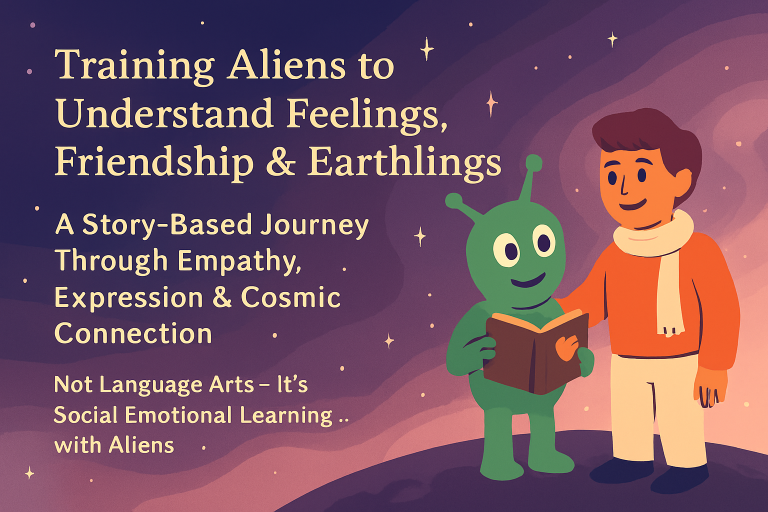
Training Aliens: Our Favorite Social Emotional Curriculum
 Training Aliens: Our Favorite Social Emotional Curriculum
 Teach big feelings, friendship skills & emotional regulation through story-based missions!
 Kids help space camp aliens navigate social challenges like frustration, joining groups & making friends.
 Perfect for homeschoolers, co-ops & neurodivergent learners—playful, inclusive & easy to adapt.
 Includes lessons, printables & alien-themed visuals that actually stick!
 Builds confidence, kindness & coping skills in a totally out-of-this-world way.
 We pair it with our favorite emotions flip book + kindness trackers for everyday SEL wins!