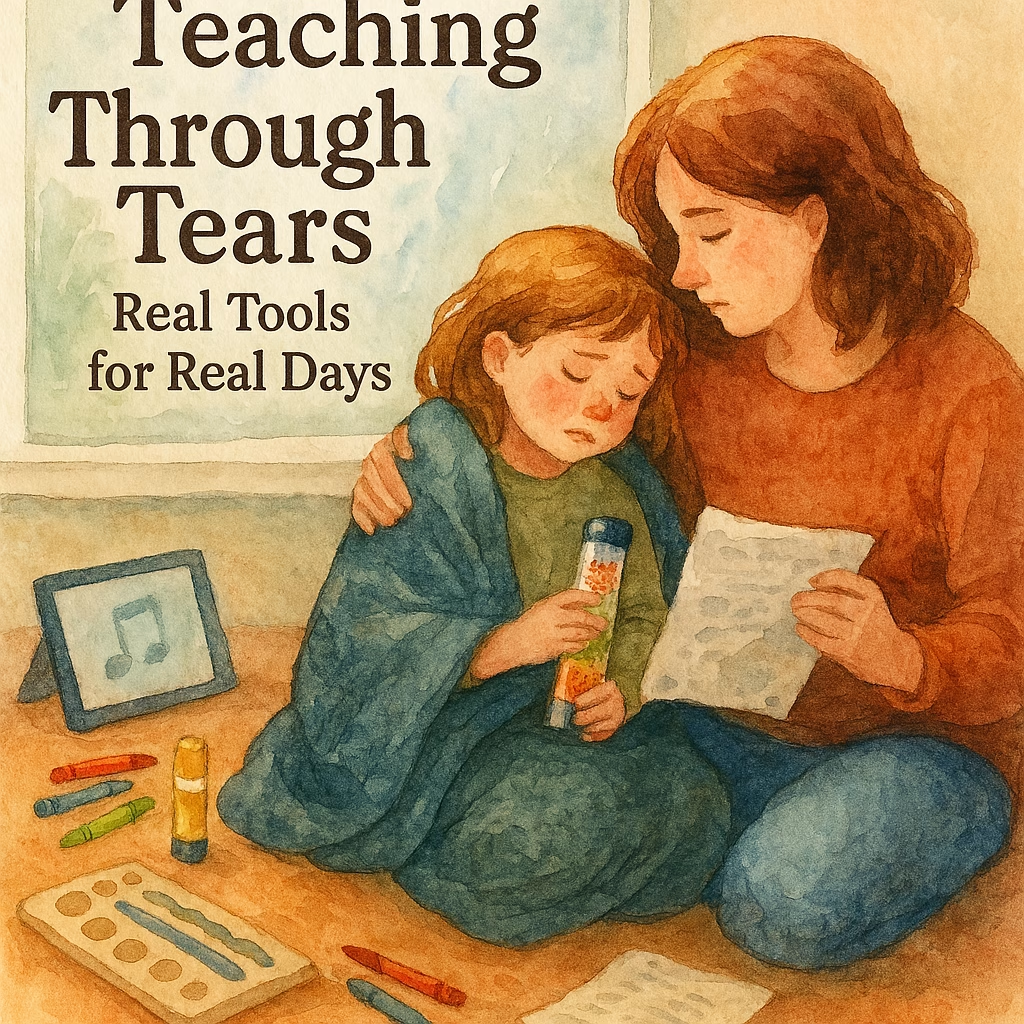
How to Teach Through Tears: What to Do When the Day Feels Heavy Real talk for sensitive families navigating emotional overwhelm—with calming rituals, sensory-friendly tools, and a whole lot of grace- teach through tears. When the Lesson Plan Meets the Meltdown Let’s be honest: some homeschool days feel like a slow-motion emotional avalanche. You’ve got a math worksheet half-filled with tears, a toddler chewing on the glue stick, and your own nervous system whispering, “Can we just not?” If you’ve ever had to teach through tears—yours or theirs—you’re not alone. And no, you’re not failing. You’re just human. Sensitive, brilliant, and doing the absolute most in a world that rarely slows down. First, Let’s Interrupt the Spiral Before we reach for solutions, let’s gently pause the overwhelm. These rituals aren’t revolutionary—but they’re real. And they work. The 3-Minute Reset: Step outside. Breathe in something real—wind, prairie air, the scent of crayons. Let your body remember it’s safe. The Cozy Corner Trick: Create a soft space with a weighted blanket, a calming playlist, and zero expectations. This isn’t timeout—it’s a nervous system hug. The “I’m Allowed to Cry” Rule: Normalize tears. For you, for them. Emotional release is not a disruption—it’s a reset. These rituals are your first line of defense when you’re trying to teach through tears and everything feels fragile. Sensory-Friendly Tools That Actually Help Each one chosen for its calming magic, sensory integrity, and real-life usefulness—especially on the days that feel like too much. You might want to check out: Silicone Sensory Activity Board – With 18 textured ropes to loop, stretch, and thread, this Montessori-inspired board is silent, screen-free, and surprisingly soothing. Parents call it their “meltdown prevention kit” for flights, therapy sessions, and restaurant outings. Eye & Hand Catching Stick Machine – A motor-skill training toy that turns hand-eye coordination into a game. Bright, engaging, and ideal for toddlers who need movement to regulate. Early Childhood Sensory Toolkit – A set for 3 years and up, supporting tactile exploration, bilateral coordination, and emotional regulation. It’s like a sensory starter pack for healing-centered homes. Sensory Fidget Tubes Trio – Each tube targets a different sensory skill—sight, sound, and touch. Watch glitter swirl, hear beads fall, and feel the weight of sand. It’s portable peace for overstimulated moments. These tools don’t just calm—they help you teach through tears with gentleness and intention.Want more sensory setups that honor your child’s brilliance? You’ll love This Simple Sensory Setup Changed Everything—Here’s How We Use It and That Toy Isn’t a Distraction. It’s a Sensory Survival Tool. Emotional Archetypes for the Day Instead of just saying “it’s a hard day,” let’s name it. These gentle archetypes help you feel seen—and help you choose the right response when you’re trying to teach through tears. The Foggy Day: Everyone’s tired, nothing sticks, and the coffee’s gone cold The Volcano Day: Big emotions erupt before breakfast The Porcupine Day: Everyone’s prickly, even the cat The Ghost Day: You feel invisible, and so does your effort Each one invites a different kind of grace. And if you’re craving visibility without burnout, How to Be Seen Without Feeling Exposed is your next read. What Not to Say (Even If You Mean Well) Let’s gently retire the phrases that spike cortisol and shut down connection—especially when you’re trying to teach through tears and keep the emotional temperature safe. “Calm down” → “Let’s take a breath together” “You’re fine” → “I see you’re having a big feeling” “We don’t cry over math” → “Let’s pause and come back when it feels safer” Want more emotionally safe scripts? Try The Emotionally Safe Way to Dream Big—Without Self-Sabotage or How to Help Sensitive Kids Celebrate Who They Are—Without Apology. Mini Scripts for Self-Talk (Because Moms Cry Too) Sometimes the hardest part isn’t the meltdown—it’s the silence afterward. These gentle affirmations help you stay grounded when you’re the one teaching through tears. “I’m allowed to pause. My worth isn’t measured by productivity.” “This moment is hard, but I’m not broken.” “I’m building emotional safety, not just checking boxes.” Need a full reset? You’re More Than a To-Do List: Join the 30-Day Ritual Reset is waiting for you. Related Reading for the Days That Feel Like Too Much If this post resonates, you’ll love these healing-centered reads: How to Feel Good Again—Without Changing Your Whole Life How to Create a Sensory-Friendly Workspace That Honors Your Brilliance How to Choose Curriculum That Supports Neurodivergent Brains (Not Breaks Them) Why “Weird” Calming Behaviors Are Actually Totally Normal How to Help Sensitive Kids Learn: 7 Brain-Based Shifts for Focus, Regulation, and Healing Feeling Burned Out? A Survival Guide for Overstimulated Moms What Happens When Everyone’s Sensitive? A Real-Life Survival Guide Why This Matters (and Why You’re Not Alone) To teach through tears is to model emotional safety in real time. It’s not a failure—it’s a sacred invitation to slow down, reconnect, and choose compassion over control. Sensitive families don’t need perfect days. They need real ones. With pauses. With grace. With tools that honor the nervous system instead of overriding it. Pin This for the Next Hard Day Because you won’t always remember what helps when you’re in the thick of it. And that’s okay. You’re building a rhythm that honors your brilliance—even on the messy days when you teach through tears and still show up with love.
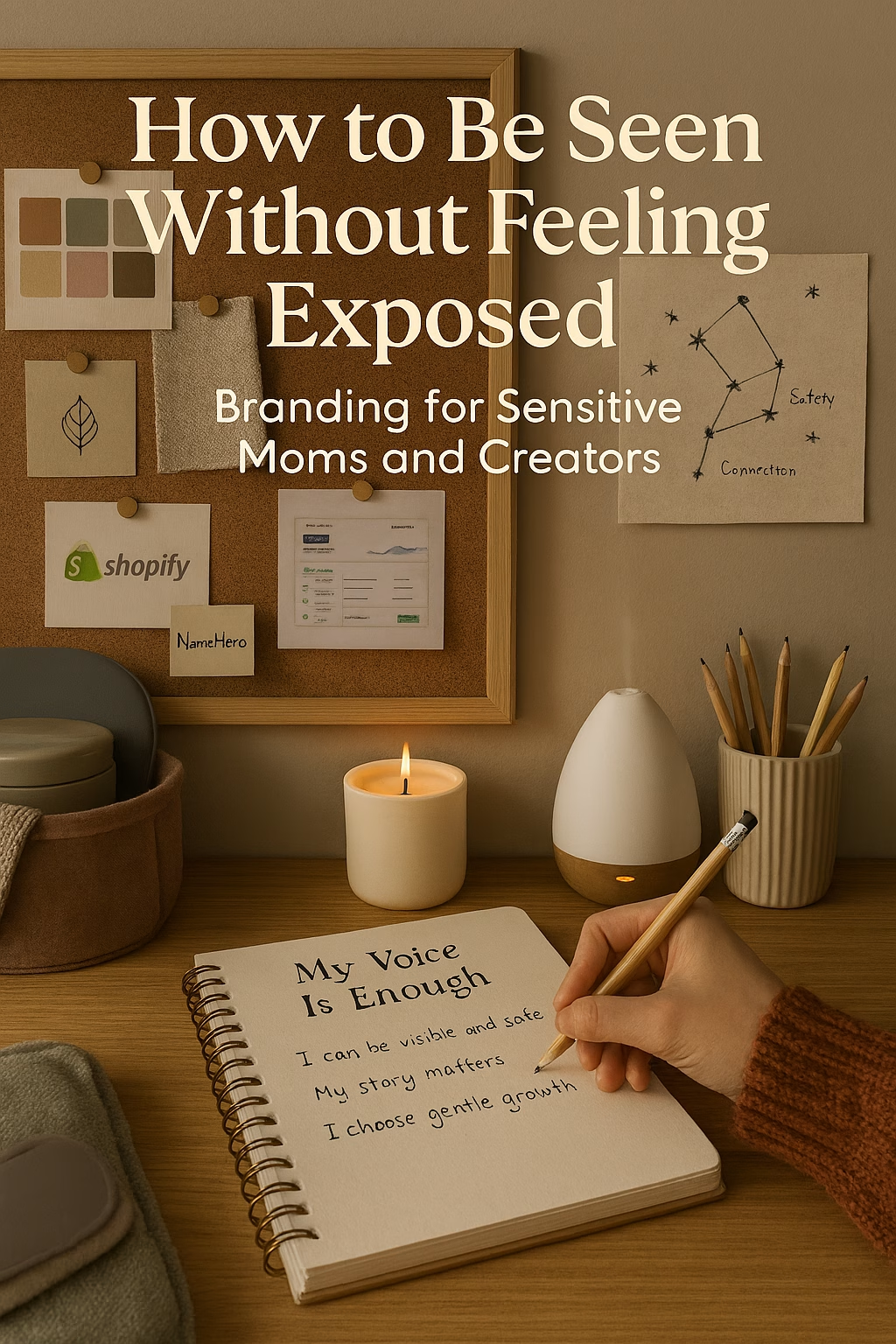
How to Be Seen Without Feeling Exposed: Branding for Sensitive Moms and Creators
From the Shadows to the Spotlight: Building a Brand That Feels Like Home What happens when visibility meets vulnerability—and how to feel good while showing up. Let’s be real: branding isn’t just Canva templates and clever captions. It’s emotional labor. It’s rewriting your story in public. It’s whispering “I hope this helps someone” while wondering if you’re too much—or not enough. This post is for the sensitive creators, the affiliate dreamers, and the cozy visionaries who want their branding to feel like home. Not a performance. Not a pressure cooker. Just a place where visibility feels safe, and vulnerability doesn’t cost your nervous system. If you’ve ever felt like your creative energy disappears the moment you hit “publish,” you’re not alone. Feeling Burned Out? A Survival Guide for Overstimulated Moms and How to Feel Good Again—Without Changing Your Whole Life are gentle reminders that your work matters—and so does your wellbeing. The Emotional Labor Behind Every “Link in Bio” You know that moment when you finally hit publish on a post you’ve rewritten seventeen times? That’s not just content—it’s courage. Every affiliate link, every caption, every carousel is a tiny act of emotional generosity.But here’s the thing:Visibility without safety feels like exposure.Affiliate work without alignment feels like selling out.And branding without boundaries? That’s a fast track to burnout.So how do we show up and feel good? We build branding that reflects our nervous system, not just our niche. For more on balancing ambition with emotional safety, visit The Emotionally Safe Way to Dream Big—Without Self-Sabotage and You’re More Than a To-Do List: Join the 30-Day Ritual Reset for Moms Who Need a Minute. Visibility That Feels Like a Weighted Blanket You don’t need to be louder—you need to be safer. Visibility should feel like a warm invitation, not a spotlight interrogation. And branding should feel like a soft place to land—not a stage to perform on. Try this: Use brand colors that regulate your nervous system (hello, soft autumn palette) Write captions that sound like your inner voice—not your inner critic Share stories that feel like connection, not confession If you’re navigating visibility with sensitive kids in mind, How to Help Sensitive Kids Celebrate Who They Are—Without Apology and What Happens When Everyone’s Sensitive? A Real-Life Survival Guide to Highly Sensitive Parenting are powerful reads. Vulnerability That Doesn’t Drain You Vulnerability isn’t about oversharing—it’s about resonance. It’s the difference between “Here’s everything I’ve been through” and “Here’s what I learned, and maybe you’ve felt this too.” Gentle tips for emotionally safe branding: Share from the scar, not the wound Use affirmations to anchor your nervous system before posting Create rituals around content creation (tea, texture, music) to help you feel good while working For more on ritualizing your creative flow, explore Turn Tea Time into a Weekly Ritual of Beauty: Art, Poetry & Music Made Simple and This Is What Learning Really Looks Like (And Why It’s Enough). Affiliate Work That Feels Like Service Affiliate marketing isn’t just about monetizing—it’s about matching people with tools that help them feel good. When done with emotional attunement, it becomes a form of care. And when woven into your branding with intention, it becomes part of your mission—not just your monetization. Affiliate picks that support your branding and your body: Positive Affirmations Journal ZAAINA Self-Care Spa Kit Cozy USB Cable Covers Comfy Laptop Sleeve Organizer NameHero Hosting Shopify Website Builder For more emotionally safe affiliate strategies, visit How to Create a Sensory-Friendly Workspace That Honors Your Brilliance, How to Make Money from Home While Homeschooling: 10 Flexible, Family-Friendly Ideas, and How Creating a Website Made Me a Better Homeschool Mom. Rituals That Help You Feel Good While Creating Let’s build a content rhythm that feels like a ritual—not a race. Branding should support your nervous system, not override it. Try this: Light a candle before writing Pair tasks with sensory anchors (soft socks, warm tea, ambient music) Celebrate micro-wins (like hitting publish without crying) If you’re building a brand while homeschooling, How to Choose Curriculum That Supports Neurodivergent Brains (Not Breaks Them) and Neurodivergent Homeschooling Made Simple offer practical, emotionally attuned support. You’re Allowed to Be Seen—And Still Feel Good You don’t have to choose between visibility and safety. You don’t have to trade authenticity for aesthetics. You’re allowed to build branding that feels like home—warm, welcoming, and emotionally safe.So go ahead. Post the thing. Share the link. Light the candle. And let yourself feel good while doing it. Ready to build branding that feels like home? Start with How to Feel Good Again—Without Changing Your Whole Life, The Emotionally Safe Way to Dream Big—Without Self-Sabotage, and Sensitive Kids Aren’t Broken—These DNA Markers Helped Me See Why. Hosting That Supports Your Learning Curve We built our site with NameHero—and it’s been a game-changer. Blazing-fast speeds (even with homeschool printables!) Free SSL, daily backups & superhero support Easy setup for blogs, shops & resource hubs Whether you’re launching a homeschool blog or building a resource library, NameHero makes it simple, secure & stress-free. Explore NameHero Hosting Plans Edit Template
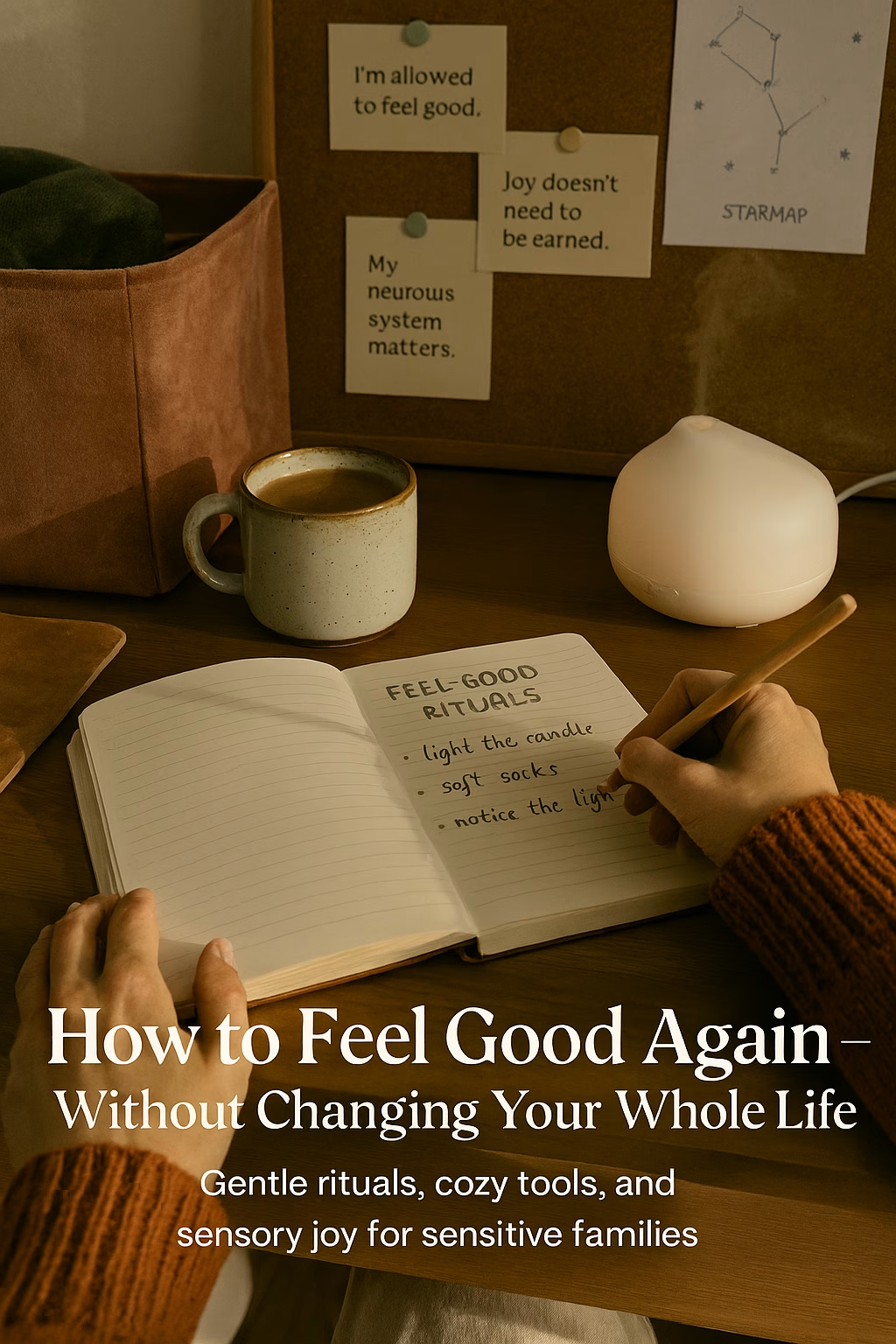
How to Feel Good Again—Without Changing Your Whole Life
Come Alive: Finding Joy in the Everyday Seasonal rituals, cozy layers, and sensory-friendly spaces that help you feel good—yes, even on a Tuesday. Let’s be honest. Some days feel like a never-ending loop of reheated coffee, sock refusals, and existential questions like “Did I brush my teeth or just think about it?” But joy isn’t reserved for vacation days or Pinterest-perfect moments. It’s hiding in your tea mug, your sweater sleeves, and the way your child lights up when you say, “Let’s make this weird.” This post is your gentle nudge to come alive again—not by doing more, but by noticing more. By layering your life with rituals, textures, and tiny sparks of enthusiasm that whisper, “You’re allowed to feel good.” Why Joy Needs a Ritual (Not a Reason) We’ve been taught that joy is a reward—something we earn after productivity, perfection, or Pinterest-worthy parenting. But sensitive families know better. Joy is a regulation tool. A nervous system balm. A way to say, “I’m still here, and I still matter.” So instead of chasing joy, let’s curate it. Let’s build seasonal rituals that feel like emotional exhale. Let’s come alive through rhythm, not hustle. Let’s choose practices that help us feel good without needing to prove anything. If you’re craving a reset, you’ll love You’re More Than a To-Do List: Join the 30-Day Ritual Reset for Moms Who Need a Minute and Feeling Burned Out? A Survival Guide for Overstimulated Moms. Start with a Joy Audit Before you reach for the pumpkin mug, pause. Ask yourself: When did I last feel alive in my own skin? What textures, smells, or sounds help me feel good? What parts of my day feel like a ritual—even if they’re tiny? This isn’t indulgent—it’s intelligent. It’s how we build emotional safety into our everyday lives. For more on this kind of reflection, visit The Emotionally Safe Way to Dream Big—Without Self-Sabotage. Create a “Come Alive Capsule” Instead of just buying cozy things, curate a sensory kit that supports your nervous system and helps you feel good in your space. Think of it as your seasonal survival bundle—with emotional benefits baked in. Warmth: Magic Hour’s Autumn Chai Rust-Toned Wrap Cardigan Weighted Lap Pad Texture: Velvet Storage Bins Sensory-Friendly Leggings Soft Autumn Sweater Dress Scent: Pumpkin Rooibos Apple Cinnamon Herbal Blend Essential Oil Diffuser Sound: Turn Tea Time into a Weekly Ritual of Beauty: Art, Poetry & Music Made Simple How to Use Art Subscription Boxes to Support Emotional Safety and Sensory Needs This capsule isn’t about aesthetics—it’s about anchoring joy in your body and space. It’s about choosing tools that help you feel good, even when the day feels heavy. For more sensory-friendly ideas, visit How to Create a Sensory-Friendly Workspace That Honors Your Brilliance. Add Nervous System Anchors Joy and regulation go hand in hand. Sprinkle these checkpoints throughout your day: “Pause: Is my jaw clenched?” “Does this ritual help me feel good—or just look good?” “If my body says no, that’s wisdom—not laziness.” These tiny shifts help you come alive without pushing past your limits. For more on this, read Why “Weird” Calming Behaviors Are Actually Totally Normal and That Toy Isn’t a Distraction. It’s a Sensory Survival Tool. Track Micro-Magic Instead of a gratitude list, try noticing tiny sparks of joy: “I laughed at something ridiculous today” “I noticed the way the light hit the leaves” “I felt proud of a small win—and it helped me feel good” This is what real joy looks like in sensitive families. It’s not curated—it’s felt. For more on redefining success, visit This Is What Learning Really Looks Like (And Why It’s Enough) and Why Eclectic Homeschooling Was the Better Way to Learn (After Letting Go of the Perfect Plan). Write Your “Come Alive” Affirmation Inspired by the song Come Alive, try this fill-in-the-blank ritual: “I come alive when I ____, even if it’s not ____.”“Joy doesn’t need to be earned—it lives in my ____.”“I’m allowed to feel good—even if the world feels heavy.” Let this be your emotional anchor for the season. For more healing-centered affirmations, explore Sensitive Kids Aren’t Broken—These DNA Markers Helped Me See Why and How DNA Testing Helped Me Understand My Child—and Myself—in a Whole New Way. Community Enrichment That Doesn’t Drain You Coming alive isn’t just about solo rituals—it’s about connection. But for sensitive families, community needs to feel emotionally safe, not overstimulating. Ideas that help you feel good while connecting: Host a fall tea swap with other homeschool moms Create a seasonal art wall with your co-op Volunteer for something small but meaningful (like organizing the cozy corner at a local event) Need inspiration? Try The Parenting Breakthrough Hidden in a Sock Refusal, What Happens When Everyone’s Sensitive? A Real-Life Survival Guide to Highly Sensitive Parenting, and Little Letters, Big Spirit: Raising a Child Who Defied Expectations. You’re Allowed to Come Alive Even if the laundry isn’t folded.Even if your planner is blank.Even if you’re still figuring out what joy looks like in this season. You’re allowed to come alive through softness, slowness, and sensory delight. Through tea and texture. Through rituals that whisper, “You’re doing enough—and you’re allowed to feel good.” So go ahead. Light the candle. Put on the cardigan. Sip the chai. And let yourself feel good—without apology. Ready to come alive? Start with Feeling Burned Out? A Survival Guide for Overstimulated Moms, How to Help Sensitive Kids Celebrate Who They Are—Without Apology, or How to Help Sensitive Kids Learn: 7 Brain-Based Shifts for Focus, Regulation, and Healing.
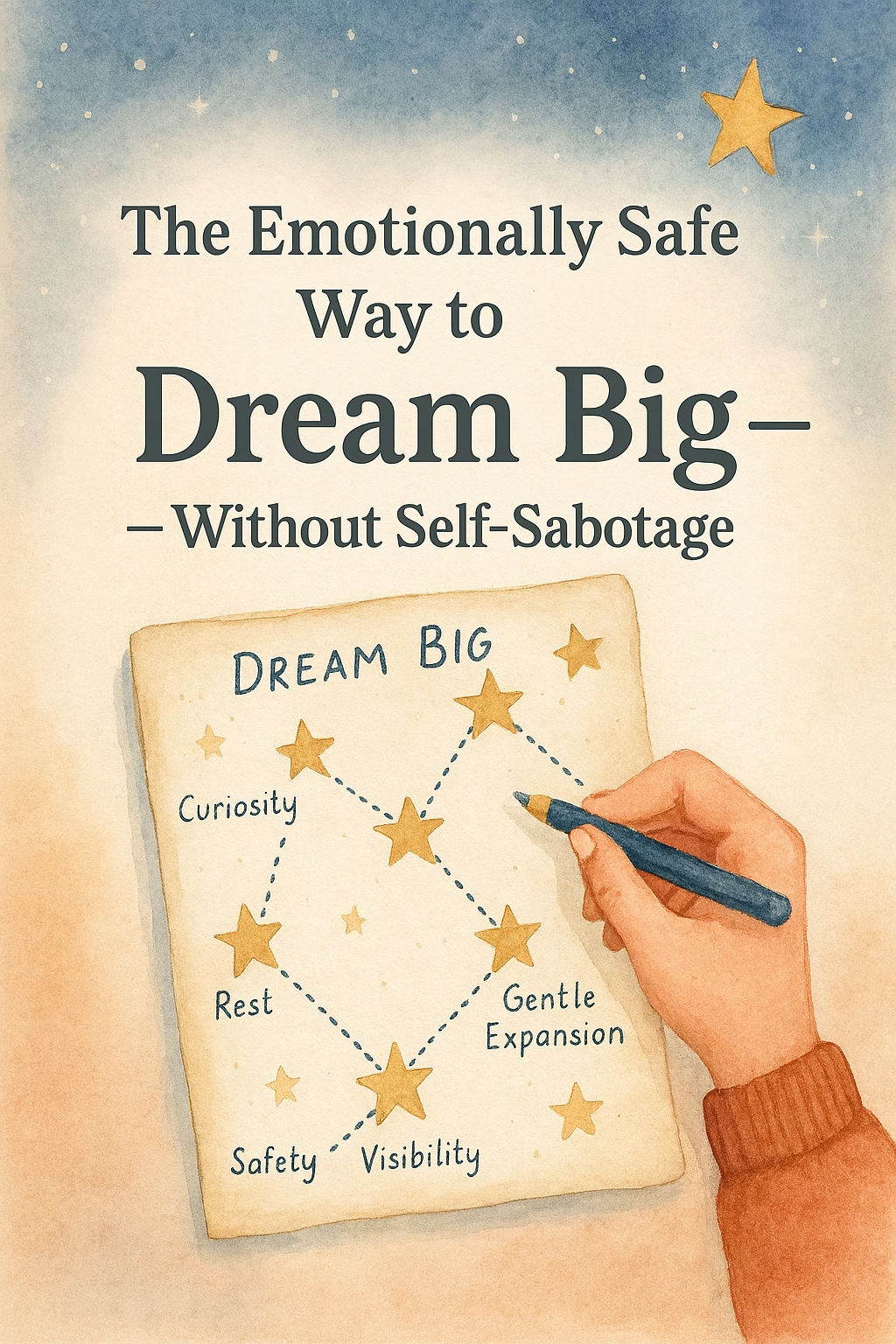
The Emotionally Safe Way to Dream Big- Without Self-Sabotage
Rewrite the Stars: Dream Big Without Losing Emotional Safety Yes, you can chase big dreams without burning out your nervous system. Let’s be honest. If you’ve ever tried to set a goal while your toddler was chewing on a planner tab and your nervous system was quietly whispering “please no,” this post is for you. Because ambition isn’t the problem. The problem is the pressure. The hustle. The “just push through” culture that forgets sensitive people need safety before strategy. So if you’ve ever whispered “I want more” and immediately followed it with “but I don’t want to lose myself,” welcome. You’re not broken. You’re just building a life that honors both your dreams and your emotional wellness. Inspired by Rewrite the Stars (yes, the song that makes every sensitive soul cry in the car), this post is your gentle guide to dream big—without self-sabotage, sensory overload, or toxic productivity. Why Sensitive Dreamers Need a Different Kind of Goal Setting Traditional goal-setting is loud. It’s color-coded. It’s “crush your goals” energy with a side of burnout. But sensitive dreamers? We need softness. We need rituals. We need planners that feel like a hug and journals that don’t judge us for skipping a week. Because here’s the truth: You don’t need to be more disciplined. You need to feel safe. You don’t need a five-year plan. You need a rhythm that honors your cycles. You don’t need to hustle harder. You need to trust your slow magic. And when you do? You stop chasing someone else’s version of success—and start rewriting the stars in a way that actually feels like you. You begin to dream big in a way that feels emotionally sustainable. If this resonates, you’ll love How to Help Sensitive Kids Celebrate Who They Are—Without Apology, which explores how emotional safety transforms learning and identity. Start with a Dream Audit (Not a To-Do List) Before you set goals, pause. Sensitive people often carry dreams that were handed to us—by culture, family, Pinterest boards, or well-meaning mentors. But not every dream is yours to hold. Ask yourself: Which dreams feel like they belong to me? Which goals feel heavy, even if they look good on paper? What would I pursue if I felt emotionally safe to fail? This isn’t procrastination. It’s clarity. And clarity is the most emotionally safe starting point there is. It’s the foundation for dreaming big without losing yourself. For more on how to create a space that supports this kind of reflection, visit How to Create a Sensory-Friendly Workspace That Honors Your Brilliance. A Gentle Ritual for Setting Nourishing Intentions Forget the vision board frenzy. This ritual is designed for sensitive brains, slow mornings, and hearts that crave meaning—not metrics. It’s how we dream big without burning out. Step 1: Create a Cozy Container Light a candle. Diffuse something grounding. Wrap yourself in a weighted blanket if needed. This is your emotional permission slip to begin.Sensory pairing: Essential Oil Diffuser, Weighted Lad Pad, Magic Hour Tea If your mornings feel chaotic, The Best Morning Routine for Kids with Sensory Processing Challenges might help you reclaim calm before you begin. Step 2: Ask the Right Questions Instead of “What do I want to achieve?” try: “What do I want to feel more often?” “What rhythms help me feel safe and alive?” “What would success look like if it felt like healing?” You’ll find more emotionally attuned prompts in You’re More Than a To-Do List: Join the 30-Day Ritual Reset for Moms Who Need a Minute. Step 3: Choose One Word or Phrase Let it be soft. Let it be yours. Examples: Rooted, Visible, Gentle Expansion, Brave Enough to Pause—each one a gentle way to dream big without pressure. Step 4: Anchor It Visually Write it on a sticky note. Add it to your planner. Make it your phone wallpaper. Let it whisper to you throughout the day. Step 5: Revisit Without ShameYou’re allowed to change your mind. You’re allowed to skip a week. You’re allowed to be a sensitive human with cycles. This ritual is a rhythm, not a rule—and it’s how we keep dreaming big while staying emotionally safe. Tools That Support Emotionally Safe Dreaming These aren’t just products. They’re invitations to regulate, reflect, and expand—without losing your softness. They help you dream big while staying grounded. Planners That Feel Like Permission Slips Papier Daily Planner Clever Fox Weekly Planner Ink+Volt Goal Planner Journals That Hold Space, Not Pressure Promptly Journal – Healing Edition 100 Days of Healing Nervous System Checkpoints Sprinkle these throughout your planning session: “Pause and notice: Is your jaw clenched?” “Before you write a goal, take three deep breaths and ask: Do I feel safe to want this?” “If your body says no, honor it. That’s wisdom, not weakness.” For more on how sensory tools support emotional regulation, read That Toy Isn’t a Distraction. It’s a Sensory Survival Tool and This Simple Sensory Setup Changed Everything—Here’s How We Use It. Sensory Pairings for Each Phase Instead of pushing through, pair each phase of planning with a sensory anchor. It’s how we make dreaming big feel like a ritual, not a race. Visioning: Weighted blanket + Art of Tea Organizing: Lavender diffuser + velvet bins Reflecting: Soft journal + gentle music You’ll find more cozy tools in Layered Texture: Sensory-Friendly Workspace Essentials, How to Use Art Subscription Boxes to Support Emotional Safety and Sensory Needs and Turn Tea Time into a Weekly Ritual of Beauty: Art, Poetry & Music Made Simple. Track Gentle Expansion (Not Just Habits) Instead of a habit tracker, try this: “I honored my energy today” “I said no without guilt” “I dreamed big without apologizing” “I rested without earning it first” This approach echoes what we explored in Why Eclectic Homeschooling Was the Better Way to Learn (After Letting Go of the Perfect Plan)—where flexibility and emotional safety became the foundation for growth. Rewrite the Stars—Your Way You don’t need to chase
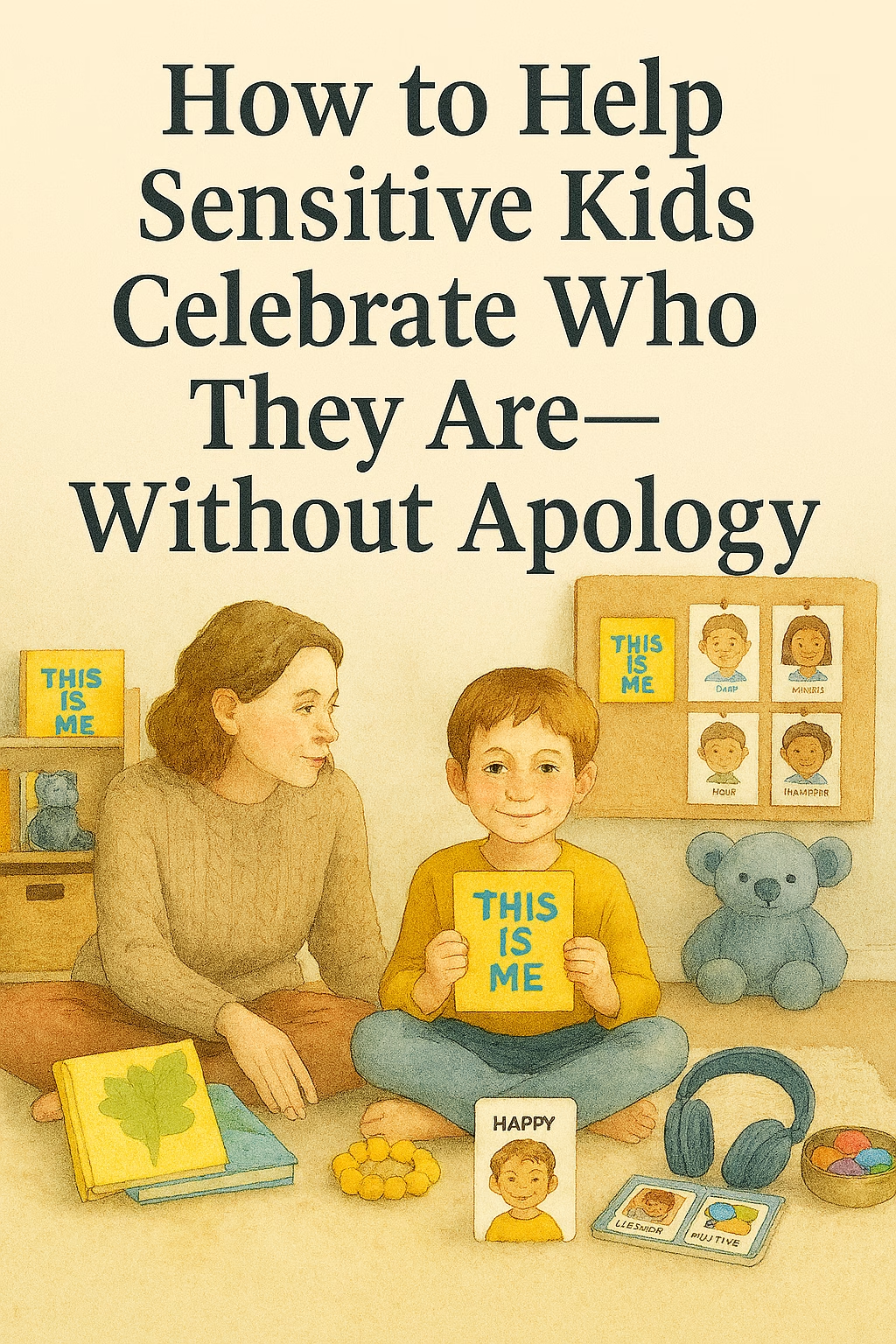
How to Help Sensitive Kids Celebrate Who They Are—Without Apology
How to Help Sensitive Kids Celebrate Who They Are—Without Apology Spoiler: It’s not just a lesson—it’s a lifelong permission slip. Let’s be honest. If you’ve ever tried to teach a sensitive or neurodivergent child to “fit in,” you’ve probably watched their sparkle dim. And if you’ve ever tried to teach them to stand out, you’ve probably been met with sock refusals, sensory meltdowns, and a deep existential question about why the alphabet song is so aggressive. But here’s the truth: sensitive kids don’t need to be fixed. They need to be seen. And when we build a homeschool rhythm that celebrates their differences instead of smoothing them out, everything changes. Inspired by the anthem “This Is Me,” this post is a love letter to every child who’s ever felt too loud, too quiet, too sensitive, too “weird”—and to every parent who’s trying to teach them that their uniqueness isn’t a liability. It’s their superpower. Why Celebrating Differences Isn’t Just Nice—It’s Necessary Sensitive kids are constantly navigating a world that wasn’t built for their brains. From fluorescent lights to rigid expectations, they’re often asked to shrink, mask, or perform just to survive. But when we create a learning environment that says, “You’re safe to be exactly who you are,” we unlock something powerful: Emotional regulation becomes easier Learning becomes joyful Connection becomes deeper And confidence? It blooms like wildflowers If you’ve ever wondered how to build that kind of space, The Parenting Breakthrough Hidden in a Sock Refusal might be your next read. Gentle Homeschooling Tools That Actually Affirm Forget the one-size-fits-all curriculum. These tools are designed to meet sensitive kids where they are—emotionally, sensory-wise, and spiritually. Emotion CardsPerfect for kids who struggle to name what they feel. These visual tools help build emotional literacy without pressure. We love this emotion wheel and emotion card set. Inclusive BooksStories that reflect neurodivergent, disabled, and emotionally complex characters help sensitive kids feel seen. Try: All My Stripes by Shaina Rudolph A Friend for Henry by Jenn Bailey This Is Me by Jamie Lee Curtis The Girl Who Thought in Pictures by Julia Finley Mosca Sensory Tools That Say “You’re Safe”From weighted lap pads to fidget bracelets, these aren’t distractions—they’re survival tools. Visual Schedules & Gentle AnchorsBecause predictability = safety. We use magnetic boards, pastel timers, and calming mantras like “You’re safe to begin.”Want to see our setup? This Simple Sensory Setup Changed Everything—Here’s How We Use It walks you through it. Neurodiversity Celebration Rituals That Stick Inspired by Neurodiversity Celebration Week, here are a few rituals that help sensitive kids internalize the message: You are enough, exactly as you are. Strengths & Interests ShowcaseLet kids create a mini gallery of what makes them unique—art, facts, favorite tools, sensory preferences. It’s not just affirming—it’s regulating. Sensory Exploration StationSet up a tray with textures, scents, and calming tools. Let kids explore what feels good to their body. This builds self-awareness and autonomy. We love pairing this with Mito Red Light therapy for deeper nervous system support. Neurodiversity StorytimeRead books that reflect different brains and bodies. Then ask: “What makes you feel different in a good way?”You’ll find more ideas in This Is What Learning Really Looks Like (And Why It’s Enough). Emotion Mapping MomentsAsk gentle questions like: “What helps you feel safe when the world feels loud?”“What’s one thing you wish people understood about your brain?”These aren’t just prompts—they’re bridges to connection. What Happens When Sensitive Kids Feel Seen When kids are allowed to be themselves—fully, loudly, and without apology—they don’t just learn better. They live better. They start asking deeper questions.They start trusting their bodies.They start advocating for their needs.They start celebrating each other. And that’s when homeschooling becomes more than education. It becomes healing. If you’re wondering how to build that kind of rhythm, Why Eclectic Homeschooling Was the Better Way to Learn (After Letting Go of the Perfect Plan) and How to Choose Curriculum That Supports Neurodivergent Brains (Not Breaks Them) are great places to start. Picks That Support Sensitive Kids and Their Learning Journey These aren’t just products. They’re tools for emotional safety, sensory regulation, and identity affirmation—chosen with sensitive kids in mind. Gentle Curriculum That Honors Neurodivergent Brilliance All About Learning Press: Multisensory reading and spelling that supports dyslexia, ADHD, and sensitive learners Grammar Galaxy: Story-based language arts that feel more like play than pressure Logic of English: Structured phonics with built-in sensory supports Pandia Press & Honest History: Inclusive, story-rich science and history for curious, emotionally attuned learners Training Aliens: Social-emotional learning that actually works for sensitive kids Sensory Tools & Emotional Anchors Loop Engage Kids Earplugs Weighted Koala Emotion Flashcards Feelings Flipbook Rituals for Regulation Art of Tea, Magic Hour Tea, and Cafe Borbone: For moms who need a sensory reset before teaching Tea Time Together: Turn emotional literacy into a weekly ritual Cozy Additions for Sensory-Friendly Spaces Shopmy Shelves – Autism Support Favorites, Mama Reset Rituals, Sensory-Friendly Workspace Essentials, and Staples for a Low-Tox Home Essential Oil Diffuser Velvet Storage Bins This Is Me. This Is Us. You don’t need to teach your child to be someone else. You get to teach them to be more themselves. Loudly. Kindly. Authentically. Because when we stop trying to fix what was never broken, we start raising sensitive kids who know how to celebrate their own brilliance—and each other’s. And that? That’s the kind of education that lasts. If you’re feeling burned out or unsure where to begin, You’re More Than a To-Do List: Join the 30-Day Ritual Reset for Moms Who Need a Minute and Feeling Burned Out? A Survival Guide for Overstimulated Moms might be the gentle nudge you need.
How to Create a Sensory-Friendly Workspace That Honors Your Brilliance
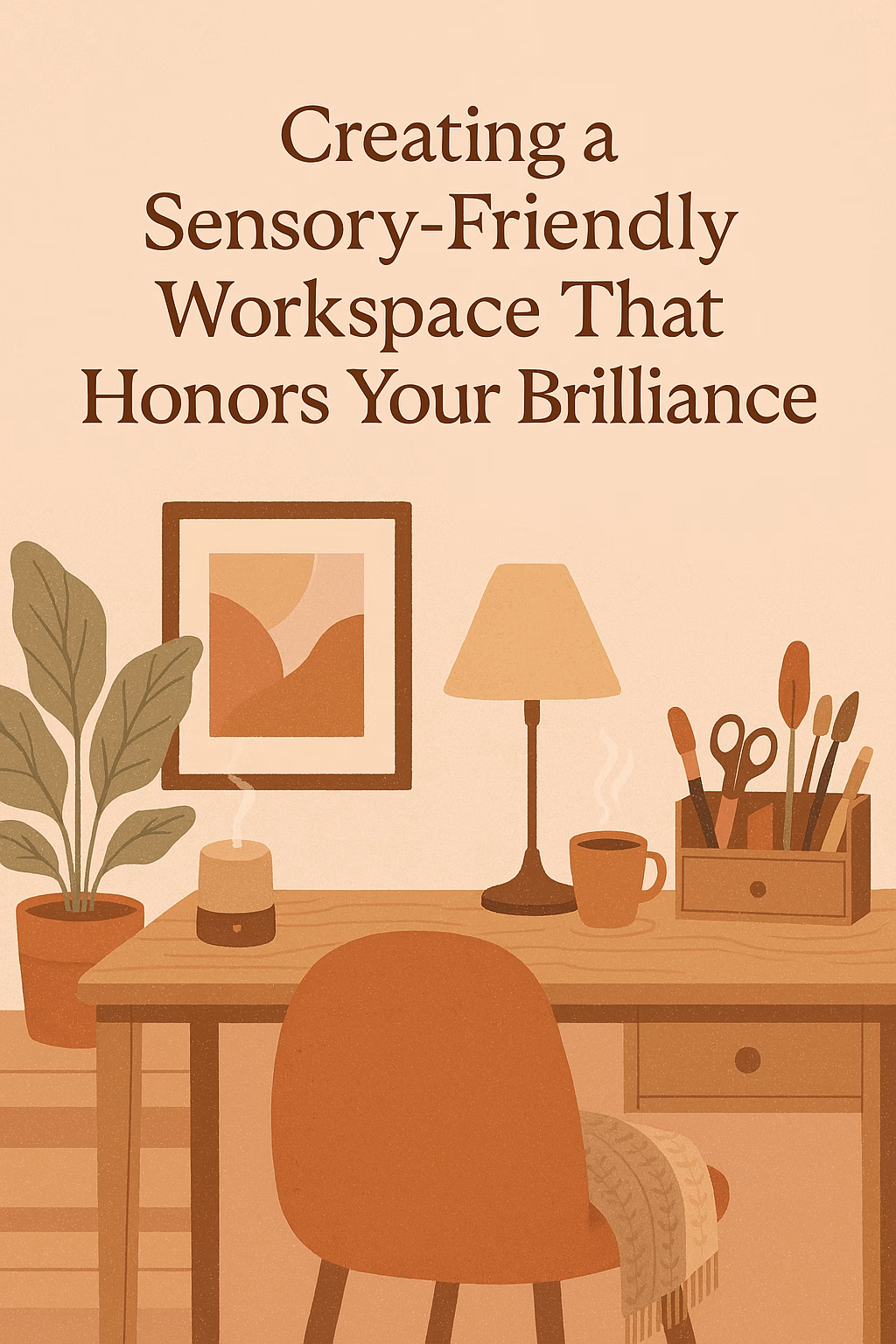
Creating a Sensory-Friendly Workspace That Honors Your Brilliance Spoiler: It’s not about the desk lamp. It’s about reclaiming your rhythm. Let’s be honest—most “workspace inspo” posts make you feel like you need a $900 ergonomic chair, a wall of floating shelves, and a personality transplant. But here’s the truth: your brilliance doesn’t need a Pinterest-perfect setup. It needs a sensory-friendly workspace that feels like you. Whether you’re homeschooling, creating content, or just trying to remember where you put your tea (again), your environment should support your nervous system, spark your creativity, and whisper, “You’re safe to shine here.” Why Your Workspace Isn’t Just a Corner—It’s a Mirror If your desk feels like a dumping ground for half-finished projects, sticky notes, and existential dread, you’re not alone. But here’s the thing: your environment reflects your energy. And when you create a sensory-friendly workspace that honors your rhythm, your work starts to feel less like a chore and more like a ritual.This isn’t about minimalism or maximalism. It’s about intentionalism. (Yes, I made that up. No, I won’t apologize.)And if you’ve ever wondered why your child’s calming behaviors seem “weird” but work, Why “Weird” Calming Behaviors Are Actually Totally Normal might help you reframe your own sensory quirks as brilliance in disguise. What Happens When You Design for Your Nervous System When your workspace is emotionally safe and sensory-friendly, everything shifts: You stop bracing for overwhelm and start leaning into flow Your brain stops scanning for threats and starts scanning for ideas You stop apologizing for needing quiet, texture, or tea breaks—and start thriving This is especially true for neurodivergent creators, homeschoolers, and moms who are constantly toggling between “I need to get things done” and “I need to not cry into my planner.” If you’re parenting a sensitive child, How to Help Sensitive Kids Learn: 7 Brain-Based Shifts for Focus, Regulation, and Healing offers practical ways to extend this mindset to their learning spaces, too. Workspace Archetypes for Neurodivergent Brains Let’s ditch the one-size-fits-all desk setup and explore what actually works in a sensory-friendly workspace: The Nest BuilderNeeds cozy containment. Think: corner desks, soft lighting, fuzzy chair, and layered textures.Perfect for those who regulate through warmth and visual boundaries. The Horizon SeekerThrives with open space and visual flow. Think: wide tables, natural light, and minimal clutter.Ideal for big-picture thinkers and sensory-sensitive creatives. The Texture CuratorRegulates through tactile input. Think: velvet bins, weighted lap pads, and sensory-friendly tools.Often paired with spontaneous creativity and emotional depth. Want to explore how these archetypes show up in your homeschool? This Is What Learning Really Looks Like (And Why It’s Enough) might be your next cozy read. Sensory Zones That Actually Work Inspired by neuroaesthetic design and inclusive workspace research, here’s how to create zones that support your brilliance: Focus Zone This is your “get things done without frying your nervous system” space. It’s where clarity meets calm. Soft lighting that doesn’t scream “interrogation room” Minimal visual clutter so your brain isn’t constantly scanning for chaos Noise-dampening textures like thick curtains, plush rugs, or acoustic panels to soften the sensory load A visual schedule or calming anchor nearby—think: a framed mantra, a gentle timer, or a color-coded rhythm chart that says “you’re safe to begin” This zone isn’t about productivity hacks. It’s about creating a sensory-friendly workspace where your brain can breathe and your brilliance can land. Regulation Zone Weighted blanket, fidget tools, calming scents A cozy chair or beanbag for movement breaks Art materials from Open the Box for spontaneous expression Need help getting started? How to Use Art Subscription Boxes to Support Emotional Safety and Sensory Needs walks you through it. Creative Zone Open-ended materials, color, movement A place to make messes without judgment Music, tea, and maybe a candle We love pairing this with Magic Hour Tea, Art of Tea, and Mama Reset Rituals for sensory-friendly inspiration. Emotional Mapping: Design from the Inside Out Before you rearrange a single pencil, ask yourself: What do I want this space to feel like? What do I want it to say about me? What does my nervous system need to feel safe, expressive, and seen? This is your brilliance map. Not a checklist. A compass. If you’re craving a deeper reset, You’re More Than a To-Do List: Join the 30-Day Ritual Reset for Moms Who Need a Minute might be the gentle nudge you need. Before & After: A Real-Life Shift Before: My desk was a graveyard of half-finished ideas.After: It became a sensory-friendly workspace where I could cry, create, and caffeinate—all without judgment.We added a candle. A playlist. A drawer for sensory tools. And suddenly, the work felt like a conversation—not a performance.If you’ve ever felt like your homeschool needed a similar shift, Why Eclectic Homeschooling Was the Better Way to Learn (After Letting Go of the Perfect Plan) might resonate. Tools That Help Your Brilliance Shine Your sensory-friendly workspace isn’t just where you “get things done.” It’s where your nervous system settles, your creativity wakes up, and your healing-centered work begins. These are the tools we reach for—not because they’re trendy, but because they help us feel safe, focused, and inspired. Lighting that regulates, not overstimulates Dimmable touch lamp with USB ports LED flameless candles Mito Red Light Textures that soothe, not scratch Velvet storage bins Weighted lap pad or blanket Silky flannel throw blanket Rituals that reset your rhythm Minimalist ceramic mug set Cafe Borbone espresso pods Essential oil diffuser Creative flow tools Desktop art organizer Multi-compartment desk caddy ErgoComfort gel wrist rest mouse pad Support for your healing-centered business NameHero– Hosting that’s fast, reliable, and emotionally stress-free Shopify: For building a business that feels aligned with your values and rhythms Your Sensory-Friendly Workspace Deserves Center Stage You don’t need to earn your space. You don’t need to wait until you’re “more productive” or “less scattered.” You get to create a sensory-friendly workspace that honors your brilliance now. Because when your environment says, “You belong here,” your brain believes it. And when your
How to Use Art Subscription Boxes to Support Emotional Safety and Sensory Needs
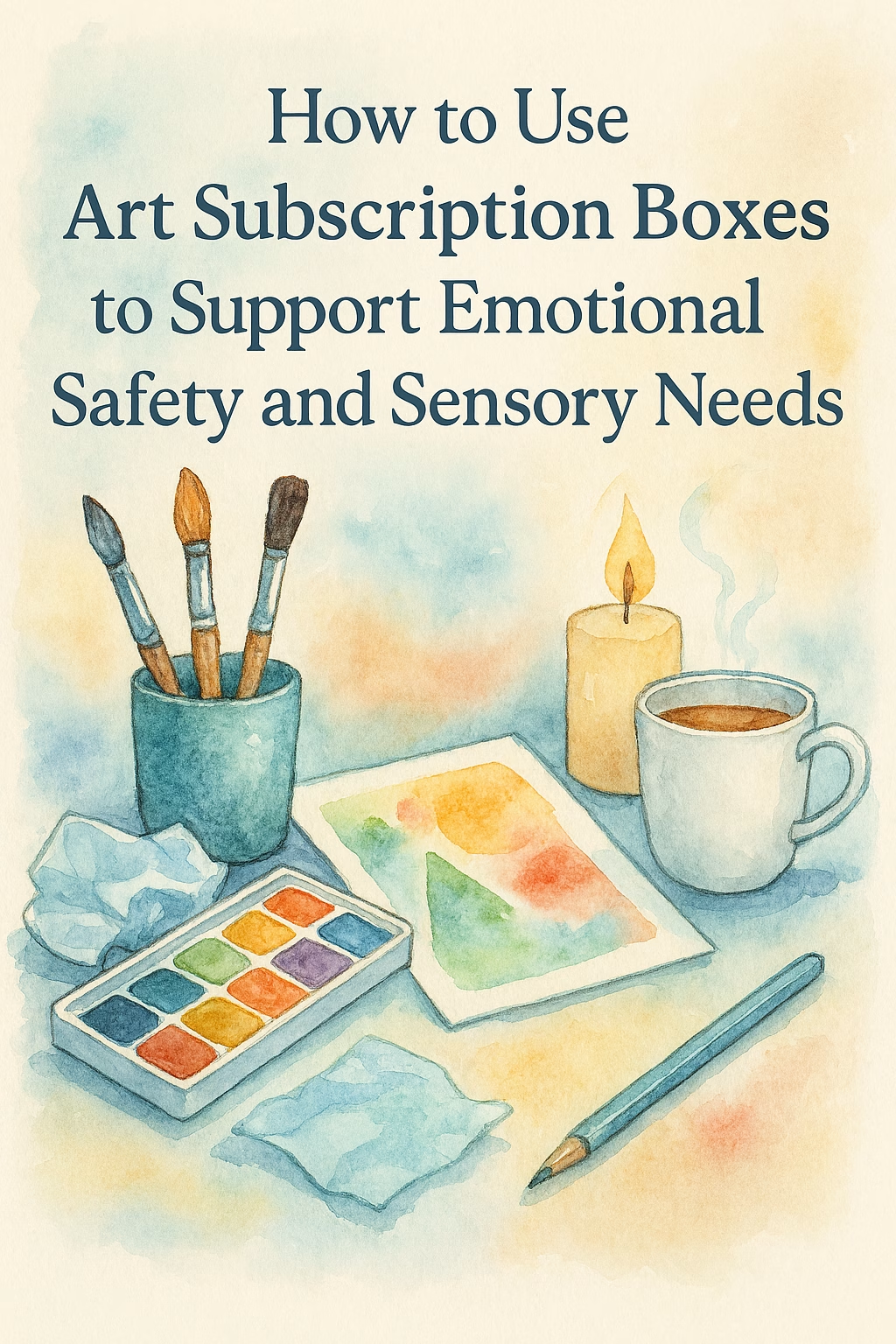
The Art Box That Saved Our Sanity (And Why You’ll Want to Open Yours Too) Spoiler: It’s not just paint and paper. It’s a monthly dose of magic, regulation, and connection. Let’s be real: art time in our house used to feel like a Pinterest board gone rogue. Glitter in the dog’s fur. Paint water mistaken for tea. A toddler sobbing because the googly eyes were “too round.” So, when Open the Box—a sensory-friendly Art Subscription Box—arrived on our doorstep, we didn’t just open it. We made it part of something sacred. Why We Added It to Our Friday Tea Rituals Every Friday, we gather with a small group of friends for tea, poetry, and gentle connection. It’s our weekly exhale. Our reset. Our reminder that learning can feel like beauty, not burnout. Adding this Art Subscription Box to those moments made creativity feel like part of the ritual—not just another subject. We light candles. We sip tea. And we open the box together, letting the materials guide us into expression that feels safe, sensory-friendly, and surprisingly profound. If you’re curious how we built this rhythm, Turn Tea Time into a Weekly Ritual of Beauty: Art, Poetry & Music Made Simple shares the heart behind it. We often pair it with blends from Art of Tea or Magic Hour Tea—because sensory-friendly learning starts with a warm mug and a soft landing. Why This Box Works for Real Families (Not Just Instagram Ones) Open the Box isn’t about perfection. It’s about presence. Each month, this Art Subscription Box delivers: Emotionally safe projects (no pressure, no performance) Sensory-friendly materials (hello, texture-rich prompts and calming colors) Connection-focused experiences (we actually sit down and make things—together) It’s not just “open-ended art.” It’s open-hearted art. And for neurodivergent brains, that matters more than you think. If you’ve ever felt like curriculum was breaking your child instead of supporting them, How to Choose Curriculum That Supports Neurodivergent Brains (Not Breaks Them) might be the post you need next. What Makes It Different (And Why We Keep Coming Back) Most art kits assume your child is regulated, focused, and ready to follow instructions. This Art Subscription Box assumes your child is human. Sensitive. Spirited. Sometimes dysregulated. Sometimes brilliant. Often both. Here’s what we’ve noticed: The projects are adaptable—we’ve used them during sensory storms and sunny mornings alike The materials are intentional—no junk, no overwhelm, just tools that invite exploration The prompts are gentle—they spark curiosity without demanding outcomes And yes, we’ve had meltdowns mid-project. But we’ve also had breakthroughs. Like the time my child used tissue paper to express a feeling they couldn’t name. Or the day we made collages about “what calm feels like.” If you’re navigating sensory needs and emotional regulation, This Simple Sensory Setup Changed Everything—Here’s How We Use It offers more ideas that pair beautifully with art. We often follow up with calming tools from Fun and Function or my low-tox essentials—especially when the day starts in meltdown mode. For Homeschoolers, Sensitive Kids, and Moms Who Need a Minute If you’re homeschooling, this Art Subscription Box is a dream. It counts as art, SEL, and sometimes science (depending on how wildly your child interprets the theme). If you’re parenting a neurodivergent child, it’s a tool for regulation, expression, and connection. And if you’re a mom who’s tired of prepping, printing, and pretending to love glitter—this box shows up ready. You just open it. That’s it. We’ve paired it with curriculum that honors the same values: All About Learning Press for emotionally safe reading and spelling Grammar Galaxy for story-based language arts Logic of English for dyslexia-friendly instruction Pandia Press and Honest History for inclusive science and history Training Aliens and Signing Time for social-emotional and communication support If you’re feeling burned out, Feeling Burned Out? A Survival Guide for Overstimulated Moms might be the gentle nudge you need before you even pick up the paintbrush. What’s Inside (Without Spoiling the Surprise) Each Art Subscription Box includes: A themed art experience with curated materials Gentle prompts that support emotional expression Enough flexibility to adapt for multiple ages and sensory needs But the real magic? It’s what happens after you open it. The quiet moments. The shared laughter. The “I made this” pride that lingers long after the glue dries. It reminds me of This Is What Learning Really Looks Like (And Why It’s Enough)—because sometimes, the most meaningful learning doesn’t look academic. It looks like connection. Why It Feels Like a Hug for Neurodivergent Brains This isn’t just creativity—it’s co-regulation. The projects invite movement, choice, and emotional expression without pressure. The textures are calming. The colors are intentional. The pacing is slow enough to honor real-life rhythms. One Friday, my daughter whispered, “I didn’t know art could feel like breathing.” That’s when I knew we’d keep opening the box. If you’ve ever wondered why your child’s “weird” calming behaviors are actually brilliant, Why “Weird” Calming Behaviors Are Actually Totally Normal might help you see their art process in a whole new light. We often follow up with gentle science from MEL Science, or use Mito Red Light and Global Healing to support our family’s nervous systems—because healing isn’t just physical, it’s relational and sensory too. Want to Try It? If your family’s been craving calm, creativity, or connection—this Art Subscription Box might be the gentle nudge you need.Light a candle. Pour some tea. Invite your child to open the box like it’s a treasure chest. And let the art unfold—not just on paper, but in your rhythm, your relationships, and your nervous systems.Because sometimes, the best kind of learning isn’t loud. It’s quiet. Intentional. And wrapped in tissue paper. Keep Exploring (Because You’re Building Something Beautiful) Why Eclectic Homeschooling Was the Better Way to Learn (After Letting Go of the Perfect Plan) The Parenting Breakthrough Hidden in a Sock Refusal: Autonomy, Regulation, and Real Connection How to Help Sensitive Kids Learn: 7 Brain-Based Shifts for Focus, Regulation, and Healing You’re More Than a To-Do List: Join the 30-Day
How to Choose Curriculum That Supports Neurodivergent Brains (Not Breaks Them)
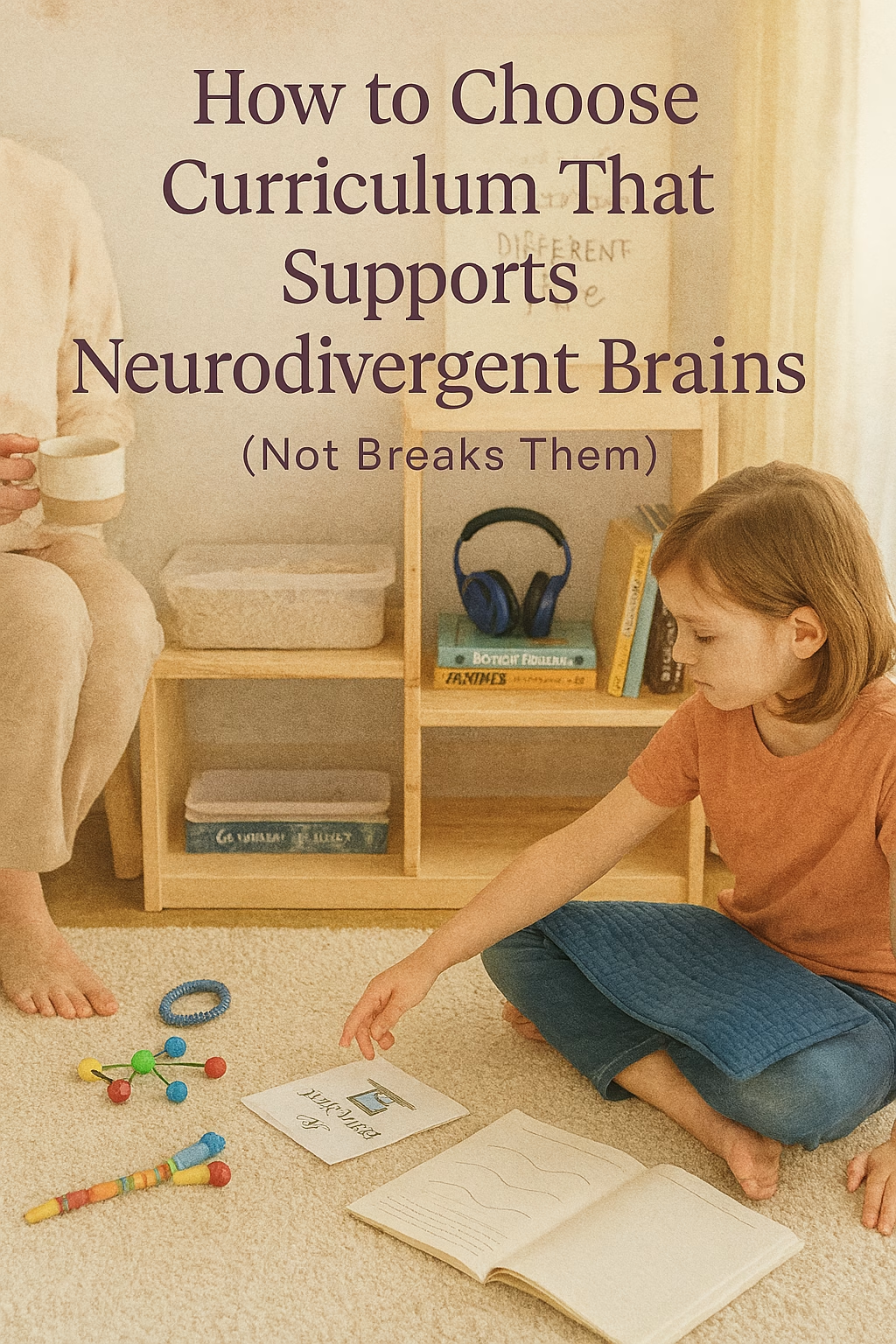
How to Choose Curriculum That Supports Neurodivergent Brains (Not Breaks Them) Spoiler: It’s not about finding the “perfect” program. It’s about finding what actually works—for your child, your rhythm, and your sanity. Let’s be honest: choosing curriculum for neurodivergent learners can feel like trying to assemble IKEA furniture blindfolded—with a toddler narrating their sensory experience in real time. You start with hope. You end with a pile of PDFs, a half-used planner, and the creeping suspicion that maybe your child isn’t “behind”—maybe the curriculum just wasn’t built for their brain. And not just any brain. A neurodivergent brain. One that processes the world in loops, bursts, and sensory spirals. One that needs more than worksheets—it needs regulation, trust, and tools that feel like safety. That’s where this post comes in. Because after years of trial, error, and emotional cartwheels, I’ve learned that choosing curriculum isn’t about checking boxes. It’s about choosing connection. Why Traditional Curriculum Misses the Mark (And What to Do Instead) Most curriculum is designed for neurotypical learners who thrive on structure, predictability, and linear progress. But neurodivergent kids? They zig when others zag. Their brains crave flexibility, novelty, and emotional safety. Traditional programs often overlook: Rigid pacing that ignores regulation needs Overwhelming visuals that trigger sensory overload Assumptions about executive function (hello, multi-step instructions) A lack of emotional safety—especially when mistakes feel like failure If your child melts down during math or zones out during phonics, it’s not because they’re broken. It’s because the curriculum wasn’t built for their nervous system—or their beautifully complex neurodivergent brain. For a deeper dive into how sensory setups can transform learning, read This Simple Sensory Setup Changed Everything—Here’s How We Use It. Curriculum as Nervous System Support Forget “learning styles.” Neurodivergent learners need curriculum that co-regulates. That means: Visual schedules that soothe Predictable transitions that reduce anxiety Movement breaks that restore focus Gentle scripting that builds emotional safety These aren’t extras. They’re essentials for brains that process the world differently. We saw this firsthand when our mornings shifted from meltdowns to magic. If you’re in that season, The Best Morning Routine for Kids with Sensory Processing Challenges might help. We’ve leaned on tools from Fun and Function to create calming spaces—weighted lap pads, sensory bins, and fidget kits that actually work. They’ve helped us build a home that feels like a hug. Time-Bending Curriculum: Because Time Is Weird Neurodivergent brains often experience time differently. ADHD, sensory processing differences, and anxiety can all warp time perception. So instead of asking “Is this rigorous enough?” ask: Can we do this in 10-minute chunks? Will this survive a sensory storm? Does it spark curiosity—or just compliance? We do math at 7am or 7pm—whenever the stars align. And sometimes, we skip the curriculum entirely and follow curiosity instead. Surprise Science: What Happens When You Skip the Curriculum but Not Curiosity is proof that learning still happens. MEL Science has been our go-to for short, sensory-rich experiments that spark curiosity without overwhelming. Their kits feel like magic—especially on days when attention spans are short and wonder is in high demand. Emotional Safety Is the Curriculum If the workbook feels like a drill sergeant, it’s a no.If your child feels safe enough to try, fail, and try again—that’s the win. We build trust through: Gentle rituals (like tea before math) Affirming language (“You’re not behind. You’re building brilliance.”) Mistake-friendly environments Because neurodivergent brains don’t just need information—they need safety to explore it. All About Learning Press has been a game-changer for us. Their reading and spelling programs are mastery-based, emotionally safe, and built for real kids—not imaginary ones who never cry over copywork. Curriculum as Relationship Repair For families recovering from school trauma, curriculum can be a healing tool.We’ve used it to rebuild trust, co-create goals, and reconnect after hard seasons.We start with a tea ritual, not a test. We honor autonomy—even when it shows up as sock refusal. The Parenting Breakthrough Hidden in a Sock Refusal explains why that moment mattered more than any worksheet.Tea Time Together has helped us turn learning into a ritual of connection. And when I need a moment to breathe, Art of Tea and Café Borbone are my go-tos—because sometimes the best curriculum starts with a warm mug and a deep exhale. Curriculum as Identity Affirmation Instead of “accommodating differences,” we affirm neurodivergent identity.We say: “Your brain is brilliant. Let’s find tools that honor it.” That’s why we lean eclectic. Why Eclectic Homeschooling Was the Better Way to Learn shows how letting go of the perfect plan gave us space to grow. Grammar Galaxy turns language arts into story-based adventures that actually make my kids laugh. Logic of English supports dyslexia and diverse learning styles with clarity and compassion. Pandia Press and Honest History help us teach science and history in ways that feel human, inclusive, and emotionally resonant. Because when curriculum reflects your child’s brain, it doesn’t just teach—it affirms. Social Skills That Don’t Feel Scripted Training Aliens has been a breath of fresh air—movement-based, neurodiversity-affirming, and built for real-life regulation. And Signing Time has supported communication in ways that feel empowering, not performative. These programs don’t just teach skills. They support the emotional wiring of neurodivergent brains—gently, playfully, and with respect. Healing Tools That Support the Whole Family When we needed deeper answers, DNA testing helped us decode our child’s learning needs. Sensitive Kids Aren’t Broken—These DNA Markers Helped Me See Why is where that journey began. Global Healing and Mito Red Light have supported our family’s healing in ways I didn’t expect—especially during seasons of chronic stress and sensory overload. And for everyday support, I’ve curated our favorite low-tox staples, Autism Support Favorites, and mama reset rituals. Because healing isn’t just physical—it’s emotional, relational, and neurological. And neurodivergent brains deserve that kind of care. You’re Not Choosing Curriculum. You’re Choosing a Relationship. Between your child and their learning. Between you and your rhythm. Between your family and the world you’re building together. So, if
This Simple Sensory Setup Changed Everything—Here’s How We Use It
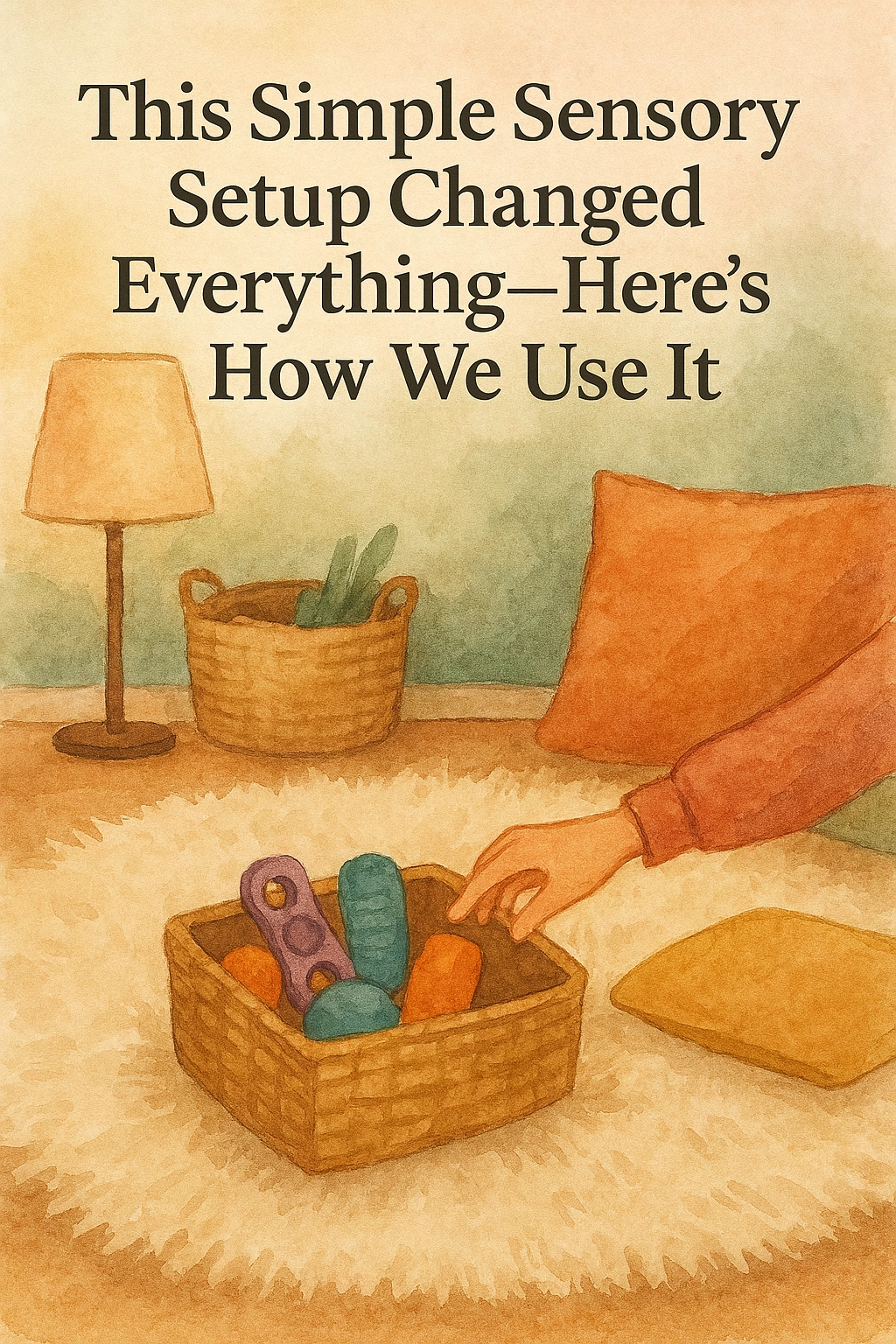
How We Use “Sensory Stations” to Reset, Reconnect, and Reclaim the Day Spoiler: It’s not about doing more. It’s about doing what works. It was 10:42 a.m. when my child declared war on handwriting. The pencil was too pokey, the paper was too papery, and I was apparently the villain in a sensory crime scene. I didn’t need a curriculum—I needed a crisis negotiator. That’s when I stopped trying to “fix the behavior” and started supporting the nervous system. And everything changed. What Is a Sensory Setup (and Why Does It Work So Well)? Sensory stations—also known as a sensory setup—are small, intentional spaces designed to help kids regulate through movement, touch, sound, or quiet. Think of them as emotional pit stops—places where a child can pause, recalibrate, and return to learning with their whole body on board.They’re not Pinterest-perfect. They’re real-life tools that meet real-life needs. And thanks to tools from Fun and Function, this sensory setup has earned a permanent spot in our homeschool rhythm. Why We Switched from “Fixing Behavior” to Supporting Regulation Before we had a sensory setup, I spent a lot of time redirecting, correcting, and—let’s be honest—bribing. But here’s the truth:You can’t teach a dysregulated child. You can only support them until they feel safe enough to learn. Once I started supporting the nervous system, everything shifted: Fewer meltdowns, more momentum More connection, less correction Actual learning happening—because the body and brain were finally on the same team Our Favorite Sensory Stations (and How We Use This Setup) We rotate stations based on what the day needs. Some are permanent fixtures; others pop up when the vibe gets wobbly. Here’s what’s working in our sensory setup right now: The Wiggle & Wall Push CornerGreat for post-lunch energy bursts. We use a wall push chart, a mini trampoline, and a resistance tunnel from Fun and Function that feels like a hug and a workout rolled into one. The Quiet NestA cozy nook with a weighted blanket, soft lighting, and calming visuals. The weighted lap pad from Fun and Function is our go-to for transitions and story time. The Tactile TableFidgets, kinetic sand, and a feelings chart. This is where we talk about “big feelings” without pressure. Bonus: the chewies from Fun and Function are a hit with my sensory seeker who chews everything except the broccoli. The Focus SpotA wobble cushion, noise-reducing headphones, and a timer for short tasks. This station gently builds stamina for independent work—without the overwhelm. A Sensory Setup Audit: What Does Your Child Need? If you’re wondering where to start, try asking: Does my child seek movement before focusing? Do transitions trigger big emotions? Is quiet time restorative or dysregulating? What sensory inputs calm my child—and which ones overwhelm them? What’s one moment today that felt regulated? What helped? This isn’t about perfection. It’s about permission—to pause, to feel, to move, to reset. A sensory setup gives your child the tools to do just that. Station Swaps for Real-Life Moods Sensory needs shift. So do moods. Here’s how we adapt our sensory setup: Overstimulated? Swap kinetic sand for soft fabric swatches or a weighted lap pad. Understimulated? Add a resistance tunnel, wall push chart, or movement cards. Anxious? Introduce a visual timer, calming scents, or a quiet tent with soft lighting. Disconnected? Try a shared sensory activity—like matching fidgets or a joint movement game. Avoidant? Offer choices: “Would you like the Quiet Nest or the Focus Spot?” Meltdown mode? Skip the station. Go straight to co-regulation. You’re the setup. What Learning Really Looks Like Learning isn’t always quiet. Sometimes it looks like wall pushes, chewies, and a child whispering affirmations to a weighted lap pad. That’s not failure—it’s regulation in progress.This sensory setup isn’t just clever—it’s designed by therapists, tested by families, and built to last through snack spills and sibling squabbles. I only recommend products I use and love, and these have earned their spot in our daily rhythm. Some of the links I share may be affiliate links, which means I may earn a small commission—at no extra cost to you—if you choose to make a purchase. I only recommend products I genuinely love and believe will support sensitive families on their journey. Thank you for trusting me and helping sustain this cozy corner of the internet. Ready to Try a Sensory Setup in Your Home? You don’t need a giant playroom or a degree in neuroscience. You just need a willingness to meet your child where they are—and a few tools that make that easier. Browse our favorite sensory supports: Fun and Function Keep exploring healing-centered homeschool tips below—because regulation isn’t a detour from learning. It’s the path. Further Reading: Keep the Rhythm Going If this post resonated, here are more stories, strategies, and soul-savers from our journey: This Is What Learning Really Looks Like (And Why It’s Enough) Why Eclectic Homeschooling Was the Better Way to Learn (After Letting Go of the Perfect Plan) You’re More Than a To-Do List: Join the 30-Day Ritual Reset for Moms Who Need a Minute The Parenting Breakthrough Hidden in a Sock Refusal: Autonomy, Regulation, and Real Connection Why “Weird” Calming Behaviors Are Actually Totally Normal How to Help Sensitive Kids Learn: 7 Brain-Based Shifts for Focus, Regulation, and Healing Sensitive Kids Aren’t Broken—These DNA Markers Helped Me See Why His DNA Didn’t Just Explain Him—It Transformed Me: A New Way to Homeschool That Toy Isn’t a Distraction. It’s a Sensory Survival Tool The Sensory Breakthrough That Changed Our Days—After Years of Struggle How to Recover When the Day Starts in Meltdown Mode Feeling Burned Out? A Survival Guide for Overstimulated Moms What Happens When Everyone’s Sensitive? A Real-Life Survival Guide to Highly Sensitive Parenting and Emotional Family Life Turn Tea Time into a Weekly Ritual of Beauty: Art, Poetry & Music Made Simple Neurodivergent Homeschooling Made Simple Surprise Science: What Happens When You Skip the Curriculum but Not Curiosity Trust, Curiosity, and Connection—This Is
This Is What Learning Really Looks Like (And Why It’s Enough)
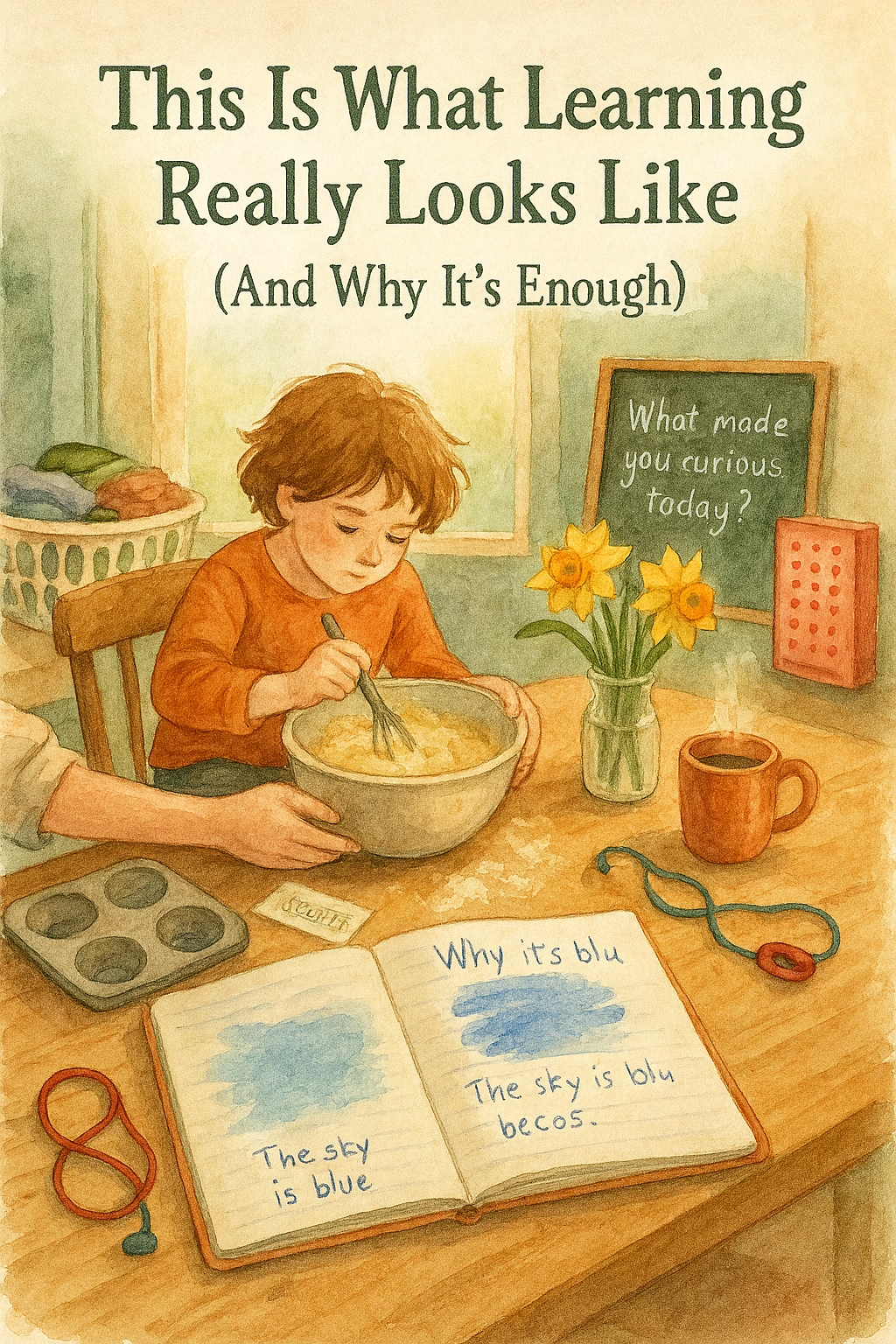
What if the best learning doesn’t look like learning at all? No worksheets. No Pinterest-perfect schedules. Just a child asking why the sky changes color or measuring flour with sticky fingers and fierce concentration. I used to think learning had to look a certain way—structured, polished, preferably laminated. I thought if it didn’t come with a printable or a checklist, it didn’t count. But the truth? The most powerful learning happens in the messy middle of everyday life. It’s in the quiet questions at bedtime.It’s in the way they negotiate snack trades like seasoned diplomats.It’s in the wild joy of discovering that worms have five hearts (and yes, we Googled it together). When I finally let go of the “perfect plan,” I found something better: Confidence in our rhythm Connection through curiosity Growth that actually sticks This is what learning really looks like: not polished, not Pinterest-worthy, but deeply human.This shift didn’t happen overnight. It started with one sock refusal, one meltdown, one moment where I realized: my child wasn’t resisting learning. He was resisting overwhelm. (Related: The Parenting Breakthrough Hidden in a Sock Refusal) How to Link Everyday Moments to Real Learning Goals Because yes—snack trades, sock refusals, and shadow tracing do count.They’re not distractions. They’re glimpses into what learning really looks like when it’s rooted in connection and curiosity. 1. “Why is the sky blue?” → ScienceThis is light refraction, atmospheric layers, and curiosity in action. Watch a short video together, then draw your own sky with crayons and label the layers. Want to go deeper? Try a hands-on experiment from MEL Science. 2. Baking muffins → Math + ChemistryDoubling a recipe teaches fractions, measurement, and chemical reactions. Let them guess what baking soda does, then taste-test their hypothesis. Reinforce with All About Learning Press for reading and logic tie-ins. 3. Sorting laundry → Early Math + Sensory RegulationCategorizing by color, size, or texture builds pattern recognition. Turn it into a game: “Find all the things with stripes!” Bonus: pair with Mito Red Light for a calming sensory reset afterward. 4. Arguing over bedtime → Social-Emotional Learning + WritingHelp them write a “bedtime negotiation letter” with reasons and counterpoints. You’re teaching persuasive writing and emotional regulation. For extra support, explore Training Aliens—our favorite social skills program. 5. Playing with shadows → Physics + GeometryTrace shadows at different times of day. Ask: “Why did it move?” Then build a sundial together. Pandia Press has great science units that build on these moments. 6. Asking “Are dragons real?” → Literacy + Mythology + Critical ThinkingRead a folktale from Honest History, compare it to nonfiction, and create your own dragon species with habitat facts. Grammar Galaxy makes storytelling even more magical. 7. Grocery shopping → Economics + Nutrition + BudgetingGive them a budget and let them plan a snack menu. Sneak in some unit price comparisons. Amazon is great for price checks—and for stocking up on snacks they’ll actually eat. 8. Building a fort → Engineering + Spatial ReasoningAsk them to sketch a blueprint first. Then test different materials for strength. Bonus: teamwork. Logic of English helps reinforce vocabulary from the build. This is what learning really looks like: playful, practical, and perfectly imperfect. A Permission Slip for Parents You don’t need to be a certified teacher, a Pinterest mom, or a walking encyclopedia. You just need to be present. Your child learns best from someone who sees them clearly—and that’s you. So, here’s your permission slip:You’re already doing enough. You’re already doing it right.Even if the day starts in meltdown mode. (How to Recover When the Day Starts in Meltdown Mode)Even if your “lesson plan” is just surviving until snack time.Even if your homeschool looks more like a cozy mess than a color-coded spreadsheet. (Why Eclectic Homeschooling Was the Better Way to Learn) This is what learning really looks like—especially for sensitive, curious kids who thrive in rhythm, not rigidity. The S.N.A.P. Method: Spot-the-Learning Framework When you’re not sure if it “counts,” try this: S: Spark — What sparked their curiosity?N: Notice — What skills are they using?A: Ask — What questions can deepen the moment?P: Pivot — How can you gently link it to a learning goal? This turns vague encouragement into a repeatable tool. (Related: Homeschool Mom Self-Care That Actually Works) When It Feels Like Nothing’s Sticking If you’re worried that natural learning isn’t “enough,” here are a few gentle ways to reinforce it: Narrate what you see: “You just used problem-solving to figure that out!” Snap a photo and reflect later: “Remember when you built that ramp? That was physics!” Create a “learning jar” where kids add slips of paper with things they discovered each week. Use sensory tools to support focus and regulation. (That Toy Isn’t a Distraction. It’s a Sensory Survival Tool) Honor calming behaviors—even the “weird” ones. (Why “Weird” Calming Behaviors Are Actually Totally Normal) Explore sensory-friendly tools from Fun and Function—we love their chewies, weighted gear, and movement-friendly seating for real-life learning moments. Browse my Autism Support Favorites collection for more tools that support what learning really looks like in sensitive families. Why It Matters (Especially for Sensitive Kids) When learning is embedded in real life, it’s emotionally safe, neurologically sticky, and deeply meaningful. Kids retain more when they feel connected, curious, and calm. That’s not just sweet—it’s science. (How to Help Sensitive Kids Learn: 7 Brain-Based Shifts) And if you’ve ever wondered why your child learns differently, you’re not alone. DNA testing helped me understand my son’s sensory needs, emotional wiring, and learning style in a whole new way. (What Your Child’s DNA Might Be Trying to Tell You About Learning)It didn’t just explain him—it transformed me. (His DNA Didn’t Just Explain Him—It Transformed Me) This is what learning really looks like when we listen deeply, adapt gently, and trust the process. What to Say Instead of “What Did You Learn Today?” Tonight, instead of asking “What did you learn today?” try: “What made you curious?” “What felt hard but