10 Signs Your Child Needs a Homeschool Break (And What to Do About It)
Is homeschooling starting to feel like a daily battle?
How can you tell if your child is overwhelmed—not just unmotivated?
If your homeschool days feel more like a tug-of-war than a joyful journey, you’re not alone. Especially after transitioning from public school, many families experience unexpected resistance—kids disengaging, tensions rising, and a once-exciting homeschool plan suddenly feeling heavy.
That was us.
We expected a smooth shift into personalized learning—but instead, we hit a wall of burnout. Even simple lessons triggered frustration. Our kids dreaded schoolwork, and we started second-guessing everything: our curriculum, our schedule, even our decision to homeschool.
So, we paused.
We stepped back—not to buy new materials, but to reconnect. We leaned into unschooling, a gentler rhythm that emphasized play, curiosity, and meaningful moments. Slowly, the resistance softened. Our kids rediscovered joy. Learning became something they leaned into—not something they avoided.
We didn’t buy new materials—but I did refill my mug.
White Coconut Crème from Art of Tea became my homeschool reset ritual. The creamy coconut and soft vanilla notes felt like a tropical exhale—reminding me to slow down, connect, and savor tiny moments of peace between the chaos.
Need your own breath of calm? This is my go-to tea during burnout breaks: Art of Tea’s White Coconut Crème.”>Coconut Creme Tea.
Before you overhaul your homeschool plan, consider this: your child may need rest and rhythm—not another workbook.
Let’s explore 10 gentle signs that your child is craving connection—and how to respond with care.
 Quick Summary: Signs Your Child Might Need a Homeschool Break
–  Resistance to favorite subjects
–  Emotional outbursts over simple tasks
–  Frequent daydreaming or lack of focus
– Sleep issues and low energy
–  Loss of joy, connection, and curiosity
1. Why Is My Child Suddenly Resisting Homeschooling?
If your child suddenly groans at the sight of their favorite subject, it’s a red flag. Resistance often signals mental fatigue, not a curriculum mismatch.
Try: A week of interest-led learning or a nature walk with this kid-friendly field journal to reset their mindset.
2. Emotional Outbursts Over Simple Tasks
 Emotional Outbursts Over Simple Tasks
Tears over math facts or spelling lists? That’s not laziness—it’s overwhelm. Emotional dysregulation often means your child’s executive function is maxed out.
Related read: How We Use Ember Bucks to Teach Emotional Regulation
3. Frequent Daydreaming or Zoning Out
Spacing out during lessons isn’t always boredom—it can be a sign of cognitive overload. Their brain might be begging for downtime.
Try: Quiet time with a sensory fidget set or a calming audiobook.
4. Forgetfulness and Lack of Focus
If your child is forgetting instructions or skipping steps, it may not be a discipline issue—it could be mental fatigue.
Tip: Use dry-erase pockets for low-pressure review games that feel playful, not punishing.
5. Is My Child Burnt Out on Homeschooling?
 Is My Child Burnt Out on Homeschooling?
When your child stops lighting up during science experiments or story time, it’s time to pause. Burnout can dull even their brightest interests.
Try: A week of unschooling-inspired exploration with Dino Detective Printables or a library scavenger hunt.
6. Can Homeschool Stress Affect Sleep?
 Can Homeschool Stress Affect Sleep?
Sleep disruptions often follow over-scheduling or emotional stress. If your child is dragging in the morning, it’s time to slow down.
Try: A cozy bedtime routine with this weighted blanket and a calming read-aloud.
P.S. During our own burnout phase, I started swapping out harsh cleaning products and synthetic fragrances for gentler alternatives. Grove Collaborative became my go-to for honest essentials—like non-toxic room sprays and biodegradable laundry sheets.
Honest Company’s lavender bubble bath also turned into part of our nighttime rhythm—a warm soak for sensory reset that even I started looking forward to.
7.Withdrawing from Siblings or Friends
 Withdrawing from Siblings or Friends
Social withdrawal can be a sign your child feels emotionally depleted. They may need connection more than correction.
Related post: How Our Homeschool Co-op Helped Us Reconnect
8. Constant Requests to Change Curriculum
 Constant Requests to Change Curriculum
If your child keeps asking to “try something new,” they may be chasing novelty to escape burnout—not seeking better content.
Tip: Offer a mini break with creative writing prompts or a DIY learning menu.
9.Complaints of Headaches or Stomachaches
 Complaints of Headaches or Stomachaches
Physical symptoms can be your child’s way of saying, “I need rest.” Stress often shows up in the body before the brain catches on.
Try: A hydration station with fun reusable water bottles and a quiet reading nook.
10. You’re Feeling Burnt Out Too
 You’re Feeling Burnt Out Too
If you’re tired, snappy, or second-guessing everything—you’re not failing. You’re human. And your child may be mirroring your energy.
Related post: From Burnout to Belonging: Our Move to North Dakota
When We Were Ready to Rebuild
 When We Were Ready to Rebuild
After our homeschool pause, we didn’t jump back in with rigid schedules or heavy workbooks. We chose tools that felt flexible, supportive, and aligned with how our kids actually learn. One of those was Logic of English.
It’s a pick-up-and-teach phonics program that helped our logical autistic learner feel safe and confident again—with consistent rules, multisensory lessons, and a clear structure that made reading feel less like a battle and more like a puzzle they could solve.
If you’re easing back into learning after burnout, Logic of English might be the gentle clarity your homeschool needs.
Favorite Tools for Gentle Homeschool Breaks
 Favorite Tools for Gentle Homeschool Breaks
Here are a few Amazon picks that help us reset without ditching our curriculum:
- Reusable, low pressure practice Dry Erase Pockets
- A gentle yet fun Nature Activity Book to learn organically in nature
- A Weighted Blanket for comfort- they’re actually very soothing!
- If it’s warm out, my kids can spend hours playing with a Water Table
- Mel Science Kits- lots of learning and lots of fun too!
 Curious about unschooling? It’s not about giving up—it’s about tuning in. Taking that step back helped our family rediscover joy in learning. If you’re feeling burnt out, you might find healing (and freedom) in embracing a season of unschooling. To learn more about unschooling, read my post: Trust, Curiosity, and Connection: This is What Unschooling Really Looks Like.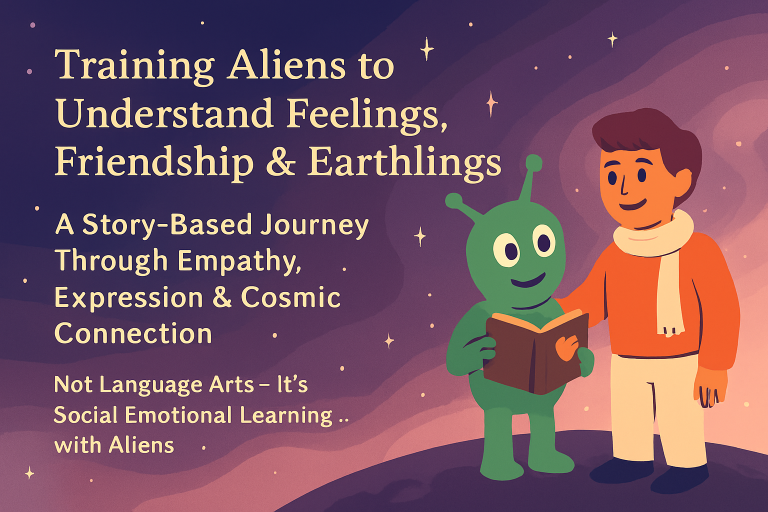
Training Aliens: Our Favorite Social Emotional Curriculum
 Training Aliens: Our Favorite Social Emotional Curriculum
 Teach big feelings, friendship skills & emotional regulation through story-based missions!
 Kids help space camp aliens navigate social challenges like frustration, joining groups & making friends. Perfect for homeschoolers, co-ops & neurodivergent learners—playful, inclusive & easy to adapt.
 Includes lessons, printables & alien-themed visuals that actually stick!
 Builds confidence, kindness & coping skills in a totally out-of-this-world way.
 We pair it with our favorite emotions flip book + kindness trackers for everyday SEL wins!