
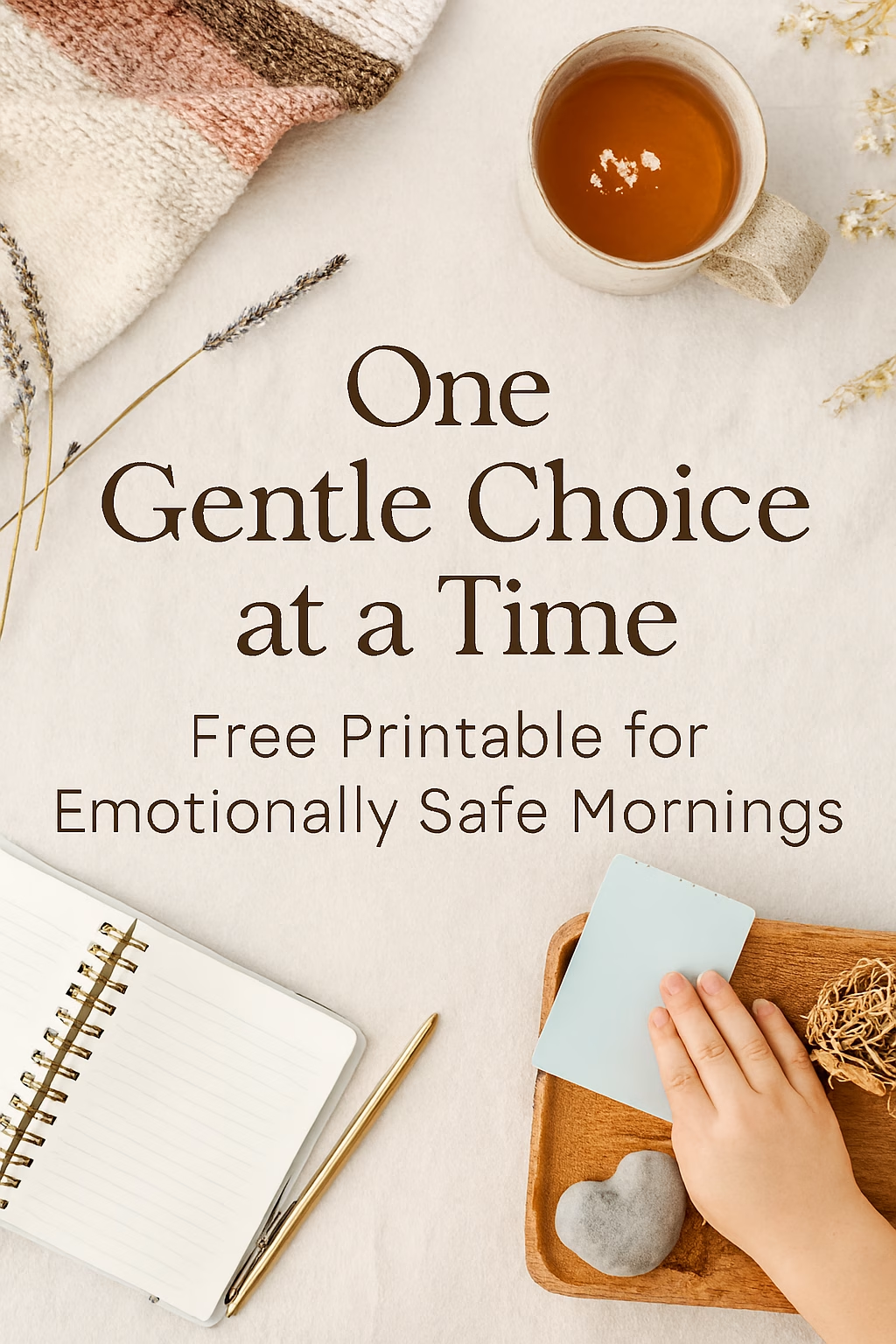
One Gentle Choice at a Time: Free Printable for Emotionally Safe Mornings It was 8:17 a.m. and my child was curled under the table, whispering “I’m not ready.”The planner was open. The pencils were sharpened. But their heart wasn’t.That’s when I stopped asking “What’s next?” and started asking “What feels safe?” If you’ve ever had a morning like that—where everything looks “ready” but nothing feels ready—this free printable is for you. What if mornings didn’t have to start with pressure? What if your child had a soft, visual way to ease into the day—without demands, without overwhelm, and without you having to play emotional detective before your second cup of coffee? That’s exactly why I created the Calm Start Morning Routine Cards. This free printable offers gentle, choice-based prompts designed for sensitive homeschoolers who need emotional safety before they can even think about math facts or handwriting. And yes, they’re free. Because every family deserves a softer start. Who this free printable is for This printable is especially helpful for: Neurodivergent kids who need gentle transitions Families who value emotional safety over rigid routines Moms who want a visual tool that doesn’t feel performative Microschool leaders building healing-centered ecosystems Anyone who’s ever whispered “we’re just not ready yet” and meant it Why this free printable actually works These cards aren’t about checking boxes or forcing routines. They’re about restoring agency, building trust, and helping your child feel seen before the learning begins. Each card offers a simple, emotionally safe invitation—like choosing a cozy spot, checking in with feelings, or starting with a quiet activity. No pressure. No performative “morning magic.” Just one gentle choice at a time. And here’s the best part: you don’t have to use all the cards. You don’t even have to use them every day. Just keep them visible, let your child lead, and watch what happens when mornings feel less like a battle and more like a beginning. Cozy companions for your Calm Start Pair this free printable with a warm drink—something grounding, gentle, and mom-approved. I love sipping Art of Tea or Magic Hour’s herbal blends while my child eases into the day. And if it’s one of those mornings? Cafe Borbone espresso saves lives. Want to create a sensory-friendly setup alongside your Calm Start cards? We keep a basket of fidgets, weighted lap pads, and soft textures nearby. Fun and Function has great tools, and my Autism Support Favorites shelf is full of things that actually help. And if you’re the emotional anchor in a room full of chaos, don’t forget to reset yourself too. My Mama Reset Rituals shelf is full of gentle tools that help me regulate before I try to lead. Red light therapy has also been a game-changer for my energy and mood—especially on mornings when I feel like I’m running on fumes. I use Mito Red Light while prepping breakfast or reading aloud. Want to turn Calm Start into a weekly ritual? Add poetry, art, or music with Tea Time Together—it’s simple, beautiful, and emotionally grounding. What moms are loving about this free printable “It gives my child a sense of control without chaos.” “We finally have a rhythm that doesn’t start with tears.” “I stopped dreading mornings. That’s huge.” Ready to try it? Download your free Calm Start Morning Routine Cards below. You’ll get a cozy intro page for moms, four gentle categories (Feelings & Check-In, Quiet Choices, Ready to Learn), and a layout that’s typo-free, emotionally safe, and visually soothing. Whether you’re running a microschool, homeschooling solo, or just trying to survive breakfast with your dignity intact—this free printable is here to help. Download the Calm Start Cards here P.S. You’re doing enough. Some mornings will be smooth. Others will be messy. These cards aren’t a fix—they’re a tool. A way to say, “I see you. I trust your rhythm. Let’s begin gently.” If you’re building a homeschool rhythm that honors sensitivity, connection, and joy—I’d love to walk alongside you.Join the Prairie Ember list for more cozy tools and gentle encouragement. Related Posts You’ll Love Free Printables That Make Homeschool Feel Less Overwhelming Burned Out and Still Homeschooling? This Is What Actually Helped Me Heal How to Build a Gentle Homeschool Rhythm This Fall (That Actually Works) Sensitive Kids Thrive in Chaos—Here’s How to Help Them Feel Safe How One Simple Weekly Ritual Can Transform Connection with Your Child You’re Not Lazy—You’re Overstimulated: A Nervous System Survival Guide 🧡 Mama Reset Rituals If you’re the emotional anchor in a room full of chaos, this shelf is for you. These gentle tools help me regulate, reconnect, and reset—especially on tender mornings.
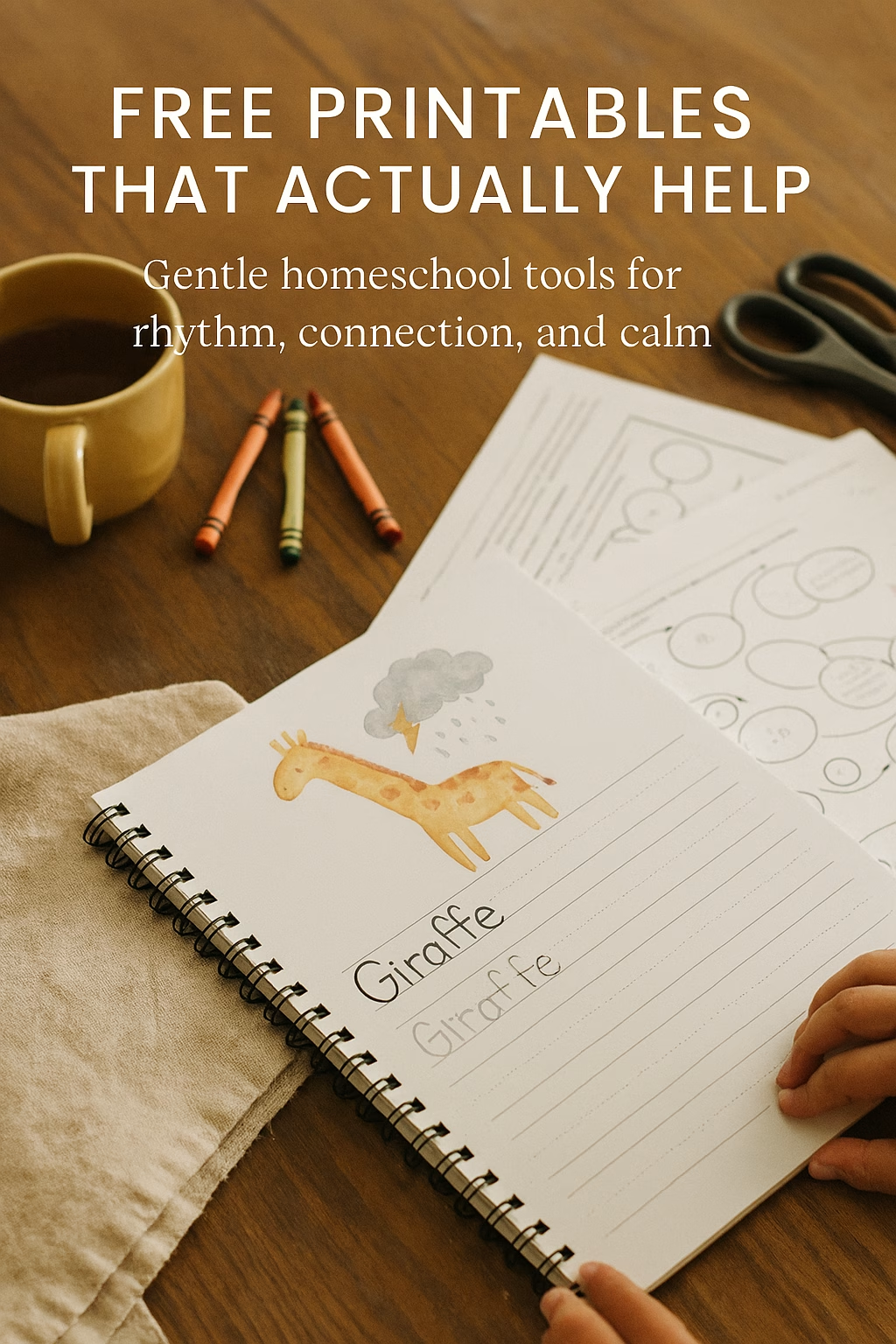
Free Printables That Make Homeschool Feel Less Overwhelming
Free Printables That Make Homeschool Feel Less Overwhelming Because sometimes you just need something that works without making you cry into your planner.Let’s be honest: homeschool overwhelm is real.Between the curriculum rabbit holes, the Pinterest-perfect expectations, and the “just print this 47-page unit study” advice from strangers online—sometimes it feels like you need a PhD in logistics just to teach phonics.But here’s the good news: There are actually free printables out there that are good. Like, “I can breathe again” good. Like, “this saved my Tuesday” good. And they don’t require a subscription, a 12-step onboarding process, or a printer that only works on alternate Thursdays.So, I rounded up the best free printables and digital tools that make homeschool feel less like a juggling act and more like a rhythm you can actually live with. The Heavy Lifters Mystery ScienceIf you’ve got curious kids and zero energy to prep a science lesson, Mystery Science is your new best friend. Their free printables and mini-lessons are short, engaging, and actually answer the weird questions your kids ask at bedtime. (“Why do we get goosebumps?” Yes, that’s a real one.)→ Related: Surprise Science: What Happens When You Skip the Curriculum but Not Curiosity The Good and the BeautifulSay what you will about the name—it’s free, it’s beautiful, and it’s pretty good. Their language arts free printables are open-and-go, and the handwriting pages are perfect for kids who need gentle structure without overwhelm. Bonus: the art and nature study freebies are stunning.→ Related: How I Use The Good and the Beautiful on a Budget The Quiet Heroes (aka the ones you didn’t know you needed) iCivicsCreated by actual Supreme Court Justice Sandra Day O’Connor (yes, really), iCivics makes government and civics feel accessible—even fun. Their free printable games and lesson plans are perfect for upper elementary and middle schoolers who think “civics” sounds like a dental procedure.→ Related: A Gentle Way to Teach Big History—Raising Kids Who Ask Better Questions The Math Learning CenterClean, intuitive free printables and visual tools that help kids see math—especially helpful for neurodivergent learners.→ Related: How to Choose the Right Homeschool Math Curriculum for Your Child Core Knowledge FoundationIf you want a full curriculum without the full meltdown, Core Knowledge offers free printable downloads for every subject. It’s structured, yes—but you can cherry-pick what works and skip what doesn’t. (I do. Often.)→ Related: Why Eclectic Homeschooling Was the Better Way to Learn (After Letting Go of the Perfect Plan) The Gentle Extras (aka the ones that save your sanity) ABCya!Free learning games that don’t feel like learning games. Great for transitions, brain breaks, or “I need to finish this email but my kid is climbing the fridge” moments. Their free printable companion activities are a hidden gem.→ Related: Hands-On Learning at Home: 7 Play-Based Activities Kids Love Free Reading ProgramA surprisingly robust phonics platform with free printables that support early readers—no credit card required.→ Related: From Tears to Triumph: Our All About Reading Journey CK-12For older kids who need science, math, or even SAT prep without the drama. CK-12 offers free printable practice sheets and simulations that don’t feel like punishment.→ Related: This Is What Learning Really Looks Like (And Why It’s Enough) EVERFIDigital lessons with free printable extensions on everything from financial literacy to mental health.→ Related: Neurodivergent Girls: The Hidden Signs of Autism and ADHD Bonus: Cozy Printables That Actually Feel Good to Use • Fishtank Learning – Free ELA and math units with clear pacing guides• Open Up Resources – High-quality curriculum access for math and ELA• UnboundEd – Standards-aligned resources with a focus on equity• Easy Peasy All-in-One Homeschool – A full curriculum that’s actually free and surprisingly usable→ Want to skip the printing chaos? Grab the EP Math 2 Printables book or Preschool Printables already bound and ready to go. • Shoelace – Parent-friendly SEL tools and free printables• Funbrain – Games, books, and videos for kids who learn best through play• FactFreaks – Printable trivia and logic puzzles for curious minds• PBS LearningMedia (Spanish available) – Videos and activities for bilingual learners• Science World (Grade 1) – E-learning modules with free printable extensions→ For older kids, Evan-Moor’s Daily Science Grade 4 workbook is a sanity-saving favorite—printable, reproducible, and actually engaging.→ Related: How to Build a Gentle Homeschool Rhythm This Fall (That Actually Works) Quick DIY Workbook Station (aka “I made this and it actually looks legit”) If you’ve ever printed a gorgeous free printable and watched it slowly disintegrate in a pile of crumpled worksheets, this section is for you. With just a few Amazon staples, you can turn any free printable into a sturdy, spiral-bound workbook your kids will actually want to use. What You’ll Need Epoium Spiral Coil Binding Machine PLAFOPE High-Grade Binding Coils Tofficu Comb Binding Spines Clear Binding Covers Lots of paper How to Set It Up Print your favorite free printables. Punch holes using your binding machine. Thread your coil and crimp the ends. Add a cover—clear plastic, cardstock, or a laminated drawing. Celebrate your brilliance with tea and a smug little smile. → Related: Burned Out and Still Homeschooling? This Is What Actually Helped Me Heal Mini Quiz: What’s Your Homeschool Style (Today)? Because let’s be real—your homeschool vibe changes faster than your toddler’s snack preferences. 1. Your homeschool day starts with… A color-coded plan and a fresh pot of tea A meltdown, a missing shoe, and someone licking the window A mix of curiosity, chaos, and “we’ll figure it out” A quiet moment before the storm 2. You feel most overwhelmed by… Curriculum choices and pacing Sensory overload and sibling squabbles Feeling behind or like you’re not doing enough Trying to teach while also being the emotional anchor 3. What would help you most today? A free printable that’s already done A sensory-friendly break A reminder that you’re not failing A cozy ritual that reconnects everyone Results: Mostly A’s → You’re craving structure with softness. Try Core Knowledge, EP free printables, or a DIY workbook
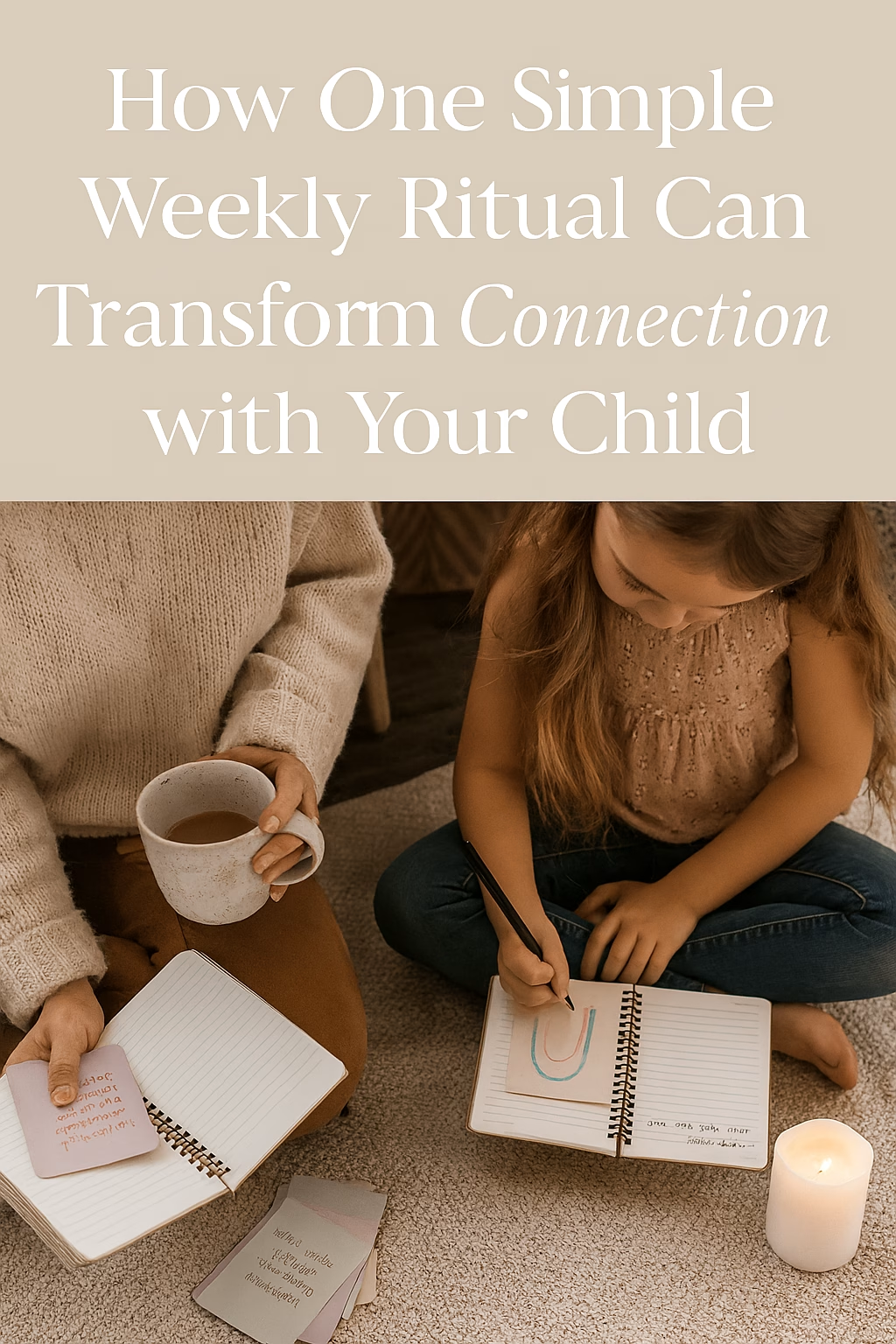
How One Simple Weekly Ritual Can Transform Connection with Your Child
How to Build a Weekly Ritual That Helps Kids Feel Seen (Even If You’re Tired, Overstimulated, and Still Finding Crumbs in Your Bra) Let’s be honest: most of us don’t need more Pinterest-perfect routines. We need a Weekly Ritual that actually works—especially for sensitive kids who crave connection but short-circuit at the sight of a color-coded chart. This post isn’t about perfection. It’s about building a Weekly Ritual that helps kids feel seen, safe, and gently celebrated… without requiring glitter, Gregorian chants, or a full-blown Waldorf certification. Whether you’re homeschooling, microschooling, or just trying to survive snack time with your dignity intact, this Weekly Ritual is simple, sensory-friendly, and surprisingly powerful. Why Weekly Rituals Matter (and Why Yours Doesn’t Need to Be Fancy) Kids don’t need elaborate ceremonies. They need consistency, warmth, and a moment that says: “I see you. I like you. You matter here.” That’s where the Weekly Ritual comes in. It’s not a schedule—it’s a soft landing. A predictable pocket of time where your child gets to show up as they are, and you get to witness them without multitasking, correcting, or rushing. And yes, you can absolutely do this with a mug of tea in hand and a journal that still has last month’s grocery list scribbled in the margins. I love this Art of Tea blend for grounding, and this Magic Hour mug makes me feel like I’m hosting a TED Talk for my inner child. What You’ll Need for Your Weekly Ritual A cozy mug that makes you feel like a benevolent forest witch. Shop my favorite mug here A journal that’s not intimidating. Bonus points if it’s spiral-bound and smells like emotional safety. This one’s in my favorite on Amazon. Kids Conversation Cards with gentle prompts like “What made you feel strong this week?” or “What’s something you wish grownups understood?” Optional: a blanket, a candle, and the emotional stamina to not interrupt your child’s answer with a life lesson. (We’re all working on it.) A Real-Life Weekly Ritual Moment That Changed Me Last week, my daughter chose the card that asked, “What’s something you wish grownups understood?”She said, “That I’m not being dramatic—I’m just full of feelings.”I almost cried into my tea.That moment reminded me why we do this Weekly Ritual. Not for the Pinterest board. Not for the homeschool transcript. But for the quiet truth that our kids are carrying—and waiting for us to hear. What to Actually Do During Your Weekly Ritual (So It’s Not Just Vibes and Tea) This isn’t just a moment—it’s a rhythm. Here’s how to guide your child through a Weekly Ritual that builds connection, emotional safety, and self-awareness: Set the Scene Together Let your child help choose the setup. Pick a cozy spot—blanket fort, couch corner, or sensory-friendly nook. Brew tea or cocoa together. I love Art of Tea for grownups who need grounding. Light a candle or turn on a soft lamp. Let them flip the switch—it gives them ownership. Choose a Ritual Card Prompt Let your child pick from a small stack of printable prompts.Some favorites: “What made you feel strong this week?” “What’s something you wish grownups understood?” “What’s one thing you want to remember?” “What’s something you did that felt kind?” Reflect Together Use a journal or drawing pad to respond. Your child can write, draw, or dictate. You can write alongside them—modeling vulnerability and reflection. Use a sensory-friendly pen or textured journal from my Layered Texture shelf to make it feel special. If your child is nonverbal or prefers visual language, try pairing this Weekly Ritual with Signing Time or a simple drawing prompt. Share and Witness This is the heart of the Weekly Ritual. Let your child share what they created or thought about. Listen without correcting, fixing, or teaching. Respond with affirmations like: “I love hearing your thoughts.” “That’s such a powerful insight.” “You’re growing in beautiful ways.” If they don’t want to share, that’s okay. Just say, “Thanks for showing up. I’m proud of you.” End with a Connection Cue Choose a gentle closing ritual: A hug, high five, or hand squeeze A shared breath or stretch A silly song or calming scent from my Fall Apothecary shelf This helps anchor the Weekly Ritual and signals safety. Troubleshooting Your Weekly Ritual (When It Goes Off the Rails) Your child resists? Try again next week. Or let them lead with a silly question first. You’re too tired to be emotionally available? Light a candle, sip your tea, and just say, “I’m here. I want to hear you.” You skipped a week? No shame. Weekly Rituals are meant to be returned to, not performed. Your child melts down mid-ritual? That’s okay. Regulation is the goal, not the prerequisite. For more gentle survival strategies, read:→ Burned Out and Still Homeschooling? This Is What Actually Helped Me Heal→ You’re Not Lazy—You’re Overstimulated: A Nervous System Survival Guide→ Feeling Burned Out? A Survival Guide for Overstimulated Moms Ritual Variations for Real-Life Families For teens: Add music, candles, and deeper prompts. Let them journal privately and share only what they choose. For neurodivergent kids: Use visual supports, Signing Time videos, or sensory tools from Fun and Function. For co-regulation: Include movement, breathwork, or red light tools from my Regulate & Recharge shelf. For couples: Adapt ritual cards for partner check-ins. Try prompts like “What felt heavy this week?” or “What helped you feel close?” (See my Cozy Couples Essentials shelf.) → Related: How to Plan a Date Night When You Have Kids (But Also Haven’t Showered in 3 Days)→ Related: What to Say When You’re the Emotional Anchor in a Room Full of Chaos Let’s Make Weekly Rituals Feel Like a Hug, Not a Hustle You don’t need a perfect script. You don’t need matching mugs. You just need a moment—and the willingness to show up with softness. This Weekly Ritual has helped me connect with my kids in ways that feel real, doable, and

Why I Love Living in North Dakota- What You Should Know Before Moving Here
Why I Love Living in North Dakota- What You Should Know Before Moving Here A cozy, clear-eyed look at life in the Bakken—and why living in North Dakota is more than just boomtown gritLet’s be honest: living in North Dakota doesn’t usually top the “dream destination” lists. It’s cold. It’s remote. And if you live in Williston, you’ve probably had to explain fracking to your out-of-state relatives more times than you care to count.But here’s the thing: I love living in North Dakota. Not in a “grin and bear it” kind of way—but in a deep, steady, soul-rooted way. And yes, part of that love comes from watching my boyfriend haul water for Halliburton in the oil fields. Because when you live in a place shaped by industry, community, and wide-open skies, you start to see beauty in the grit. The Oil Field Isn’t Just a Job—It’s a Rhythm In the Baken, oil field life isn’t background noise—it’s the beat we build our days around. My boyfriend’s water hauling schedule might be unpredictable, but it’s also grounding. It teaches us to plan flexibly, celebrate small wins, and find joy in the quiet moments between dispatches. And here’s the twist: the industry is changing. It’s not all boom-and-bust anymore. It’s steadier, smarter, and more focused on sustainability. That means his job is stable, his skills are valuable, and our life here—our life living in North Dakota—feels less like a gamble and more like a choice. What a Week Looks Like Living in North Dakota Monday: He’s out the door before sunrise, and I’m batching emotionally safe product descriptions with coffee and a weighted blanket.(Cafe Borbone’s espresso pods are my go-to—strong enough to match the wind, smooth enough to keep me grounded.) Tuesday: I prep blog posts and Pinterest pins while he hauls water across the Bakken.(My sensory-friendly workspace essentials from ShopMyShelves make batching feel less like a chore and more like a ritual.) Wednesday: We meet up with our homeschool co-op group—lots of snacks, social skills, and gentle chaos.(We use Training Aliens for social-emotional games that actually work with our sensitive crew.) Thursday: It’s enrichment day! I lead ASL and movement classes.(Signing Time is our favorite resource for cozy, inclusive ASL learning—especially for mixed-age groups.) Friday: I catch up on content batching while he’s off early.(Mito Red Light therapy helps me recharge after a long week—especially when my nervous system feels like it’s still bracing for dispatch.) It’s not glamorous—but it’s ours. And it’s surprisingly strategic. Living in North Dakota has taught us how to build a rhythm that works for us. Living in North Dakota Teaches You to Breathe Differently There’s something about the wind here. It’s not gentle, but it is honest. It reminds you to dress in layers, drive with caution, and speak with intention. Living in North Dakota has taught me to slow down, listen closely, and build routines that honor both ambition and emotional safety. Whether I’m curating cozy resources for sensitive families or mapping out microschool onboarding guides, I’m always aware of the land beneath me. It’s firm. It’s quiet. And it’s fiercely supportive—just like the people who live here. Why Living in North Dakota Is Surprisingly Strategic If you’re building a life, a business, or a microschool in North Dakota, you’re not just surviving—you’re innovating. The oil field economy may be rugged, but it’s also ripe with opportunity. Families here are craving connection, clarity, and emotionally safe spaces. And that’s exactly what I’m creating through Prairie Ember. From batching Pinterest pins to designing opt-in forms, every piece of my work is shaped by the rhythms of this place.(I lean on Grammar Galaxy and Logic of English to keep our homeschool language arts gentle but effective. Pandia Press and Honest History help us explore big ideas without overwhelming sensitive learners.) It’s not just about what sells—it’s about what serves. And living in North Dakota makes that mission feel real. Living in North Dakota Opened Doors I Didn’t Know Existed I’ve lived in other places. I’ve worked in other towns. But nowhere—nowhere—have I felt the kind of grounded, community-rooted support I’ve found living in North Dakota. Here, I got a job from my neighbor. Not through a resume or a formal interview—just through conversation, trust, and showing up. I was considered for a board member position by people who saw my heart and my leadership, not just my credentials. And now? I’m seriously considering starting a microschool. Something I would never have dreamed of doing anywhere else. But here, it doesn’t feel impossible. It feels invited. Supported. Like the land itself is saying, “Yes. You belong here. Build something.” Living in North Dakota has shown me that opportunity doesn’t always look like a job listing or a networking event. Sometimes it looks like a neighbor waving you over. A community asking for your voice. A quiet town giving you permission to dream big—without losing your softness. Thinking of Moving to North Dakota? Here’s What I Wish Someone Had Told Me So, you’re considering a move to North Dakota—maybe for oil field work, maybe for a fresh start, maybe because you saw a photo of the northern lights and got emotionally attached. Whatever your reason, here’s the truth: it’s not for everyone. But if it is for you, living in North Dakota will change your life in the best, most grounding ways. Here’s what I wish someone had told me before I unpacked my boots in Williston: The weather is wild—but the people are warmer than you’d expect. Yes, the wind will slap you. But your neighbor will plow your driveway without asking. The economy is rugged but resilient. Oil field jobs are steady right now, especially in logistics and support roles. If you’re reliable and willing to learn, you’ll find opportunity. Community matters more than convenience. You won’t find a Trader Joe’s. You will find potlucks, prayer circles, and people who show up when it counts. You’ll learn to love the quiet. The sky stretches
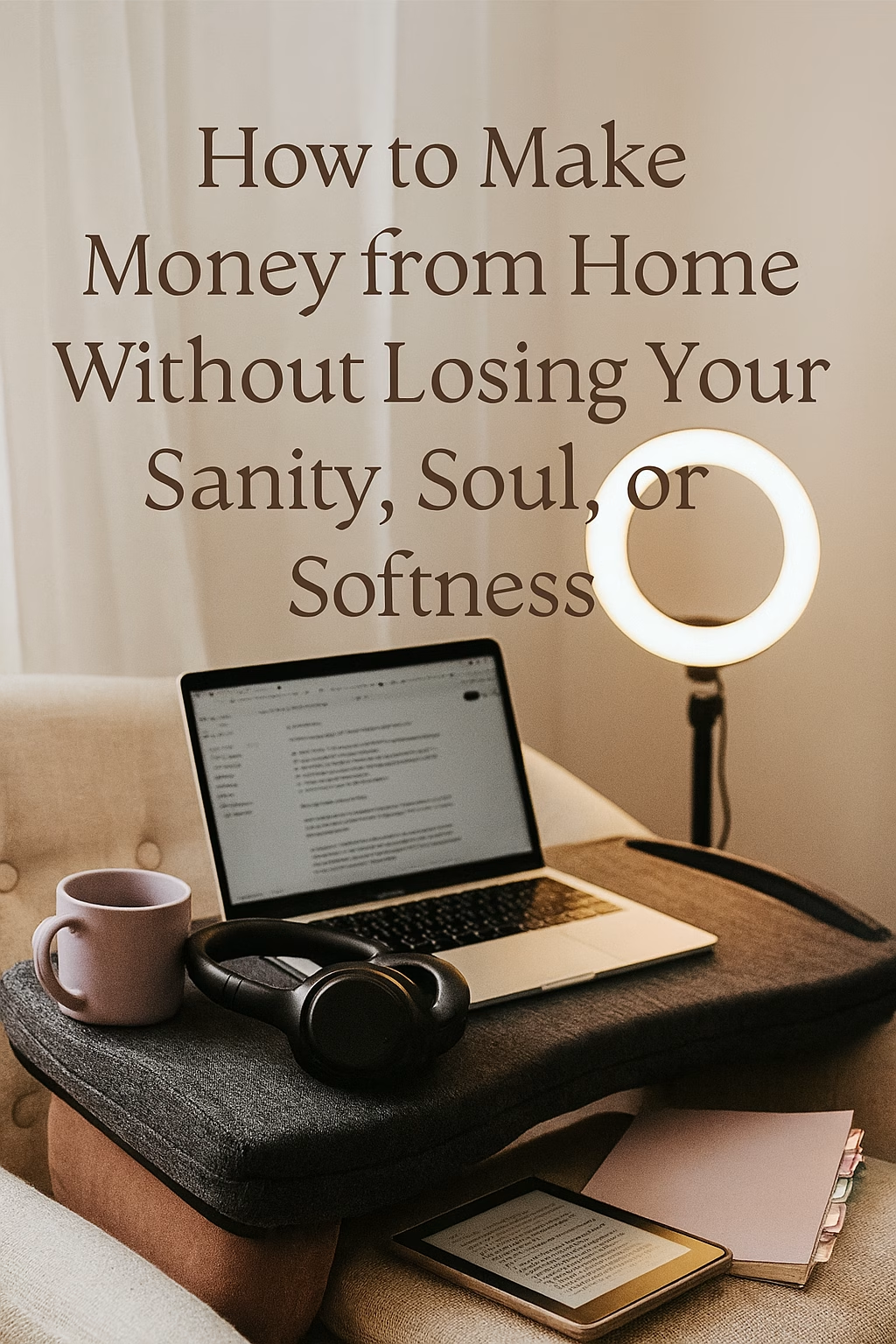
How to Make Money from Home Without Losing Your Sanity, Soul, or Softness
How to Make Money from Home Without Losing Your Sanity, Soul, or Softness It Started With a Cold Cup of Tea and a Blog Draft I Couldn’t Finish I was sitting on the floor, surrounded by half-written blog posts, a toddler meltdown in the next room, and a deep desire to Make Money from Home without losing myself.I didn’t want to hustle.I didn’t want to sell things I didn’t believe in.I didn’t want to pretend I was okay when I wasn’t.I just wanted to write.To share what helped.To earn gently, without compromising my nervous system.So, I started affiliate blogging.Not the loud kind.The emotionally safe kind. What Is Affiliate Blogging (The Gentle Version)? Affiliate blogging is one of the softest ways to Make Money from Home. You write about products or services you genuinely use and love—and when someone clicks your link and buys, you earn a commission.But here’s the twist:You don’t have to be pushy.You don’t have to be perfect.You don’t have to pretend you’re a productivity robot.You just have to be honest, helpful, and gently visible. Why It Works for Sensitive Creatives You get to write in your own voice—no scripts, no sleaze. You can Make Money from Home while you sleep (or regulate, or cry, or teach). You don’t need a huge audience—just trust and authenticity. You can build slowly, gently, and in alignment with your energy. What Helped Me Start (Without Melting Down) NameHero Hosting – Fast, reliable, and emotionally safe. Their dashboard didn’t make me scream, and their support actually helped me Make Money from Home without tech panic. Shopify for Digital Products – Selling emotion cards, journals, and class scripts felt doable once I set up my cozy little shop. Pinterest (But Gently) – I batch pins with emotionally safe descriptions and alt text. No viral pressure—just slow, steady visibility. Blog Posts That Feel Like Letters – I write like I’m talking to a friend. No keyword stuffing. Just real stories, soft tips, and gentle invitations. Cozy Amazon Tools That Helped Me Make Money from Home These are products I actually use to create, regulate, and show up gently online. If you’re sensitive, overwhelmed, or just starting out, they might help you too. Blue Yeti USB MicrophoneFor recording voiceovers, podcast intros, or course content without sounding like you’re in a tin can.“This mic helped me sound like myself—calm, clear, and not echoey.” Logitech C920 HD WebcamFor showing up softly on Zoom or video content without feeling exposed.“I use this when I feel brave enough to be seen.” Lap Desk with Cushion + Phone HolderFor blogging from the couch, the trailer, or under a weighted blanket.“This is how I write when I can’t sit at a desk.” Soft LED Ring Light with Adjustable WarmthHelps you feel gently lit without harsh brightness—great for sensitive eyes.“I use the warmest setting so I don’t feel like I’m in an interrogation.” Noise-Canceling HeadphonesFor regulating while writing, batching pins, or escaping chaos for a moment.“These help me hear myself think.” Emotionally Safe Planner or Blog OrganizerUndated, soft-toned planners with gentle prompts.“I use this to plan blog posts when I’m regulated enough to think ahead.” Kindle PaperwhiteFor reading blogging books, SEO guides, or cozy fiction during recharge time.“This is my escape hatch when I need to refill.” How to Start Affiliate Blogging (Without Losing Yourself) Step 1: Choose 1–3 products you actually use and love.Step 2: Sign up for their affiliate programs (NameHero and Shopify are great places to start).Step 3: Write a blog post that feels like a story.Step 4: Add your affiliate links gently—“Here’s the link I used” is enough.Step 5: Share it softly. Pinterest, email, social media—whatever feels safe. This is how I began to Make Money from Home—without selling out or burning out. Gentle Calls to Action That Actually Work Instead of “Buy now,” try: “Here’s the hosting I use—it’s helped me feel safe online and Make Money from Home.” “This is the platform I trust to sell my digital products.” “If you’re curious, here’s the link I used to get started.” Emotionally Safe Blogging vs. Hustle Culture Emotionally Safe Blogging: Feels like a conversation Prioritizes regulation over reach Builds trust slowly Honors your energy Converts through connection Helps you Make Money from Home without losing your softness Traditional Hustle Blogging: Feels like a performance Prioritizes metrics over meaning Builds urgency Ignores burnout Converts through pressure Often forgets emotional safety entirely FAQ for Sensitive Creatives Do I need a niche to start affiliate blogging?Nope. You need a voice, a story, and a product that genuinely helped you Make Money from Home. Start there. What if I hate selling things?Perfect. You’re not selling—you’re sharing. Think “gentle recommendation,” not “sales pitch.” How do I write posts that don’t feel fake?Write like you’re talking to a friend. Use your real words. Share your real experience. Can I do this without showing my face?Absolutely. Your words are enough. Your story is enough. You are enough. What if I only have 3 readers?Then you have 3 chances to build trust. That’s how you start to Make Money from Home—one connection at a time. Related Posts You Might Love Burned Out and Still Homeschooling? This Is What Actually Helped Me Heal The Truth About Roadschooling: What No One Tells You About Learning in a Tiny Trailer Neurodivergent Girls: The Hidden Signs of Autism and ADHD You’re Not Lazy—You’re Overstimulated: A Nervous System Survival Guide Motherhood Isn’t a Personality—Here’s How to Find Yourself Again How to Be Seen Without Feeling Exposed: Branding for Sensitive Moms and Creators The Emotionally Safe Way to Dream Big—Without Self-Sabotage How to Create a Sensory-Friendly Workspace That Honors Your Brilliance Let’s Make This a Soft Space to Share Have you ever tried affiliate blogging—or thought about how to Make Money from Home but felt overwhelmed?I’d love to hear your story.Let’s make this a gentle, emotionally safe space to explore what’s possible. 🧺 Layered Texture: Sensory-Friendly Workspace Essentials These are the
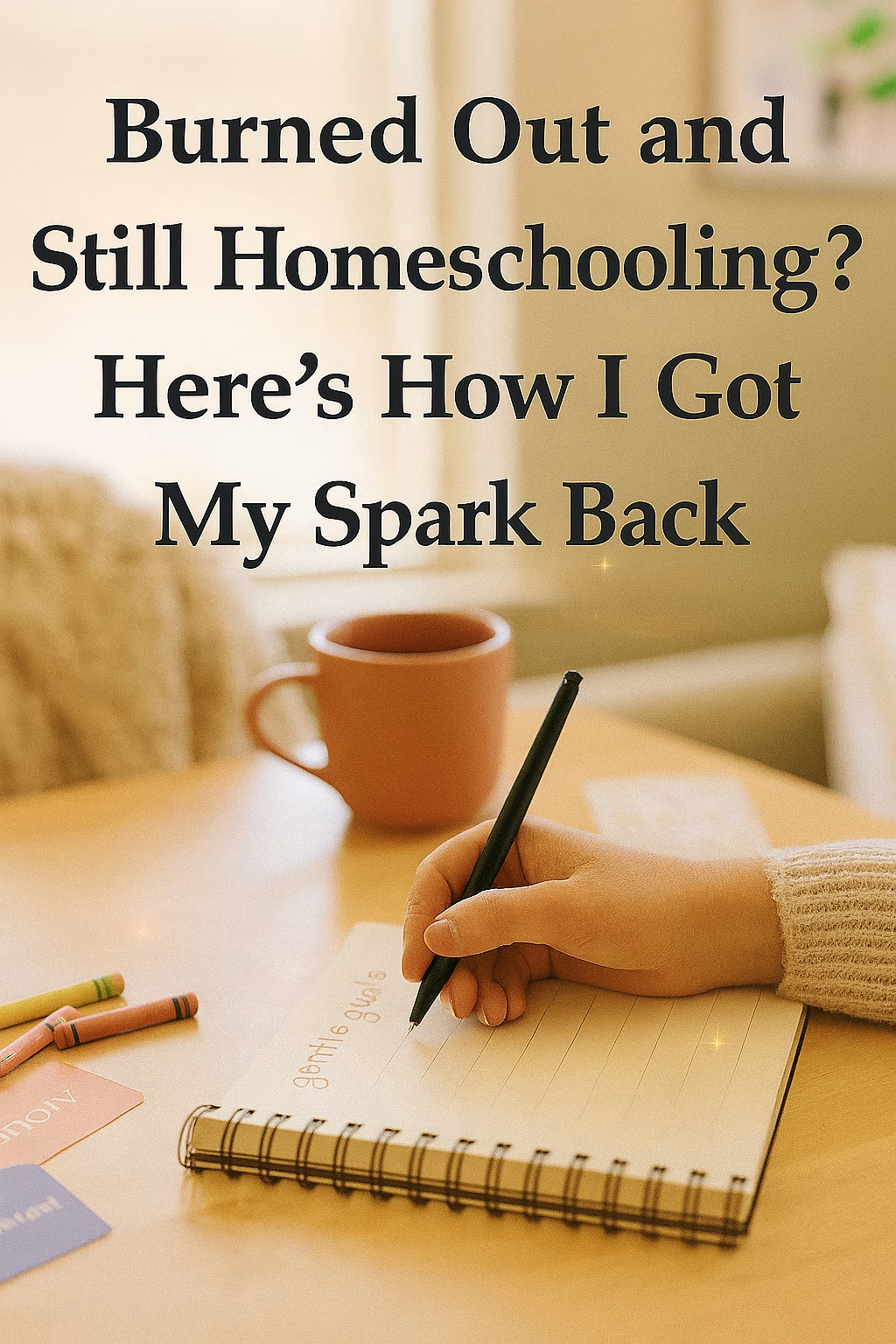
Burned Out and Still Homeschooling? This Is What Actually Helped Me Heal
How I Rebuilt My Spark After Feeling Burned Out by Homeschool Spoiler: It didn’t involve glitter pens. But it did involve a planner I wanted to marry. Let’s be real. Homeschool burnout doesn’t knock politely. It shows up like a toddler with a kazoo at 5 a.m.—loud, relentless, and weirdly proud of itself. I was deep in it. Burned out, overwhelmed, and questioning everything. My lesson plans felt like expired soup. My spark? Flickering somewhere between “meh” and “please don’t ask me to teach fractions.” But here’s the thing: I didn’t quit. I rebuilt. Slowly. Gently. And with a lot of help from tools that didn’t just organize my chaos—they helped me feel like a human again. First, I Named the Burnout Not just “tired.” Not just “overwhelmed.” I was emotionally crispy. Fully burned out. I started saying it out loud: “I’m not failing. I’m just fried.”Naming it gave me permission to stop pretending I was fine. And that’s when the healing began. If you’re feeling burned out too, you might love Feeling Burned Out? A Survival Guide for Overstimulated Moms or You’re Not Lazy—You’re Overstimulated: A Nervous System Survival Guide. They’re like emotional aloe vera. Then, I Decluttered My Expectations I didn’t Marie Kondo my curriculum—I emotionally decluttered. I asked: What actually feels good to teach? What routines feel safe for my kids and for me? What can I let go of without guilt? Spoiler: I let go of rigid schedules and embraced themed days, cozy scripts, and movement breaks that didn’t feel like punishment.I leaned into flexible, emotionally safe curriculum like Grammar Galaxy and Training Aliens—because connection matters more than checkboxes. If you’re burned out and rethinking your homeschool rhythm, How to Build a Gentle Homeschool Rhythm This Fall (That Actually Works) and Why Eclectic Homeschooling Was the Better Way to Learn might help you breathe again. The Planner That Saved My Sanity I found this planner and nearly cried when I saw the “gentle goals” section. It didn’t ask me to conquer the world. It asked me to breathe, reflect, and maybe write down one thing I did well. Benefit: It helped me track progress without shame. Bonus: It’s pretty enough to leave out on the counter without triggering my inner perfectionist. Also helpful: The Gentle Reset: How to Recalibrate When You’ve Lost Your Spark and Motherhood Isn’t a Personality—Here’s How to Find Yourself Again. Both reminded me I’m allowed to be a person, not just a burned-out planner. Rituals That Actually Worked I tried everything. Bubble baths. Essential oils. Screaming into a pillow. But here’s what stuck: This calming playlist I now call “Emergency Brain Fog Rescue” This weighted wrap from Amazon that feels like a hug from a very chill alien This 5-minute journal that doesn’t judge me for doodling instead of writing Art of Tea’s Moonlight blend for when I needed to feel like a cozy witch with a to-do list These rituals didn’t fix everything. But they gave me micro-moments of peace. And that’s where the spark started to flicker again. If you’re burned out and craving cozy rituals, Fall Rituals for Sensitive Souls and Comfortable Fall Capsule Wardrobe: Easy Outfits That Actually Feel Good are like warm socks for your nervous system. Burnout Bingo: Are You Crispy? Here’s how I knew I was deep in the burnout zone: I taught the same math concept three times and still didn’t understand it I cried over a broken crayon I Googled “how to homeschool without actually teaching” I considered hiding in the pantry with a granola bar and a podcast If you checked even one of these, you’re not broken. You’re just burned out. Let’s rebuild. Also relatable: How to Teach Through Tears: Calming Tools for Overwhelmed Homeschool Days. What I Tell Burned-Out Homeschoolers Now You’re not failing. You’re not behind. You’re just a human doing something wildly hard with wildly little support.So, here’s your permission slip: Rest is productive. Joy counts as curriculum. You’re allowed to rebuild slowly. If you’ve been the emotional anchor in a room full of chaos, What to Say When You’re the Emotional Anchor might feel like a hug in blog form. My Spark-Rebuilding Toolkit If you’re burned out and in the burnout zone, here are the tools that helped me feel like myself again: Gentle planner with emotional check-ins Weighted wrap for sensory regulation 5-minute journal for low-pressure reflection Grammar Galaxy for low-prep, connection-first learning Art of Tea for sensory rituals that feel like a hug Training Aliens for social-emotional support that doesn’t feel like a lecture Also worth exploring: These Adaptogens Help Moms Regulate, Focus, and Actually Sleep and Red Light Therapy Changed My Energy, Skin, and Sanity. No wellness retreat required. What I Wish I’d Known Rest is productive Joy counts as curriculum You don’t need to earn your breaks Your planner should feel like a hug, not a drill sergeant You’re allowed to pivot, pause, and start over If you’re still wondering “Why am I like this?”—The Hidden Patterns You Inherited (and How to Heal Them) might be the mirror you didn’t know you needed. Final Thought + Reader Reflection Burnout doesn’t mean you’re failing. It means you’ve been trying really hard for really long. Rebuilding your spark isn’t about doing more—it’s about doing less, with more intention. What’s one tiny ritual that helps you feel like yourself again?Drop it in the comments—I’m building a burnout survival list that doesn’t involve glitter pens or toxic positivity. You’re not alone in this. And if you need a planner that feels like a warm hug and a playlist that doesn’t make you roll your eyes, I’ve got you. Click around. Try what feels good. Leave the rest. Also: If your homeschool spark lives in a tiny trailer, The Truth About Roadschooling might be your next favorite read. ✨ Mama Reset Rituals ✨ These are the gentle tools I reach for when I’m burned out and craving

The Truth About Roadschooling: What No One Tells You About Learning in a Tiny Trailer
Roadschooling Was Magical—Until It Wasn’t: What We Learned Living in a Trailer for 3 Months Last year, we packed up our life, squeezed it into a travel trailer the size of a generous walk-in closet, and hit the road for three months of full-time roadschooling. From Texas to North Dakota, then down and around through Wyoming, Utah, Oregon, and Washington—we learned, lived, and limped our way through beaches, national parks, and more gas station snacks than I care to admit.We saw incredible things.We learned in real time.We bonded in ways that only come from shared awe… and shared poop tank emergencies.So, if you’re dreaming of roadschooling—of trading worksheets for waterfalls and screen time for scenic drives—this post is for you. What We Gained 1. Real-World Learning That Actually StuckYellowstone wasn’t just a postcard—it was a geology lesson, a wildlife encounter, and a sensory experience all rolled into one. My kid still talks about the bubbling mud pots and the bison traffic jam like it happened yesterday. That’s the kind of retention roadschooling makes possible. 2. Awe-Filled Moments That No Curriculum Could ScriptWe watched the sun set over the Oregon coast, hiked through red rock canyons, and stood in quiet reverence under towering evergreens. These weren’t just field trips—they were soul trips. And they’re the kind of magic that roadschooling can offer when the stars align. 3. Learning Tools That Traveled WellWe leaned on flexible, emotionally safe curriculums that fit our rhythm: MEL Science for hands-on experiments at picnic tables and park benches All About Learning Press for structured literacy that didn’t unravel on the road Grammar Galaxy for story-based language arts that made long drives bearable Pandia Press for secular science and history that paired beautifully with real-world exploration Honest History for cozy storytelling on rainy trailer days 4. Family Bonding (The Good Kind)There’s something about being together in a tiny space with no escape that forces you to grow. We laughed, cried, problem-solved, and learned to read each other’s energy like pros. Roadschooling doesn’t just teach kids—it teaches parents, too. 5. Flexibility, Resilience, and the Art of the PivotWhen the weather changed, when the RV park was sketchy, when the water pump failed—we adapted. And our kids saw us adapt. That’s a life skill you can’t teach from a workbook. It’s one of the hidden gifts of roadschooling. What We Didn’t Expect 1. No Room for Anything. Literally.If you’re a cozy-home, sensory-corner kind of mom, brace yourself. There’s no “corner.” There’s barely a floor. Every item has to earn its place, and even then, it might get stepped on. Roadschooling forces you to rethink what “essentials” really are. 2. The Tank SituationPoop tanks. Water tanks. Propane tanks. All the tanks. You will learn more about plumbing than you ever wanted to know. And yes, you will smell things. Things you cannot un-smell. 3. RV Parks Are Not Always MagicalSome are lovely. Some feel like parking lots with picnic tables. Some are loud, crowded, or just plain weird. You’ll learn to scout like a pro and lower your expectations without lowering your standards. 4. Weather Mood SwingsWindstorms in Wyoming. Freezing nights in North Dakota. Blazing heat in Utah. Your trailer will rock, your plans will shift, and your kids will ask why the Wi-Fi is down. Again. Roadschooling means surrendering to the elements—sometimes gracefully, sometimes not. 5. Emotional WhiplashConstant transitions are hard—especially for sensitive kids. New beds, new routines, new noises. It’s exciting, yes, but it’s also exhausting. And sometimes, the math lesson just doesn’t happen. That’s okay. That’s roadschooling. Things No One Warns You About (But Should) You will cry in a campground bathroom. Your kid will ask deep existential questions while you’re unclogging a toilet. You will question your life choices in a Walmart parking lot. You will learn to cook dinner with one pan, two ingredients, and zero patience. You will become a weather app addict. You will discover that “full hookups” is not as sexy as it sounds. A Day in the Life (Unfiltered) 7:42 AM: Wake up to the sound of wind rattling the trailer. Realize the propane ran out overnight.8:15 AM: Boil water on the camp stove while your kid builds a fort out of blankets and asks if Yellowstone has volcanoes.9:30 AM: Attempt math. Abandon math. Go outside instead.11:00 AM: Drive to a new park. Everyone’s grumpy. You forgot snacks.2:00 PM: Your kid identifies a rock formation from last week’s geology podcast. You cry a little.6:00 PM: Dinner is rice and beans again. You’re too tired to care.8:30 PM: Bedtime story by flashlight. Everyone’s dirty, tired, and somehow… happy. This is roadschooling. Not the Instagram version—the real one. Before You Go: Planning Tips for Sensitive Families Choose fewer stops. You’ll thank yourself. Build in recovery days. Pack for comfort, not Pinterest. Expect tech fails. Practice your poop tank routine before you hit the road. Know your kid’s sensory triggers—and yours. Don’t skip the cozy: bring the playlist, the blanket, the bedtime ritual Grab the gear that actually helps: Collapsible water jugs for emergency refills Blackout curtains for sleep in unpredictable light Portable fan for airflow and sensory regulation One-pan cooking set for sanity-saving meals RV-friendly broom because dirt is relentless Weather radio for stormy nights when Wi-Fi disappears Would I Do It Again? Only if we didn’t have everything we owned crammed into the trailer.Only if the layout didn’t make us step on each other’s toes—literally and emotionally.Only if we had space to breathe, move, and regulate without bumping into someone’s elbow or laundry pile. And honestly? For our family, roadschooling could only work in certain seasons.It’s not something we found sustainable long-term.Living in a trailer never felt like “home”—not in the deep, cozy, emotionally safe way we needed.Adventures are fun, yes. But when you never have a space of comfort to come back to, even the fun starts to feel like a chore. So yes—I’d do it again.But only with a pared-down packing list, a

Neurodivergent Girls: The Hidden Signs of Autism and ADHD
ADHD Isn’t Just Loud—and Autism Isn’t Always Obvious Because “she’s just sensitive” doesn’t explain the sock meltdown, the sensory spiral, or the 3-hour bedtime negotiation. Let’s get one thing straight:Neurodiversity doesn’t wear the same outfit in every gender.Autism and ADHD? They show up in neurodivergent girls like a quiet storm—masked, misunderstood, and often misdiagnosed. This post isn’t about labels.It’s about clarity.It’s about finally understanding why your daughter’s “quirks” aren’t just personality—they’re patterns.And why your own perfectionism, sensory overwhelm, and calendar chaos might be more neurological than moral. → Related: You’re Not Lazy—You’re Overstimulated: A Nervous System Survival Guide→ Related: Motherhood Isn’t a Personality—Here’s How to Find Yourself Again Signs of Autism in Neurodivergent Girls You Might Miss She’s polite. She makes eye contact. She gets good grades.But she also melts down after school, scripts her social interactions, and panics when plans change. Autistic neurodivergent girls often mask so well that their distress goes unnoticed—until it erupts.They’re not “just sensitive.” They’re navigating a world that wasn’t built for their nervous systems. → Related: Sensitive Kids Thrive in Chaos—Here’s How to Help Them Feel Safe→ Related: Why “Weird” Calming Behaviors Are Actually Totally Normal How ADHD Looks Different in Neurodivergent Girls Forget the bouncing-off-the-walls stereotype.ADHD in neurodivergent girls often looks like: Emotional spirals over small things Time blindness and calendar chaos Perfectionism that leads to burnout Constant overthinking and social exhaustion They’re not lazy. They’re trying harder than anyone realizes—just to keep up. → Related: Why Our Kids Pay for Screen Time (and Love It)→ Related: Why Screen Time Boundaries Work Better When Kids Help Set Them Why You’re Not Just Tired—You’re Masking If you feel like you’re performing motherhood instead of living it…If you collapse after social events, over-prepare for everything, and still feel like you’re failing… You might be masking.And masking is exhausting. → Related: Feeling Burned Out? A Survival Guide for Overstimulated Moms→ Related: Tired but Wired? Signs of High Cortisol in Women—and How to Lower It Gently Real-Life Moment: The Sock Spiral She was “fine” all day.Then bedtime hit.She couldn’t find the right socks.Cue tears, yelling, collapsing on the floor. It wasn’t about the socks.It was about masking all day, sensory overload, and no safe way to decompress. You didn’t do anything wrong.You just didn’t have the full picture—until now. → Related: The Parenting Breakthrough Hidden in a Sock Refusal→ Related: How to Recover When the Day Starts in Meltdown Mode Is It Just Sensitivity—Or Is It Neurodivergence? Here’s a cozy, printable checklist to help you decode what’s really going on with your neurodivergent girl: Signs You Might Be Missing: Meltdowns after “good” days Obsessive rule-following or perfectionism Intense interests that feel like lifelines Sensory overwhelm (but masked in public) Time blindness, emotional spirals, and calendar chaos Social exhaustion after playdates or co-op Partial diagnoses that never quite explain everything Print it. Highlight it. Cry a little. Then feel seen.→ Related: How to Help Sensitive Kids Celebrate Who They Are—Without Apology→ Related: This Simple Sensory Setup Changed Everything—Here’s How We Use It The Emotional Cost of Being Misunderstood When neurodivergent girls are misread as dramatic, defiant, or disorganized, they internalize shame.They start believing they’re broken.They stop asking for help. And moms? We carry that same weight—until someone finally says, “I see it now.” → Related: “Why Am I Like This?” The Hidden Patterns You Inherited—and How to Heal Them in Motherhood→ Related: What to Say When You’re the Emotional Anchor in a Room Full of Chaos What If Her Perfectionism Is Actually Neurological? She color-codes her planner. She panics over small mistakes. She rewrites her homework three times.It looks like ambition.But it might be executive dysfunction in disguise. Perfectionism isn’t always a personality trait. Sometimes, it’s a coping mechanism—especially in neurodivergent girls. → Related: The Emotionally Safe Way to Dream Big—Without Self-Sabotage→ Related: How to Be Seen Without Feeling Exposed: Branding for Sensitive Moms and Creators For the Moms Who Were That Neurodivergent Girl You followed the rules. You got good grades. You didn’t cause trouble.But you also: Cried over scratchy socks Rehearsed every conversation in your head Felt like you were “too much” and “not enough” at the same time Spent recess alone, pretending you preferred it that way Over-functioned to survive, then collapsed in private You weren’t dramatic. You were dysregulated.You weren’t lazy. You were overwhelmed.You weren’t broken. You were overlooked. And now? You’re parenting a neurodivergent girl who mirrors your nervous system.You’re trying to give her what you didn’t get:Clarity. Compassion. Tools. Language. Safety. This post isn’t just about her.It’s about you finally seeing yourself—and realizing you deserved support all along. You’re not behind. You’re healing in real time. And that matters. → Related: How to Feel Good Again—Without Changing Your Whole Life→ Related: The Gentle Reset: How to Recalibrate When You’ve Lost Your Spark Gentle Tools That Help Neurodivergent Girls Feel Safe Whether you’re navigating sensory spirals, emotional dysregulation, or calendar chaos, these tools offer real support—not just distraction. They’re designed to help neurodivergent girls regulate, decompress, and thrive in their own rhythm. You might want to check out: Yrissmiss Fidget Toys for Kids and Teens Silicone Sensory Activity Board LESONG Sensory Squishy Fidget Tubes Sensory Strips Fidget Toys – 8 Pack Textured Stretchy Suction Toys – 8 Pcs JOYIN Sensory Tubes – 4 Pack → Related: That Toy Isn’t a Distraction. It’s a Sensory Survival Tool→ Related: The Sensory Breakthrough That Changed Our Days—After Years of Struggle Final Thoughts from a Mom Who’s Been There If your daughter seems “fine” in public but falls apart at home…If you’ve been told you’re “too sensitive” your whole life…If you’re managing meltdowns, masking, and mystery symptoms with no clear answers… You’re not alone.You’re not broken.You’re just finally seeing the full picture. And that clarity?It’s the beginning of healing. If this post made you feel seen, share it with another mom who’s still wondering why her neurodivergent

Why Screen Time Boundaries Work Better When Kids Help Set Them
Why Screen Time Boundaries Work Better When Kids Help Set Them Because “no screens ever” sounds great until someone’s sobbing in the pantry. Let’s be honest:You’ve tried the timers.You’ve tried the “just one more episode” negotiations.You’ve even tried hiding the tablet behind the flour bin. But Screen Time boundaries only stick when kids feel like they’re part of the plan—not victims of it. This post isn’t about banning screens.It’s about building trust, emotional safety, and actual follow-through.And yes, it includes Screen Time tools like timers, visual schedules, and emotion cards that don’t feel like homework. → Related: Why Our Kids Pay for Screen Time (and Love It)→ Related: You’re Not Lazy—You’re Overstimulated: A Nervous System Survival Guide Why Involving Kids in Screen Time Plans Actually Works When kids help set Screen Time boundaries, something magical happens:They stop seeing you as the screen police and start seeing themselves as part of the solution. Here’s why it works: Ownership builds buy-in. Kids are more likely to follow Screen Time rules they helped create. It reduces power struggles. You’re not the villain—you’re the guide. It teaches emotional regulation. They learn to pause, reflect, and choose. It builds executive function. Planning, negotiating, and sticking to Screen Time limits = brain gains. It creates consistency. No more “but you said yesterday…” debates. → Related: Sensitive Kids Thrive in Chaos—Here’s How to Help Them Feel Safe Mini Neuroscience: Why Screen Time Transitions Are So Hard When your child’s brain is deep in Minecraft mode, their prefrontal cortex—the part that helps with stopping, switching, and planning—is basically on vacation.That’s why the Screen Time timer goes off and they scream like you’ve canceled Christmas. Their nervous system isn’t trying to be difficult.It’s just overwhelmed.And that’s why collaborative Screen Time boundaries work better—they give the brain a heads-up instead of a shutdown. → Related: Tired but Wired? Signs of High Cortisol in Women—and How to Lower It Gently What to Say When You’re Setting Screen Time Boundaries Together You don’t need a TED Talk.You need a few emotionally safe phrases that invite collaboration without losing authority. Try these: “Let’s make a Screen Time plan that works for both of us.” “What do you think is a fair amount of time for games?” “How will we know when it’s time to stop?” “What should happen if we forget the plan?” “Let’s make a visual schedule so we don’t have to argue later.” → Related: What to Say When You’re the Emotional Anchor in a Room Full of Chaos Sensory-Safe Screen Time Ritual (Start + Stop) This ritual helps kids transition in and out of Screen Time without meltdowns—and gives you a moment to breathe. Before Screen Time: Light a candle or turn on a calming lamp Choose a timer together Say: “We’re in charge of our Screen Time plan today.” Flip a sand timer or press start together After Screen Time: Stretch or do a silly movement Sip something warm or crunchy Say: “We did it. Let’s name one feeling before we move on.” → Related: Fall Rituals for Sensitive Souls: How to Feel Good Tools That Make Screen Time Boundaries Stick (Without Tears or Timers That Beep Like Bombs) These tools aren’t just helpful—they’re emotionally safe, visually clear, and actually used in real-life homes with sensitive kids. Timers That Don’t Feel Punitive Because “you have 5 minutes left” shouldn’t sound like a threat. Time Timer MOD Colorful Sand Timers Visual Schedules That Reduce “But I Didn’t Know!” Drama Because consistency is calming—and pictures speak louder than nagging. Magnetic Daily Routine Chart Screen Time Tokens + Schedule Cards Emotion Cards That Help Kids Pause Before the Spiral Because sometimes the meltdown isn’t about the screen—it’s about the transition. Emotion Cards for Real-Life Families Zones of Regulation Visual Poster → Related: That Toy Isn’t a Distraction. It’s a Sensory Survival Tool→ Related: The Sensory Breakthrough That Changed Our Days—After Years of Struggle Real-Life Moment: The Timer, the Tears, and the Turnaround We set a 20-minute Screen Time timer.My child chose it.We agreed on the plan.And when the timer went off, they said, “Okay, I’ll finish this level and then stop.” I didn’t yell.They didn’t cry.It was… peaceful. That’s the power of collaborative Screen Time boundaries.Not perfect.But emotionally safe. → Related: The Parenting Breakthrough Hidden in a Sock Refusal What to Say When the Screen Time Plan Falls Apart (Because It Will) Even the best boundaries get tested.Here’s what to say when the Screen Time plan goes sideways: “We made this plan together. Let’s look at it again.” “I see you’re upset. Let’s take a break and reset.” “We can try again tomorrow. I’m still proud of you.” “Let’s use our emotion cards to figure out what’s really going on.” → Related: The Gentle Reset: How to Recalibrate When You’ve Lost Your Spark Final Thoughts from a Mom Who’s Been There You don’t need perfect boundaries.You need collaborative ones.Ones that feel fair, clear, and emotionally safe. When kids help set the Screen Time rules, they’re not just following them.They’re learning self-regulation, empathy, and trust.And you?You get fewer meltdowns, more connection, and a Screen Time plan that actually sticks. → Related: Motherhood Isn’t a Personality—Here’s How to Find Yourself Again How to Keep Your Feral Child from Constantly Getting Sick This Season Red Light Therapy Changed My Energy, Skin, and Sanity Gentle Exercise Ideas That Help Families Focus and Regulate ✨ Need a reset after the screen spiral? These gentle tools help you regulate, reconnect, and feel human again. Weighted plushies, calming teas, sensory aids, and cozy rituals for overstimulated moms.

What to Say When You’re the Emotional Anchor in a Room Full of Chaos
What to Say When You’re the Only Regulated Person in the Room Because someone has to be the calm cucumber in a bowl of spicy chaos. Let’s be honest:Sometimes you’re the only one in the room who isn’t crying, yelling, or throwing a shoe.And while that’s a win for your nervous system, it’s also… a lot. Whether you’re navigating a toddler tantrum, a sensory spiral, or a partner who thinks “just calm down” is a helpful phrase—being the regulated one means you’re holding the emotional glue.And that glue? It gets sticky. → Related: You’re Not Lazy—You’re Overstimulated: A Nervous System Survival Guide→ Related: Feeling Burned Out? A Survival Guide for Overstimulated Moms Why Scripts Work (Even When You’re Tired and Crispy) Scripts aren’t just words. They’re nervous system cues.They help your brain stay out of fight-or-flight and in connection mode—especially when everything feels loud, fast, and unpredictable. When you know what to say, you: Reduce cognitive load (no scrambling for the “right” words) Signal safety to others (even if they’re mid-meltdown) Stay anchored in your values (instead of reacting from stress) Create emotional clarity in chaotic moments → Related: Tired but Wired? Signs of High Cortisol in Women—and How to Lower It Gently→ Related: These Adaptogens Help Moms Regulate, Focus, and Actually Sleep—Without a Wellness Retreat What to Say When Everyone Else Is Spiraling These scripts aren’t about perfection.They’re about presence.They help you hold space, set boundaries, and gently guide the emotional tornado back to earth. What to Say When Your Child Is Melting Down “You’re safe. I’m here.” “Your feelings are big, and that’s okay.” “Let’s take a breath together. I’ll go first.” “Do you want your squishy frog or your glitter jar?” “I won’t leave. I’ll sit right here until your body feels better.” → Related: Sensitive Kids Thrive in Chaos—Here’s How to Help Them Feel Safe→ Related: That Toy Isn’t a Distraction. It’s a Sensory Survival Tool What to Say When Your Partner Is Dysregulated “I want to understand, but I need us both regulated first.” “Let’s pause and come back when we’re both calm.” “I’m not shutting down—I’m protecting our connection.” “I love you. I’m not your enemy. Let’s reset.” → Related: How to Plan a Date Night When You Have Kids (But Also Haven’t Showered in 3 Days)→ Related: Cozy Couples Essentials Shelf What to Say in a Group Setting (When Everyone’s Vibes Are Off) “Let’s take a breath before we keep going.” “I’m noticing some tension—can we pause for a moment?” “I want this to feel safe for everyone. What do we need right now?” “It’s okay to feel big things. Let’s name it and move gently.” → Related: The Emotionally Safe Way to Dream Big—Without Self-Sabotage→ Related: Layered Texture: Sensory-Friendly Workspace Essentials The 90-Second Regulation Ritual (For Moms Who Need a Minute) This ritual is your nervous system’s love language. It’s also a gentle way to reset before deciding what to say next. Light a candle (bonus if it smells like fall) Hold something weighted or textured Say out loud: “I’m safe. I’m allowed to pause.” Breathe in for 4, hold for 4, out for 6 Text a friend who gets it (“I’m the cucumber again ”) Sip something warm: Magic Hour Tea, Art of Tea, or Cafe Borbone → Related: Fall Apothecary Shelf The Calm Cucumber Soundtrack For moms who hold space, hold hope, and occasionally scream into throw pillows while figuring out what to say next. “River Flows in You” – Yiruma “Bloom” – The Paper Kites “Weightless” – Marconi Union (yes, it’s scientifically calming) “Light a Candle” – Avalon “Golden Hour” – Kacey Musgraves “Tea & Oranges” – Outside the Box “You’re Safe Now” – Instrumental playlist for sensory resets → Related: Mama Reset Rituals Shelf Amazon Finds for Moms Who Want to Stay Regulated (But Also Scream Into a Throw Pillow) These aren’t just “calming tools.” They’re survival gear for emotionally intelligent moms navigating sensory chaos with grace and grit—especially when you’re trying to figure out what to say in the middle of it. Weighted Plushie That Feels Like a Hug→ Shop Weighted Emotional Support Plush Chew Necklace for You or Your Sensory-Seeking Sidekick→ Shop Chewable Necklace for Sensory Regulation Glitter Jar That Calms Everyone (Including You)→ Shop Slow-Motion Glitter Calm Jar Emotion Cards That Don’t Feel Like Homework→ Shop Emotion Cards for Real-Life Families Mito Red Light Therapy for Moms Who Want to Feel Human Again→ Shop Mito Red Light Panel → Related: Regulate and Recharge: My Fitness Essentials→ Related: Staples for a Low-Tox Home Real-Life Moment: The Sock, the Glitter Jar, and What to Say I was standing in the hallway, holding a glitter jar and a sock.My child was sobbing. My partner was pacing.I said, “You’re safe. I’m here.”And for three seconds, the room exhaled. That’s the power of knowing what to say.Not perfection.Presence. → Related: The Parenting Breakthrough Hidden in a Sock Refusal→ Related: How to Recover When the Day Starts in Meltdown Mode What to Do When You’re the Only Regulated Person (And You’re About to Snap) Let’s be real:Being the calm one doesn’t mean you’re not overwhelmed.It means you’re choosing clarity over chaos—even when your insides feel like a shaken soda can and you’re not sure what to say next. Try this: Step outside for 90 seconds of fresh air Use a calming tool for yourself Say out loud: “I’m safe. I’m regulated. I’m allowed to pause.” Sip something warm from Magic Hour Tea or Art of Tea → Related: The Gentle Reset: How to Recalibrate When You’ve Lost Your Spark→ Related: The Soft Fall Capsule Final Thoughts from a Mom Who’s Been the Cucumber in the Chaos You’re not just surviving the moment.You’re modeling emotional safety.You’re creating a ripple effect of regulation—even if no one else knows what that word means yet. So next time you’re the only regulated person in the room,Take a breath.Say the script.Grab the glitter jar.And remember:You’re not just holding space.You’re holding hope.And you know exactly what